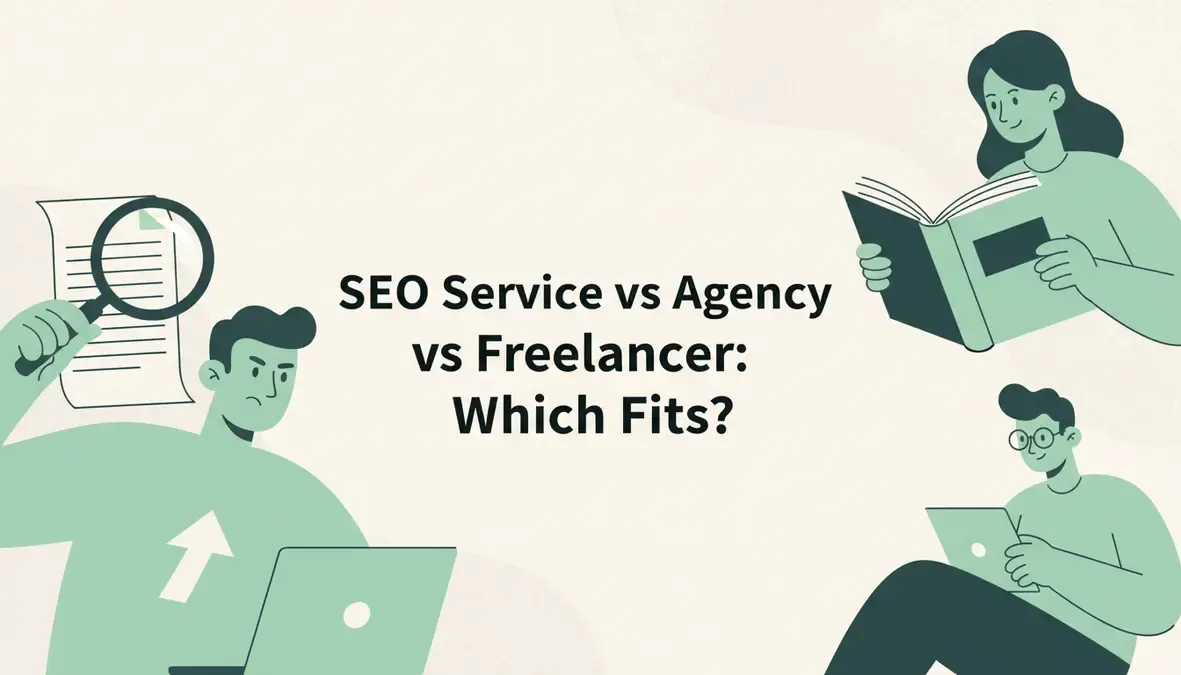
When you're ready to boost your website's search rankings, you've got three main paths: hiring an SEO optimization service company, working with a specialized SEO agency, or bringing on a freelance SEO expert. Each approach has its place, but choosing the wrong one can cost you months of progress and thousands of dollars.
The difference isn't just about price. It's about matching your specific needs, timeline, and growth goals with the right type of SEO partner. A small startup launching its first website needs something completely different from an established SaaS company scaling to new markets. Understanding these distinctions upfront saves you from costly pivots later.
This guide breaks down exactly when each option makes sense, what you can expect to pay, and how to spot red flags before you commit. By the end, you'll know which SEO optimization service approach aligns with your business goals and budget.
Understanding Your SEO Service Options
The SEO optimization service landscape has evolved dramatically over the past decade. What used to be a simple choice between hiring someone in-house or outsourcing has expanded into multiple specialized service models, each designed for different business scenarios.
The Three Main SEO Service Types
Full-Service SEO Agencies represent the traditional approach. These companies typically employ 10-100+ specialists across different SEO disciplines. They handle everything from technical audits to content creation, link building, and ongoing optimization. Think of them as your outsourced SEO department.
Specialized SEO Optimization Services focus on specific aspects of search engine optimization. Some concentrate exclusively on technical SEO, others on content strategy, and still others on link building campaigns. These services often work alongside your existing marketing team or other vendors.
Freelance SEO Consultants are individual experts who typically specialize in one or two areas of SEO. They might be former agency employees who've gone independent, or specialists who've built expertise in niche industries or specific SEO tactics.
Why It Matters: The type of SEO optimization service you choose fundamentally shapes your entire search marketing strategy. Agencies provide comprehensive coverage but less flexibility. Specialists offer deep expertise but require more coordination. Freelancers deliver personalized attention but have capacity limits.
How Each Service Model Operates
Agency operations typically follow established processes and methodologies. They assign account managers, conduct regular reporting cycles, and often use proprietary tools and platforms. Most agencies require 6-12 month contracts and work with multiple clients simultaneously across various industries.
Specialized services usually integrate into your existing workflow. They might handle one piece of your SEO puzzle while you or other vendors manage the rest. These services often offer more flexible engagement models, from project-based work to ongoing retainers.
Freelancer arrangements tend to be more collaborative and hands-on. Independent consultants often work directly with business owners or marketing managers, providing both execution and education. They typically offer more scheduling flexibility but may have limited availability during busy periods.
The Modern SEO Service Landscape
Today's SEO optimization service market reflects the complexity of modern search algorithms. Google processes over 8.5 billion searches daily, and its ranking factors have grown increasingly sophisticated. This complexity has driven specialization within the industry.
Some services focus exclusively on search engine optimization for SaaS companies, while others specialize in e-commerce SEO or local search optimization. This specialization often produces better results than generalist approaches, but it requires more careful vendor selection and coordination.
Detailed Comparison: Agencies vs Services vs Freelancers
The choice between different SEO optimization service models isn't just about budget—it's about finding the right fit for your business stage, internal capabilities, and growth trajectory. Let's examine how each option performs across the factors that matter most.
Comparison of SEO Service Types
| Service Type | Best For | Typical Cost | Response Time | Specialization Level |
|---|---|---|---|---|
| Full-Service Agency | Established businesses needing comprehensive SEO | $3,000-$15,000/month | 24-48 hours | Broad coverage, moderate depth |
| Specialized Service | Companies with specific SEO needs | $1,500-$8,000/month | Same day to 24 hours | Deep expertise in focus areas |
| Freelance Consultant | Startups and small businesses | $500-$5,000/month | Immediate to 24 hours | Variable, often highly specialized |
Scope and Service Delivery
Full-Service Agencies provide end-to-end SEO management. They typically start with comprehensive audits, develop multi-month strategies, and execute across all SEO channels simultaneously. Most agencies assign dedicated teams including strategists, technical specialists, content creators, and link builders.
Their service delivery follows structured methodologies. Monthly reporting cycles, quarterly strategy reviews, and annual planning sessions are standard. This systematic approach works well for larger businesses that need predictable processes and comprehensive coverage.
Specialized SEO Services excel in their particular domains. A technical SEO service might identify and fix crawl errors, page speed issues, and schema markup problems that agencies miss. Content-focused services often produce higher-quality, more targeted content than generalist teams.
These services typically integrate with your existing marketing stack. They might use your content management system, analytics tools, and project management platforms rather than requiring you to adapt to their processes.
Freelance consultants offer the most personalized approach. They often provide direct access to senior-level expertise without the overhead of account managers or junior staff. Many freelancers specialize in specific industries or SEO tactics, bringing deep knowledge to their engagements.
Key Insight: The best SEO optimization service choice depends more on your internal capabilities than your budget. Companies with strong marketing teams often succeed with specialized services, while businesses lacking SEO knowledge benefit from full-service approaches.
Communication and Collaboration Styles
Agency communication typically flows through account managers and follows formal reporting structures. Monthly reports, quarterly business reviews, and annual strategy sessions are common. This structure provides consistency but can create distance between decision-makers and the specialists doing the work.
Specialized service communication varies widely but often involves more direct collaboration with technical experts. You might work directly with the SEO specialist implementing changes rather than communicating through intermediaries.
Freelancer communication tends to be the most direct and flexible. Most independent consultants communicate directly with business owners or marketing managers, providing real-time updates and immediate responses to questions.
Quality Control and Accountability
Agencies typically have established quality control processes, multiple review layers, and formal accountability structures. However, junior staff often handle day-to-day execution, which can impact quality consistency.
Specialized services usually maintain high quality within their expertise areas but may lack broader SEO perspective. Their focused approach often produces excellent results in their specialty but might miss optimization opportunities outside their scope.
Freelancers provide variable quality control depending on their individual processes and experience levels. Top-tier consultants often deliver exceptional work, but less experienced freelancers might lack the systematic approaches that agencies provide.
When to Choose a Full-Service SEO Agency
Full-service SEO agencies make sense for established businesses with complex needs, multiple websites, or limited internal marketing resources. These comprehensive SEO optimization service providers excel when you need coordinated execution across multiple SEO disciplines simultaneously.
Ideal Agency Scenarios
Enterprise and Mid-Market Companies often benefit most from agency partnerships. When you're managing multiple product lines, geographic markets, or brand portfolios, agencies provide the infrastructure to coordinate complex SEO campaigns across all properties.
Businesses Lacking SEO Expertise find agencies particularly valuable. If your internal team focuses on other marketing channels or lacks technical SEO knowledge, agencies fill that gap completely. They bring established processes, proven methodologies, and experienced teams.
Companies requiring comprehensive coverage need agencies when SEO touches multiple business functions. E-commerce sites requiring product page optimization, content marketing, technical improvements, and link building simultaneously often exceed the capacity of smaller service providers.
Agency Advantages in Practice
Established methodologies represent one of the strongest agency benefits. Reputable agencies have refined their processes through hundreds of client engagements. They know which tactics work across different industries and can avoid common pitfalls that derail DIY efforts.
Resource depth allows agencies to handle sudden workload spikes or complex projects. When Google releases algorithm updates requiring immediate response, agencies can mobilize teams quickly. Individual specialists or small services might lack this surge capacity.
Cross-Disciplinary Integration helps agencies identify optimization opportunities that specialized services might miss. Their content team understands technical constraints, while their technical team considers content implications. This integration often produces better overall results.
Pro Tip: The best agency relationships involve clear communication about internal capabilities and expectations. Agencies perform better when they understand your business goals, competitive landscape, and internal constraints upfront.
Agency Limitations to Consider
Higher costs reflect the overhead of maintaining diverse teams and comprehensive service offerings. Agencies typically charge 2-3x what specialized services cost for equivalent work within specific disciplines.
Less flexibility stems from established processes and multiple client commitments. Agencies often resist custom approaches or rapid strategy pivots that might benefit your specific situation.
Account management layers can create communication barriers between your team and the specialists implementing your SEO optimization service. Important nuances might get lost in translation, leading to suboptimal execution.
Making Agency Relationships Successful
Clear scope definition prevents misunderstandings and scope creep. Document exactly which SEO activities the agency will handle versus what your internal team manages. This clarity helps both sides focus on their strengths.
Regular performance reviews beyond standard reporting help maintain alignment. Quarterly strategy sessions should evaluate not just metrics but also process effectiveness and strategic direction.
Internal champion assignment ensures someone on your team understands SEO well enough to evaluate agency recommendations and hold them accountable for results.

When to Choose Specialized SEO Services
Specialized SEO optimization services work best when you have specific needs, existing marketing capabilities, or want to supplement rather than replace your current SEO efforts. These focused providers often deliver superior results within their expertise areas compared to generalist approaches.
Perfect Fit Scenarios for Specialists
Companies with Strong Internal Teams often benefit most from specialized services. When your marketing team understands SEO fundamentals but lacks expertise in specific areas like technical optimization or link building, specialists fill those gaps perfectly.
Businesses needing specific solutions find specialists invaluable for targeted challenges. Maybe your site has technical issues affecting crawl budget, or you need industry-specific content that requires deep domain knowledge. Specialists often solve these problems faster and more effectively than generalists.
SaaS and Technology Companies frequently succeed with specialized SEO services because their marketing teams typically have strong analytical skills and technical understanding. They can coordinate multiple specialists while maintaining strategic oversight internally.
Types of SEO Specialization
Technical SEO Services focus exclusively on site architecture, page speed, crawlability, and other backend optimization factors. These services often identify issues that comprehensive audits miss and implement solutions that require specialized expertise.
Content strategy services develop topic clusters, keyword strategies, and content calendars aligned with search intent. They typically produce higher-quality, more targeted content than generalist teams because content creation is their primary focus.
Link building services specialize in earning high-quality backlinks through outreach, digital PR, and relationship building. Quality link building requires specific skills and established relationships that generalist teams often lack.
Expert Tip: The best specialized SEO optimization services integrate seamlessly with your existing marketing stack and processes. Look for providers who adapt to your tools and workflows rather than requiring you to change systems.
Coordination and Management Considerations
Project management requirements increase when working with multiple specialists. Someone needs to coordinate timing, ensure specialists don't work at cross-purposes, and maintain overall strategic coherence.
Communication overhead can become significant when managing several specialized services simultaneously. Each provider has different reporting formats, communication preferences, and update schedules.
Strategic integration requires internal expertise to ensure specialized work supports broader business goals. Without strong internal SEO knowledge, specialized services might optimize for metrics that don't align with business outcomes.
Maximizing Specialist Value
Clear performance metrics help specialists focus on outcomes that matter to your business. Rather than generic SEO metrics, establish KPIs that connect directly to revenue, lead generation, or other business objectives.
Regular coordination meetings prevent specialists from working in isolation. Monthly alignment sessions ensure everyone understands how their work connects to broader SEO and business strategies.
Knowledge transfer expectations should be established upfront. The best specialist relationships include education components that build your internal team's capabilities over time.
When to Choose Freelance SEO Consultants
Freelance SEO consultants often provide the best value for startups, small businesses, and companies needing flexible, personalized SEO optimization service arrangements. Independent specialists bring senior-level expertise without agency overhead, making them ideal for specific business scenarios.
Optimal Freelancer Situations
Startup and Small Business Environments benefit significantly from freelance consultants. Early-stage companies need hands-on guidance, education, and flexible service delivery that adapts to rapidly changing priorities and limited budgets.
Project-Based SEO Needs align perfectly with freelancer capabilities. Whether you need a comprehensive SEO audit, migration planning, or penalty recovery, experienced consultants often deliver faster results than agencies because they work directly on your project without coordination overhead.
Companies wanting direct expert access find freelancers invaluable when they need immediate answers, custom strategies, or specialized knowledge. Without account management layers, you communicate directly with the person implementing your SEO optimization service.
Freelancer Advantages in Action
Personalized attention represents the strongest freelancer benefit. Independent consultants typically work with 3-8 clients simultaneously compared to agencies managing 20-50+ accounts. This focused attention often produces more thoughtful, customized strategies.
Flexible engagement models allow freelancers to adapt to your specific needs and constraints. They might provide intensive consulting during website launches, ongoing monthly optimization, or project-based work during slow periods.
Senior-Level Expertise comes standard with experienced freelancers. You typically work directly with consultants who have 5-15+ years of SEO experience, whereas agencies often assign junior staff to day-to-day execution.
Key Takeaway: The best freelance relationships combine execution with education. Top consultants don't just implement SEO improvements—they teach your team why changes matter and how to maintain progress long-term.
Freelancer Limitations and Risks
Capacity constraints limit how much work individual consultants can handle. During busy periods or complex projects, freelancers might not have the bandwidth to meet aggressive timelines that agencies could accommodate.
Single Point of Failure creates risk if your consultant becomes unavailable due to illness, vacation, or other commitments. Agencies provide backup resources, while freelancers typically don't have coverage arrangements.
Variable quality control depends entirely on individual consultant processes and experience levels. While top-tier freelancers often exceed agency quality, less experienced independents might lack systematic approaches.
Building Successful Freelancer Relationships
Clear Scope and Expectations prevent misunderstandings about deliverables, timelines, and communication preferences. Document exactly what you expect from your SEO optimization service arrangement upfront.
Regular Check-ins and Updates maintain momentum and alignment. Weekly or bi-weekly status calls help catch issues early and ensure work stays aligned with business priorities.
Knowledge transfer planning maximizes long-term value from freelancer relationships. Establish expectations about documentation, training, and capability building from the beginning of your engagement.

Cost Analysis and Budget Planning
Understanding the true cost of different SEO optimization service models goes beyond monthly retainers or project fees. Smart budget planning considers setup costs, ongoing expenses, opportunity costs, and the total investment required to achieve meaningful results.
Comprehensive Cost Breakdown
Full-Service Agency Pricing typically ranges from $3,000-$15,000 monthly for most businesses, with enterprise engagements reaching $25,000+ monthly. Initial setup often requires 3-6 months of investment before seeing significant results, making the true first-year cost $36,000-$180,000 for comprehensive programs.
Specialized service costs vary significantly by discipline and scope. Technical SEO services might cost $2,000-$5,000 monthly, while comprehensive content programs range from $3,000-$8,000 monthly. Link building services typically charge $1,500-$6,000 monthly depending on target quality and volume.
Freelance consultant rates span from $75-$250 hourly for most markets, with monthly retainers ranging from $1,500-$8,000 depending on scope and consultant experience. Project-based work often costs $5,000-$25,000 for comprehensive audits or strategy development.
Hidden Costs and Additional Investments
Tool and Software Requirements add significant expenses regardless of service type. Professional SEO requires subscriptions to platforms like Ahrefs ($399-$999/month), SEMrush ($119-$449/month), and various specialized tools. Some services include tool access, while others require separate subscriptions.
Content creation costs often exceed SEO optimization service fees for content-heavy strategies. Quality content creation typically costs $200-$500 per published piece, with comprehensive content programs requiring 8-20 pieces monthly.
Technical implementation expenses arise when SEO recommendations require development work. Website modifications, page speed improvements, and technical fixes often require additional developer time costing $75-$200 hourly.
Pro Tip: Budget for 6-12 months of consistent investment regardless of which SEO optimization service model you choose. Search engine optimization produces compounding returns, but meaningful results typically require sustained effort over multiple quarters.
ROI Expectations by Service Type
Agency ROI Timelines typically show initial improvements in 3-6 months, with significant traffic and ranking gains appearing in 6-12 months. Agencies often guarantee specific performance metrics but may require longer contracts to achieve meaningful results.
Specialized Service ROI can appear faster within specific disciplines. Technical SEO fixes might improve site performance within weeks, while content strategies typically show results in 4-8 months. However, specialized services might not address all factors limiting overall SEO performance.
Freelancer ROI varies widely based on consultant expertise and project focus. Experienced consultants often identify and fix critical issues quickly, producing faster initial results. However, comprehensive improvements typically require the same 6-12 month timeline as other service types.
Budget Allocation Strategies
Conservative approach involves starting with specialized services or freelancers to address specific issues, then expanding to comprehensive programs as ROI becomes clear. This strategy minimizes initial risk while building internal SEO knowledge.
Aggressive growth strategy typically involves comprehensive agency engagement from the start, accepting higher upfront costs in exchange for faster, more complete optimization. This approach works best for established businesses with proven product-market fit.
Hybrid investment model combines internal team development with external specialists for specific needs. This strategy often produces the best long-term ROI but requires stronger internal SEO knowledge to coordinate effectively.

Decision Framework: Choosing Your SEO Partner
Making the right SEO optimization service choice requires evaluating your specific situation against proven decision criteria. This framework helps you match your needs, constraints, and goals with the service model most likely to produce success.
Business Stage Assessment
Early-Stage Startups (pre-product-market fit) typically benefit most from freelance consultants who provide education and foundational strategy. These businesses need flexible, cost-effective guidance rather than comprehensive execution.
Growth-Stage Companies (proven product-market fit, scaling revenue) often require specialized services or full-service agencies depending on internal capabilities. Companies with strong marketing teams might coordinate specialists, while those lacking SEO expertise benefit from comprehensive agency support.
Established enterprises (multiple products, markets, or brands) typically need full-service agencies or hybrid approaches combining internal teams with specialized services. Complex organizations require the infrastructure and processes that agencies provide.
Internal Capability Evaluation
Strong marketing teams with analytical capabilities often succeed with specialized services. These teams can coordinate multiple providers while maintaining strategic oversight and performance accountability.
Limited marketing resources typically require full-service agencies or comprehensive freelance consultants who can handle strategy and execution independently. These businesses need partners who can work autonomously while providing education and guidance.
Technical teams (common in SaaS companies) often benefit from specialized technical SEO services combined with content or link building specialists. Their technical background enables effective coordination of multiple specialized providers.
Why It Matters: Your internal capabilities determine how much coordination, education, and strategic guidance you need from external SEO optimization service providers. Honest capability assessment prevents costly mismatches between your needs and service provider strengths.
Timeline and Urgency Factors
Immediate needs (website launches, penalty recovery, competitive threats) often require freelance consultants or specialized services that can mobilize quickly. Agencies typically have longer onboarding processes that might not meet urgent timelines.
Long-Term Growth Goals align well with comprehensive agency programs that build sustainable competitive advantages over 12-24 months. These engagements justify higher upfront investments through sustained performance improvements.
Flexible timelines allow for hybrid approaches that optimize cost-effectiveness. You might start with audits and quick wins from freelancers, then transition to specialized services or agencies for ongoing optimization.
Risk Tolerance and Budget Constraints
Conservative budgets typically favor freelance consultants or specialized services that provide specific value without comprehensive overhead. These approaches allow you to test SEO effectiveness before making larger commitments.
Growth investment budgets can support full-service agency engagements that provide comprehensive coverage and faster results. Higher upfront costs often produce better ROI for businesses ready to invest aggressively in growth.
Risk-Averse Organizations might prefer agencies with established track records and formal accountability structures. Specialized services and freelancers often provide better value but require more active management and oversight.
Making the Final Decision
Service provider evaluation should focus on relevant experience, communication style, and cultural fit rather than just credentials or pricing. The best SEO optimization service relationships involve genuine partnerships built on trust and shared objectives.
Trial period arrangements help reduce decision risk by allowing you to evaluate service quality and fit before making long-term commitments. Most reputable providers offer project-based engagements or short-term trials.
Success metrics definition ensures alignment between your business goals and service provider activities. Establish clear KPIs that connect SEO performance to business outcomes rather than just vanity metrics.
Common Questions About SEO Service Types
How long should I expect to wait for SEO results regardless of service type?
SEO results typically follow predictable timelines regardless of whether you choose an agency, specialized service, or freelancer. Technical improvements might show impact within 2-4 weeks, while content and link building efforts usually require 3-6 months to produce meaningful ranking improvements.
The key difference between service types lies in execution speed rather than result timing. Freelancers often implement changes faster due to direct communication and fewer approval layers. Agencies might take longer to start but can execute more comprehensive strategies simultaneously. Specialized services typically show results fastest within their expertise areas but might not address all ranking factors.
Most businesses see initial improvements within 90 days and significant results within 6-12 months, regardless of service provider type. However, sustainable SEO success requires consistent effort over 12-24 months as search algorithms favor websites with sustained optimization efforts.
Can I switch between different SEO service types if my initial choice isn't working?
Switching between SEO optimization service types is common and often beneficial as business needs evolve. Most transitions happen when companies outgrow their current provider's capabilities or when internal expertise develops enough to coordinate different service models.
The smoothest transitions involve knowledge transfer periods where new providers review existing strategies, performance data, and implementation details. Quality SEO services document their work thoroughly, making transitions easier. However, switching providers often creates 30-60 day performance dips as new teams familiarize themselves with your situation.
Plan transitions during lower-stakes periods when possible, and ensure new providers understand previous strategies before making significant changes. Some businesses successfully use hybrid approaches, maintaining relationships with previous providers for specific expertise areas while adding new services for different needs.
How do I evaluate the quality of work from different SEO service types?
Quality evaluation requires understanding both technical execution and strategic alignment with business goals. For technical work, audit tools like Screaming Frog, GTmetrix, and Google Search Console provide objective performance metrics. Content quality can be assessed through engagement metrics, search visibility, and conversion performance.
Strategic quality is harder to measure but equally important. Quality providers explain their recommendations clearly, connect SEO activities to business outcomes, and adapt strategies based on performance data. They should provide regular reporting that goes beyond rankings to include traffic quality, conversion impact, and competitive positioning.
Red flags include providers who guarantee specific rankings, use outdated tactics, or can't explain their methodologies clearly. Quality SEO optimization services focus on sustainable, white-hat strategies that build long-term competitive advantages rather than quick fixes that might create future problems.
What happens if I need to scale my SEO efforts quickly?
Scaling requirements often drive transitions between service types. Freelancers typically can't accommodate sudden capacity increases, while agencies and specialized services often have resources to handle growth spurts. However, scaling speed varies significantly between providers.
Agencies usually scale fastest for comprehensive needs because they maintain diverse teams and can reassign resources quickly. Specialized services scale well within their expertise areas but might require additional providers for comprehensive coverage. Freelancers often scale through subcontractor networks, though this can impact quality consistency.
Plan for scaling needs during initial provider selection. Discuss capacity limits, surge pricing, and resource availability upfront. Some businesses maintain relationships with multiple service types specifically to handle varying capacity needs throughout the year.
How do I coordinate multiple SEO service providers effectively?
Successful coordination requires clear communication protocols, defined responsibilities, and regular alignment meetings. Assign someone internally to serve as the primary coordinator and establish which provider leads strategic decisions versus tactical execution.
Create shared documentation systems where all providers can access performance data, strategy documents, and implementation schedules. Monthly coordination calls help prevent providers from working at cross-purposes and ensure everyone understands how their work supports broader business goals.
Establish clear performance metrics and reporting standards that all providers follow. This consistency makes it easier to evaluate individual provider performance and identify coordination issues before they impact results.
Key Takeaway: The most successful SEO optimization service arrangements involve clear communication, defined expectations, and regular performance evaluation regardless of service type. Focus on finding providers who align with your communication style and business goals rather than just technical capabilities.
Wrapping Up
Choosing the right SEO optimization service comes down to matching your business needs, internal capabilities, and growth timeline with the provider model that fits best. Agencies excel for comprehensive needs and limited internal resources, specialized services work great for targeted improvements with strong internal teams, and freelancers provide personalized expertise for startups and flexible arrangements. Get started with RankLoop to explore which approach aligns with your specific SEO goals and budget. Ready to get started? Visit RankLoop to learn more.