Building backlinks remains one of the most critical factors for SEO success, but not all links carry the same weight. Educational (.edu) websites have long been considered the gold standard for link building, often viewed as more valuable than typical backlinks from commercial sites. But is this reputation deserved, and when should you prioritize edu sites for backlinks versus pursuing a broader linking strategy?
The reality is more nuanced than many SEO professionals realize. While edu sites for backlinks do offer unique advantages, they're not automatically superior to all other link types. The key lies in understanding when educational backlinks provide genuine value versus when your efforts might be better spent elsewhere. This guide will help you make that decision by comparing the two approaches across multiple dimensions.
You'll learn the real differences between educational and general backlinks, discover the specific scenarios where each approach excels, and get a practical framework for deciding which strategy aligns with your SEO goals. Whether you're a SaaS founder looking to build domain authority or an indie hacker trying to maximize limited resources, this comparison will help you choose the right path forward.
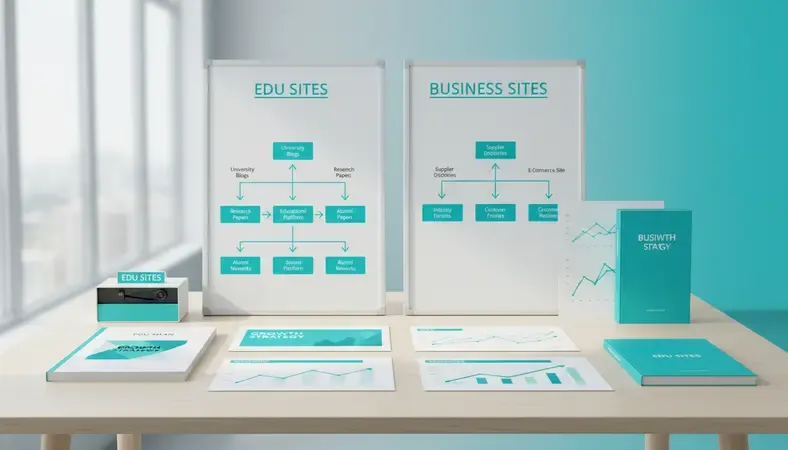
Understanding Your Link Building Options
The world of backlink acquisition isn't as simple as "get more links." Different types of websites offer distinct advantages, and understanding these differences is crucial for developing an effective strategy. When we talk about edu sites for backlinks versus general backlinks, we're comparing two fundamentally different approaches to link building.
Educational backlinks come from websites with .edu domains, which are restricted to accredited educational institutions in the United States. These include universities, colleges, community colleges, and other officially recognized educational organizations. The exclusivity of .edu domains creates an inherent scarcity that search engines and SEO professionals have historically valued.
General backlinks, on the other hand, encompass everything else in the digital landscape. This includes commercial websites (.com), non-profit organizations (.org), government sites (.gov), and international domains (.co.uk, .de, etc.). While this category is broader and more diverse, it also includes some of the most authoritative and relevant websites in any given industry.
Key Insight: The value of any backlink ultimately depends more on the linking site's authority, relevance, and editorial standards than on its domain extension alone.
The distinction between these two approaches goes beyond just the domain type. Educational institutions operate under different content creation models, have unique audiences, and follow distinct editorial processes compared to commercial websites. Understanding these operational differences helps explain why edu sites for backlinks have developed their reputation and when that reputation translates into real SEO value.
Educational websites typically publish content for academic purposes, student resources, faculty research, and institutional communication. This creates opportunities for links through guest lectures, research collaborations, student resource pages, and academic partnerships. The challenge lies in aligning your content and outreach with these academic contexts.
General websites operate across a much wider spectrum of purposes and audiences. From industry publications and news sites to blogs and resource directories, the variety creates more opportunities but also more competition. Success with general backlinks often depends on understanding specific niches and building relationships within particular industry ecosystems.
Comparing Link Building Methods
When evaluating edu sites for backlinks against general link building approaches, several key factors determine which strategy makes sense for your specific situation. Let's break down the most important comparison points.
Quick Comparison of Link Building Approaches
| Factor | Educational Backlinks | General Backlinks |
|---|---|---|
| Acquisition Difficulty | Very High – Limited opportunities, academic focus required | Medium to High – Varies by industry and approach |
| Time Investment | 3-6 months per successful link | 1-4 weeks per successful link |
| Cost per Link | $500-2000+ (including content creation) | $50-500 (varies widely by method) |
| Relevance Match | Often limited to educational/research topics | Can be perfectly matched to any niche |
| Authority Transfer | High domain authority, but may lack topical relevance | Variable, but can be highly relevant |
| Scalability | Very low – few opportunities exist | High – many opportunities across industries |
The fundamental difference in acquisition difficulty stems from the nature of educational institutions. Universities and colleges don't exist primarily to link to external websites. Their content serves academic purposes, which means your link request must align with genuine educational value. This creates a high barrier to entry but also ensures that successful links carry editorial weight.
Why It Matters: Educational institutions have built-in credibility with search engines because they can't be purchased like commercial domains and must meet accreditation standards to obtain .edu status.
General backlinks offer more flexibility in both approach and scalability. You can pursue industry publications, partner websites, resource pages, guest posting opportunities, and numerous other strategies. This variety means you can often find approaches that match your specific expertise and content strengths.
The time investment difference is particularly significant for resource-constrained businesses. While a single educational backlink might take months of relationship building and content creation, you could potentially secure multiple high-quality general backlinks in the same timeframe. For many businesses, this efficiency difference outweighs the theoretical authority boost from educational domains.
Cost considerations extend beyond direct expenses to include opportunity costs. The resources spent pursuing one educational backlink could potentially secure 5-10 quality general backlinks from relevant industry sources. The question becomes whether that single .edu link provides equivalent value to multiple targeted industry links.
Deep Dive: Educational Backlinks Strategy
Educational backlinks require a fundamentally different approach compared to traditional link building. Success depends on understanding how educational institutions operate and finding genuine ways to provide value to their academic communities.
The most effective educational link building strategies focus on creating resources that serve legitimate educational purposes. This might include developing case studies for business school curricula, providing data for research projects, offering guest lectures that get documented online, or creating tools that help students and faculty with their work.
Primary Educational Link Building Methods
-
Resource Page Inclusion: Many universities maintain resource pages for students and faculty in specific subjects. Getting listed requires creating genuinely useful resources that complement academic curricula.
-
Guest Lectures and Speaking: Universities frequently document guest speakers and lectures online. Speaking at educational events can naturally result in backlinks from event pages and department websites.
-
Research Collaboration: Partnering with academic researchers on studies or providing data for research projects can lead to citations and links from research publications and institutional pages.
-
Student Resource Development: Creating tools, guides, or resources specifically designed for students in relevant fields can earn links from career centers, department pages, and student resource sections.
-
Scholarship Programs: Establishing legitimate scholarship programs can result in links from financial aid offices and scholarship directories, though this requires significant financial commitment.
Expert Tip: The most successful educational link building focuses on long-term relationship building rather than quick wins. Establishing connections with faculty and administrators creates ongoing opportunities.
The content requirements for educational backlinks differ significantly from commercial link building. Academic audiences expect rigorous research, proper citations, and content that advances knowledge rather than simply promoting products or services. This means your content creation process must account for higher editorial standards and longer development timelines.
Educational institutions also move slowly compared to commercial websites. Decision-making processes involve multiple stakeholders, and content updates happen on academic schedules rather than business timelines. This pace requires patience and long-term planning that many businesses find challenging to maintain.
The relationship-building aspect of educational link building cannot be overstated. Unlike commercial websites where you might secure a link through a single email exchange, educational backlinks typically require multiple touchpoints, genuine value demonstration, and often in-person or virtual relationship building.
Deep Dive: General Backlinks Strategy
General backlink strategies offer significantly more flexibility and scalability compared to educational approaches. The key to success lies in understanding the diverse landscape of linking opportunities and matching your approach to your specific industry and resources.
Industry-relevant websites often provide the highest value general backlinks because they combine authority with topical relevance. A link from a well-respected industry publication or established company in your space can provide both SEO value and direct referral traffic from your target audience.
Primary General Link Building Methods
-
Industry Publication Guest Posts: Writing for trade publications and industry magazines provides links with high topical relevance and reaches your target audience directly.
-
Resource Page Outreach: Many commercial websites maintain resource pages for their audiences. These pages often accept suggestions for genuinely useful tools and content.
-
Broken Link Building: Identifying broken links on relevant websites and suggesting your content as a replacement creates value for the linking site while earning you a backlink.
-
Partnership and Collaboration Links: Working with complementary businesses, suppliers, or clients often naturally results in website mentions and links.
-
Digital PR and Newsjacking: Creating newsworthy content or commenting on industry trends can earn links from news sites and industry publications.
-
Tool and Resource Creation: Developing free tools, calculators, templates, or resources that other websites want to reference creates natural linking opportunities.
The content requirements for general backlinks vary widely depending on your target websites. Industry publications might want data-driven articles with original research, while resource pages might prefer practical tools or comprehensive guides. This variety allows you to leverage different content strengths and production capabilities.
Pro Tip: The most scalable general link building strategies focus on creating genuinely useful resources that other websites want to reference naturally, rather than relying solely on outreach.
Speed of acquisition represents one of the biggest advantages of general backlink strategies. While educational institutions operate on academic timelines, commercial websites often move quickly to publish relevant content and add valuable resources. This responsiveness allows for more agile link building campaigns that can adapt to market changes and opportunities.
The relationship dynamics in general link building also differ significantly. While you still need to build relationships, commercial websites are often more responsive to mutually beneficial arrangements. They understand business value propositions and can make linking decisions based on clear value exchanges.

The Importance of Strategic Link Building
Understanding when to pursue edu sites for backlinks versus general linking strategies requires looking beyond surface-level metrics like domain authority. The real value of any backlink strategy lies in how well it aligns with your specific business goals, target audience, and available resources.
Search engines have evolved to evaluate links based on multiple factors beyond just the domain extension. While .edu domains do carry inherent trust signals, a highly relevant link from an authoritative industry website can provide equal or greater SEO value, especially when it also drives qualified referral traffic.
The concept of topical authority has become increasingly important in modern SEO. Search engines want to see that your website is recognized as an authority within your specific industry or niche. This means that ten relevant links from industry websites might provide more ranking power than one .edu link that lacks topical connection to your business.
Key Takeaway: The most effective link building strategies combine authority, relevance, and scalability rather than focusing exclusively on any single factor like domain type.
For SaaS companies and indie hackers, the business impact of different link types extends beyond SEO rankings. Links that drive qualified traffic, generate leads, or increase brand awareness within your target market provide compound value that purely SEO-focused links cannot match.
The resource allocation question becomes critical when comparing these approaches. Educational link building requires significant time and often financial investment with uncertain outcomes. General link building, while still requiring effort, typically offers more predictable returns and faster feedback loops for strategy optimization.
Long-term sustainability also favors diversified link building approaches. Relying heavily on any single link type creates vulnerability if search engine algorithms change or if specific linking opportunities disappear. A balanced portfolio of high-quality links from various authoritative sources provides more stable SEO foundations.
The industry context matters significantly in this decision. B2B software companies might find more value in links from industry publications and partner websites than from educational institutions. Consumer brands might benefit more from lifestyle and news website coverage. Understanding your audience's information consumption patterns helps guide link building priorities.
Common Misconceptions About Educational Links
Several persistent myths about edu sites for backlinks continue to influence SEO strategies, often leading businesses to make suboptimal resource allocation decisions. Understanding the reality behind these misconceptions helps create more effective link building approaches.
The most common misconception is that .edu links automatically carry more SEO weight than other link types. While educational domains do have inherent trust signals, search engines evaluate links based on multiple factors including relevance, context, and the authority of the specific page linking to you, not just the domain extension.
Another widespread belief is that educational backlinks are impossible to acquire through legitimate means. While they're certainly more challenging than many general backlinks, genuine educational value creation can earn these links naturally. The key is understanding what constitutes legitimate value for academic audiences.
Expert Tip: Many businesses waste resources chasing educational backlinks that provide minimal relevance to their industry when they could earn more valuable links from authoritative industry sources.
The "nofollow" misconception also affects educational link building strategies. Many businesses assume that educational institutions primarily use nofollow links, making them less valuable for SEO. In reality, educational websites use a mix of follow and nofollow links based on editorial policies and context, just like other website types.
Some marketers believe that educational backlinks are permanent and never get removed. Educational websites actually update their content regularly, removing outdated resources and broken links. The longevity advantage of educational backlinks is often overstated compared to links from well-maintained commercial websites.
The cost-effectiveness myth suggests that educational backlinks provide better ROI because they're "free" to acquire. The reality is that legitimate educational link building requires significant time investment, content creation, and often relationship building that translates to substantial opportunity costs.
Finally, many businesses assume that educational backlinks work for all industries equally. The truth is that some industries have natural connections to educational institutions (like education technology or research tools), while others have minimal overlap with academic interests. Understanding this fit is crucial for strategy selection.

Best Practices for Link Building Success
Regardless of whether you choose to focus on edu sites for backlinks or pursue general linking strategies, certain principles determine success across both approaches. These best practices help maximize your return on investment and build sustainable link portfolios.
Quality always trumps quantity in modern link building. A single high-quality, relevant link from an authoritative source provides more value than multiple low-quality links from irrelevant websites. This principle applies equally to educational and general backlinks, though the definition of "quality" varies between the two approaches.
Content alignment represents a critical success factor. For educational backlinks, your content must serve genuine academic purposes and meet scholarly standards. For general backlinks, content should provide clear value to the target website's audience while showcasing your expertise. Understanding these different value propositions is essential.
Essential Link Building Practices
-
Audience Research: Understand the target website's audience and content preferences before creating outreach materials or content proposals.
-
Value-First Approach: Lead with how you can provide value to the linking website and its audience, rather than focusing on what you want to gain.
-
Relationship Building: Invest in genuine relationships with website owners, editors, and content managers rather than treating link building as purely transactional.
-
Content Quality Standards: Maintain high editorial standards regardless of the link type you're pursuing, as quality content increases acceptance rates and link longevity.
-
Diversification Strategy: Build links from multiple source types and industries to create a natural, robust link profile that withstands algorithm changes.
-
Performance Tracking: Monitor not just link acquisition but also the business impact of different link types to optimize your strategy over time.
Pro Tip: The most successful link builders treat each outreach as the beginning of a potential long-term relationship rather than a one-time transaction.
Timing considerations affect both educational and general link building success. Educational institutions often plan content updates around academic calendars, while commercial websites may have editorial calendars tied to business cycles or industry events. Understanding these patterns helps optimize outreach timing.
The follow-up process differs significantly between educational and general link building. Educational institutions may require multiple touchpoints over months, while commercial websites often respond more quickly to well-crafted initial outreach. Adjusting your follow-up cadence to match institutional cultures improves success rates.
Documentation and relationship management become increasingly important as your link building efforts scale. Maintaining detailed records of contacts, successful strategies, and relationship status helps identify opportunities for ongoing collaboration and prevents duplicate outreach efforts.
Making the Right Choice for Your Business
The decision between focusing on edu sites for backlinks versus pursuing general linking strategies should align with your specific business context, resources, and goals. Several key factors help determine which approach provides the best return on investment for your situation.
Industry relevance plays a crucial role in this decision. If your business operates in education technology, research tools, or academic services, educational backlinks provide both SEO value and direct access to your target audience. For most other industries, general backlinks from relevant commercial sources typically offer better alignment with business objectives.
Resource availability significantly impacts strategy viability. Educational link building requires substantial time investment, specialized content creation, and often long-term relationship building. Businesses with limited marketing resources might achieve better results focusing on more efficient general link building approaches.
Key Takeaway: The best link building strategy for your business depends more on your specific situation and goals than on any universal "best practice" about domain types.
Timeline expectations also influence strategy selection. If you need to see SEO improvements within 3-6 months, general link building typically provides faster results. Educational link building often requires 6-12 months or longer to show significant impact, making it more suitable for long-term SEO strategies.
Competitive landscape analysis helps inform this decision. If your competitors are successfully ranking with diverse general backlink profiles, you might not need educational backlinks to compete effectively. However, if your industry leaders have strong educational link profiles, you may need to pursue similar strategies.
Decision Framework for Link Building Strategy
| Your Situation | Recommended Approach | Key Considerations |
|---|---|---|
| Limited Resources | Focus on General Backlinks | Higher efficiency, faster results, more scalable |
| Education-Related Business | Balanced Approach (60% General, 40% Educational) | Natural audience overlap, higher relevance for edu links |
| Established Business with Time | Balanced Approach (70% General, 30% Educational) | Diversification benefits, long-term authority building |
| New Business Needing Quick Wins | Focus on General Backlinks | Faster feedback loops, more immediate impact |
| High-Authority Competitors | General Backlinks with Selective Educational | Match competitor strategies while maintaining efficiency |
The scalability question becomes particularly important for growing businesses. General link building strategies can typically scale with your business growth, while educational opportunities remain relatively fixed. Consider whether your chosen approach can grow with your business needs.
Brand positioning also influences this decision. If you want to establish thought leadership in your industry, general backlinks from industry publications might provide more brand exposure than educational links. However, if academic credibility supports your brand positioning, educational backlinks could provide unique value.
Common Questions About Link Building Strategies
Which type of backlink actually provides better SEO value?
The SEO value of backlinks depends more on relevance, authority, and editorial context than on domain type alone. A highly relevant link from an authoritative industry website often provides more SEO value than an irrelevant educational link. Modern search engines evaluate links based on multiple factors including the linking page's authority, topical relevance, and the context surrounding the link.
Educational backlinks do carry inherent trust signals because .edu domains require accreditation and cannot be purchased commercially. However, this advantage diminishes if the educational link lacks relevance to your business or comes from a low-authority page within the educational domain. The most valuable backlinks combine authority, relevance, and editorial endorsement regardless of domain type.
How long does it typically take to acquire educational versus general backlinks?
Educational backlinks typically require 3-6 months from initial outreach to successful placement, with some taking even longer due to academic decision-making processes and content update schedules. This timeline includes relationship building, content creation, and the institutional approval processes common at educational organizations.
General backlinks can often be acquired in 1-4 weeks, depending on the target website and your approach. Commercial websites typically respond faster to outreach, make quicker editorial decisions, and publish content on more frequent schedules. This efficiency advantage allows for more agile link building campaigns and faster strategy optimization.
Are educational backlinks worth the extra effort and cost?
Educational backlinks justify the additional effort when they provide genuine relevance to your business and audience. For education technology companies, research tool providers, or businesses targeting academic markets, educational backlinks offer both SEO value and direct audience access that justifies the investment.
For most other businesses, the opportunity cost of educational link building often exceeds the benefits. The resources required to secure one educational backlink could typically secure 5-10 relevant general backlinks from industry sources. Unless educational backlinks provide unique strategic value for your specific situation, general link building usually offers better ROI.
Can I effectively combine both strategies?
Yes, combining educational and general backlink strategies can provide portfolio diversification benefits while maximizing your link building efficiency. The optimal mix depends on your industry, resources, and competitive landscape. Most businesses benefit from allocating 70-80% of link building resources to general strategies while selectively pursuing educational opportunities that offer clear relevance and value.
A combined approach allows you to capture the trust signals of educational backlinks while maintaining the scalability and relevance of general link building. This strategy also provides protection against algorithm changes that might affect one link type more than others.
How do I know if my industry is suitable for educational link building?
Industries with natural academic connections typically see the best results from educational link building efforts. This includes education technology, research tools, academic software, textbook publishers, and professional development services. If your target audience includes students, faculty, or educational administrators, educational backlinks provide both SEO and direct marketing value.
Industries with limited academic overlap, such as local services, e-commerce, or consumer products, typically achieve better results focusing on general backlink strategies. However, even businesses without obvious educational connections might find opportunities through scholarship programs, research partnerships, or student resource development if they have sufficient resources for long-term relationship building.
Wrapping Up
Choosing between edu sites for backlinks and general linking strategies isn't about finding a universal best practice—it's about matching your approach to your specific business context and resources. While educational backlinks offer unique trust signals and can provide valuable authority, they require significant time investment and work best for businesses with natural academic connections. General backlinks, though more varied in quality, typically offer better scalability, faster results, and more precise audience targeting for most businesses. The most successful link building strategies often combine both approaches strategically, focusing resources where they'll generate the greatest return on investment. Get started with RankLoop to develop a link building strategy that matches your specific needs and goals. Ready to get started? Visit RankLoop to learn more.