Author: rankerandy

  • Content vs Links: Which Drives Better SEO Results?

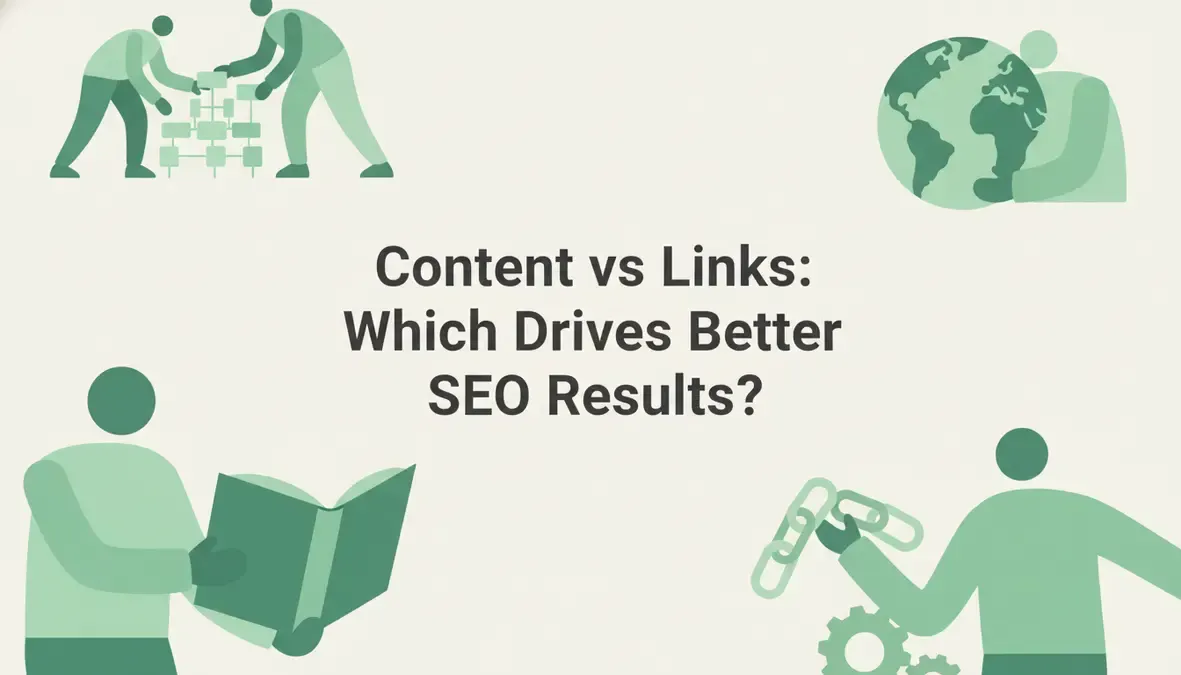
    Content vs Links: Which Drives Better SEO Results?

    When it comes to SEO success, the eternal debate centers around two fundamental pillars: high-quality content and strategic link building. For SaaS founders and indie hackers, this isn’t just an academic discussion—it’s a critical business decision that impacts organic traffic, user acquisition, and revenue growth. The link building versus content creation dilemma has shaped SEO strategies for over two decades, yet the answer isn’t as straightforward as choosing one over the other.

    Both content and the link building serve distinct but interconnected roles in search engine optimization. Comprehensive Comparison Content provides the foundation—the substance that search engines crawl, index, and serve to users. Meanwhile, the link building acts as the authority signal, telling search engines that other websites trust and value your content enough to reference it. The most successful SEO strategies don’t pit these elements against each other but rather integrate them into a cohesive approach.

    This comprehensive comparison will examine both strategies across multiple dimensions: implementation complexity, resource requirements, timeline to results, scalability, and long-term sustainability. We’ll explore when each approach makes sense, how they complement each other, and provide a framework for making the right choice based on your specific situation and goals.

    Understanding Your SEO Strategy Options

    The modern SEO landscape offers multiple pathways to search engine visibility, but two approaches dominate the conversation among growth-focused businesses. Content-driven SEO focuses on creating valuable, comprehensive resources that naturally attract both users and search engines. This approach emphasizes topical authority, user experience, and answering search intent through well-crafted articles, guides, and resources.

    Hero

    The link building approach, conversely, prioritizes acquiring high-quality backlinks from authoritative websites to boost domain authority and search rankings. This strategy involves outreach, relationship building, and earning citations from relevant industry publications, blogs, and websites. The link building encompasses everything from guest posting and digital PR to broken link building and resource page placements.

    Why It Matters: Your choice between content-first and link-first strategies determines not just your SEO tactics, but your entire resource allocation, team structure, and growth timeline.

    Understanding these approaches requires recognizing that neither exists in complete isolation. Content without promotion rarely achieves its full potential, while the link building without quality content to support it often leads to short-term gains followed by penalties or ranking drops. The most successful companies typically start with one primary focus while gradually incorporating elements of the other.

    Content-Driven SEO Fundamentals

    Content-driven SEO builds organic visibility through comprehensive, valuable resources that naturally attract both users and search engines. This approach focuses on creating pillar content, topic clusters, and supporting articles that establish topical authority within your niche. The strategy assumes that exceptional content will naturally earn links, social shares, and user engagement over time.

    The content authority approach requires deep understanding of your target audience’s search behavior, pain points, and information needs. Success depends on consistently publishing well-researched, actionable content that genuinely helps users solve problems or make decisions. This might include detailed guides, comparison articles, case studies, and educational resources that position your brand as a trusted industry resource.

    Link Building Strategy Essentials

    The link building strategy prioritizes acquiring high-quality backlinks from authoritative websites to boost domain authority and search rankings. This approach involves systematic outreach, relationship building, and earning citations from relevant industry publications, blogs, and websites. Success requires identifying link opportunities, crafting compelling pitches, and building genuine relationships with other website owners and content creators.

    Modern link building extends far beyond simple directory submissions or reciprocal link exchanges. Today’s effective strategies include guest posting on relevant industry blogs, securing mentions in industry roundups, participating in expert interviews, and creating linkable assets like research studies or tools that naturally attract citations. The key lies in earning links that provide genuine value to both the linking site and their audience.

    Detailed Comparison: Content vs Link Building

    To make an informed decision between content-focused and link-building strategies, we need to examine how each approach performs across critical business dimensions. This comparison will help you understand the practical implications of choosing one strategy over the other, or how to balance both effectively.

    Implementation Complexity and Learning Curve

    Content creation requires a different skill set compared to the link building, though both demand significant expertise to execute effectively. Content-driven SEO involves keyword research, topic planning, writing, editing, optimization, and promotion. The learning curve includes understanding search intent, content structure, on-page SEO, and user experience principles.

    The link building demands skills in relationship building, outreach, negotiation, and strategic thinking. Success requires understanding link quality metrics, identifying valuable prospects, crafting personalized pitches, and building long-term industry relationships. The complexity lies not just in the tactical execution but in developing the strategic thinking needed to identify and pursue the most valuable opportunities.

    Pro Tip: Content creation skills are generally more transferable across marketing channels, while link building expertise is highly specialized but can yield faster results when executed correctly.

    From a team perspective, content creation often requires writers, editors, designers, and SEO specialists. The link building typically needs outreach specialists, relationship managers, and strategic thinkers who understand the nuances of different industries and publications. Many companies find it easier to build internal content capabilities while outsourcing specialized link building activities.

    Timeline and Results Expectations

    Understanding the timeline for results is crucial for setting realistic expectations and making informed strategic decisions. Content-driven SEO typically follows a compound growth pattern, starting slowly but accelerating as your content library and topical authority grow. Most businesses see initial traction within 3-4 months, meaningful traffic growth by 6-8 months, and significant momentum after 12-18 months of consistent publishing.

    The link building often delivers faster initial results, with individual high-quality links potentially boosting rankings within weeks or months. However, the impact can be more variable and dependent on the specific links acquired. A single high-authority link might immediately improve rankings for target keywords, while a campaign of lower-authority links might take months to show cumulative impact.

    Key Insight: Content strategies build momentum over time, while link building can provide more immediate but variable results. The most successful approaches combine both for optimal timing and sustainability.

    The compounding effect of content becomes apparent over longer timeframes. Each new piece of content can potentially rank for multiple keywords, attract natural links, and support other content pieces through internal linking. This creates an accelerating return on investment that continues growing even when new content publication slows.

    Conversely, the link building results can plateau without ongoing effort. Links provide an immediate authority boost, but maintaining and improving rankings typically requires continuous link acquisition. The challenge lies in sustaining the quality and volume of links needed to compete in increasingly competitive markets.

    Short-Term vs Long-Term Impact

    Short-term impact varies significantly between these approaches. The link building can deliver immediate ranking improvements, especially for specific target keywords. A well-placed link from a high-authority site can boost rankings within days or weeks, making it attractive for businesses needing quick wins or working with tight deadlines.

    Content creation typically requires more patience for initial results but offers more sustainable long-term growth. Individual pieces might take months to gain traction, but successful content can continue attracting traffic and links for years. The cumulative effect of a strong content library creates lasting competitive advantages that become increasingly difficult for competitors to replicate.

    Pros and Cons Analysis

    Content-Driven SEO Advantages

    Content-focused strategies offer several compelling advantages that make them attractive for long-term growth. The most significant benefit is sustainability—quality content continues delivering value long after publication. Unlike paid advertising or temporary link building campaigns, content assets appreciate over time as they accumulate social signals, natural links, and search engine trust.

    Content authority building also provides compound returns on investment. Each new piece of content can support and enhance existing content through internal linking, topic clustering, and comprehensive coverage of user needs. This creates a virtuous cycle where new content performs better because of existing content, while older content gets renewed relevance through strategic updates and interlinking.

    • Sustainable Growth: Content continues working 24/7 without ongoing costs
    • Brand Building: Positions your company as a trusted industry resource
    • Multi-Channel Benefits: Content supports social media, email marketing, and sales efforts
    • Predictable Costs: Budget planning is straightforward with consistent content creation
    • Compound Returns: Each piece supports and enhances other content pieces
    • Natural Link Attraction: Quality content earns links organically over time

    Content Strategy Limitations

    Despite its advantages, content-driven SEO faces significant challenges that can limit its effectiveness in certain situations. The most notable limitation is the time investment required to see meaningful results. Many businesses struggle with the 6-12 month timeline needed to build content authority, especially when facing immediate competitive pressures or growth targets.

    Content creation also requires substantial ongoing investment in research, writing, editing, and promotion. The costs can escalate quickly when targeting competitive keywords that require comprehensive, high-quality content to rank effectively. Additionally, content alone may not be sufficient in highly competitive markets where established competitors already dominate search results.

    • Slow Initial Results: Requires patience and consistent investment before seeing returns
    • High Content Volume Needs: Competitive markets require substantial content libraries
    • Ongoing Resource Requirements: Success demands consistent publishing and updates
    • Difficulty in Competitive Markets: Hard to break through when competitors have established authority

    Link Building Advantages

    The link building offers distinct advantages that make it particularly valuable in specific scenarios. The most compelling benefit is speed—quality links can improve rankings within weeks, making this approach ideal for businesses needing faster results or working in time-sensitive markets.

    Process image

    Link building also provides more direct control over SEO outcomes. While content success depends on user engagement and search algorithm preferences, link acquisition allows for targeted improvements to specific pages and keywords. This precision makes the link building valuable for supporting product launches, seasonal campaigns, or competitive keyword battles.

    • Faster Results: Quality links can improve rankings within weeks
    • Targeted Impact: Direct control over which pages and keywords to boost
    • Competitive Advantage: Can quickly close authority gaps with competitors
    • Measurable ROI: Individual links provide clear value attribution
    • Strategic Flexibility: Can adapt quickly to algorithm changes or market shifts

    Link Building Limitations

    The link building faces several challenges that can limit its effectiveness and sustainability. The most significant concern is risk—aggressive or low-quality link building can result in search engine penalties that devastate organic traffic. Google’s algorithm updates increasingly focus on link quality, making it essential to maintain high standards throughout all link building activities.

    Resource intensity presents another major challenge. Effective link building requires specialized skills, tools, and ongoing relationship management. The success rate for outreach campaigns typically ranges from 1-10%, meaning substantial effort may be needed to secure each quality link. This unpredictability makes budgeting and timeline planning more difficult compared to content creation.

    Expert Tip: The most successful link building strategies focus on building genuine relationships and providing value to linking sites, rather than pursuing links purely for SEO benefit.

    • Risk of Penalties: Poor quality links can harm search rankings
    • Unpredictable Results: Success rates vary widely across campaigns and industries
    • Relationship Dependency: Success relies on building and maintaining industry connections
    • Ongoing Effort Required: Links need continuous acquisition to maintain competitive advantage
    • Higher Skill Requirements: Demands specialized expertise in outreach and relationship building

    When to Choose Each Strategy

    Selecting between content-driven and link-focused strategies depends on multiple factors including your business stage, competitive landscape, resources, and timeline constraints. Understanding these decision factors helps ensure your chosen approach aligns with your specific situation and goals.

    Ideal Scenarios for Content-First Approach

    Content-driven strategies work exceptionally well for businesses with longer-term growth horizons and the resources to invest consistently in quality content creation. This approach is particularly effective for SaaS companies and indie hackers who can leverage their expertise to create genuinely valuable resources for their target audience.

    Startups and growing businesses often benefit from content-first strategies because they build lasting assets while establishing thought leadership. If you’re in a niche where you can provide unique insights, practical advice, or comprehensive guides that competitors haven’t addressed, content creation offers an excellent path to differentiation and authority building.

    • Long-term Growth Focus: When you can invest 12-18 months building content authority
    • Expertise Advantage: You have unique knowledge or insights to share
    • Limited Outreach Capacity: Small teams without dedicated relationship builders
    • Brand Building Priority: Establishing thought leadership is a key business goal
    • Predictable Budget Needs: Prefer consistent monthly costs over variable campaign expenses
    • Multi-Channel Strategy: Content supports other marketing efforts beyond SEO

    Why It Matters: Content-first strategies work best when you can commit to consistent, long-term investment and have expertise that naturally translates into valuable content for your audience.

    Optimal Situations for Link Building Focus

    The link building becomes the preferred strategy when you need faster results, have established content that needs promotion, or operate in highly competitive markets where content alone isn’t sufficient. This approach works particularly well for businesses with dedicated outreach resources or those targeting specific, high-value keywords.

    Companies with existing content libraries often find the link building provides the fastest path to improved rankings. Rather than creating new content from scratch, you can focus on promoting and earning links to your best existing pages. This strategy is especially effective when you have comprehensive resources that competitors are already linking to.

    • Time-Sensitive Goals: Need ranking improvements within 3-6 months
    • Existing Quality Content: Have valuable content that needs promotion and authority
    • Competitive Markets: Content alone isn’t sufficient to compete with established players
    • Specific Keyword Targets: Need to boost rankings for particular high-value terms
    • Outreach Capabilities: Have team members skilled in relationship building
    • Product Launch Support: Need immediate visibility for new products or services

    Decision Framework for Strategy Selection

    Making the right choice between content and link building requires evaluating your specific situation across multiple dimensions. Start by assessing your timeline constraints—if you need results within 6 months, the link building may be necessary. For longer-term growth horizons, content creation often provides better returns on investment.

    Resource evaluation is equally important. Consider not just your budget, but your team’s skills and capacity. Content creation requires consistent writing and optimization capabilities, while the link building demands relationship building and outreach expertise. Many successful companies start with their team’s natural strengths and gradually build capabilities in the complementary area.

    Market analysis should inform your decision as well. In highly competitive markets with established players, pure content strategies may struggle to gain traction without supporting link building efforts. Conversely, in emerging niches or markets with poor existing content, a content-first approach can quickly establish dominance.

    Hybrid Approach: Combining Both Strategies

    The most successful SEO strategies often combine elements of both content creation and the link building, creating synergistic effects that exceed the sum of their parts. This hybrid approach leverages content as the foundation while using strategic link building to accelerate growth and competitive positioning.

    Best practices

    A well-executed hybrid strategy starts with content creation to establish the foundation, then uses that content as the basis for link building outreach. This approach provides link builders with valuable assets to promote while ensuring that acquired links point to genuinely useful resources that provide value to the linking site’s audience.

    Implementing an Integrated Strategy

    Successful integration requires careful coordination between content creation and link building activities. The most effective approach involves creating linkable assets—comprehensive guides, original research, or valuable tools—specifically designed to attract natural links while serving user needs. These assets become the foundation for targeted outreach campaigns.

    The integrated approach typically follows a structured timeline: content research and creation in months 1-2, followed by promotion and link building in months 3-4, then analysis and optimization in month 5-6. This cycle repeats with new content while previous pieces continue generating results through both organic discovery and ongoing link acquisition.

    • Phase 1: Research and create comprehensive, linkable content assets
    • Phase 2: Launch targeted outreach campaigns promoting the new content
    • Phase 3: Analyze results and optimize both content and outreach approaches
    • Phase 4: Scale successful tactics while testing new content and link opportunities

    Pro Tip: The most effective hybrid strategies use content creation to identify link opportunities—research for content pieces often reveals potential linking partners and collaboration opportunities.

    Making the Right Choice for Your Business

    Choosing between content-driven SEO, link building focus, or a hybrid approach requires honest assessment of your business situation, resources, and goals. The right strategy aligns with your team’s capabilities, market position, and growth timeline while setting realistic expectations for results and investment requirements.

    Start by evaluating your current position. If you’re starting with minimal content and domain authority, a content-first approach often provides the strongest foundation. However, if you have quality content but lack visibility, strategic link building can accelerate your growth significantly. Companies with established content libraries and some authority often benefit most from hybrid approaches.

    Consider your competitive landscape carefully. In markets with strong incumbents, pure content strategies may require years to gain meaningful traction. The link building can help level the playing field more quickly, though it requires higher investment and specialized skills. Emerging markets or niches with poor existing content favor content-first strategies that can quickly establish dominance.

    Key Takeaway: The most successful SEO strategies align with your business’s natural strengths while addressing market realities. Don’t choose a strategy simply because it worked for another company—choose what works for your specific situation.

    Timeline and Expectation Setting

    Realistic timeline expectations prevent frustration and ensure adequate resource allocation. Content-driven strategies typically require 6-12 months to show meaningful results, with compound growth accelerating after the first year. Plan for consistent investment during this period without expecting immediate returns.

    The link building can show faster initial results but requires ongoing effort to maintain momentum. Individual links may improve rankings within weeks, but building sustainable link acquisition systems takes months of relationship building and process refinement. Factor this timeline into your planning and resource allocation.

    Conclusion image

    Measuring Success and Optimization

    Success metrics differ between content and link building strategies, requiring tailored measurement approaches. Content success metrics include organic traffic growth, keyword rankings, time on page, and natural link acquisition over time. These metrics often show gradual improvement with occasional spikes when individual pieces gain traction.

    Link building success focuses on domain authority improvements, specific keyword ranking gains, and referral traffic from acquired links. Track both the quantity and quality of links, measuring their impact on target keywords and overall domain performance. The best measurement frameworks combine leading indicators (content published, links acquired) with lagging indicators (traffic, rankings, conversions).

    Common Questions About Content vs Link Building

    Which Strategy Delivers Faster Results?

    The link building typically delivers faster initial results compared to content-driven strategies. Quality links can improve rankings within weeks or months, while content usually requires 6-12 months to build meaningful traction. However, this speed advantage comes with trade-offs in sustainability and predictability.

    Content strategies start slower but often accelerate over time as your content library and topical authority grow. The compound effect means that content published months ago continues generating value, while individual links may lose impact over time without ongoing acquisition efforts.

    For businesses needing immediate results, a hybrid approach often works best—creating quality content while simultaneously pursuing strategic link opportunities to accelerate initial growth.

    How Much Should I Budget for Each Approach?

    Budget requirements vary significantly based on your market, competition, and quality standards. Content-driven strategies typically require $3,000-$10,000 monthly for consistent, high-quality content creation including research, writing, editing, and optimization. This investment scales with content volume and complexity.

    The link building costs are more variable, ranging from $2,000-$15,000 monthly depending on target quality and volume. Higher-authority links require more investment in relationship building and content creation for outreach. Many businesses find success with project-based link building campaigns rather than ongoing monthly investments.

    Consider starting with smaller budgets to test effectiveness before scaling. A $5,000 monthly budget can support either a solid content strategy or targeted link building campaigns, allowing you to validate your chosen approach before making larger commitments.

    Can Small Teams Handle Both Strategies Effectively?

    Small teams can manage hybrid strategies effectively with proper planning and tool selection. The key is starting with one primary focus while gradually building capabilities in the complementary area. Most successful small teams begin with content creation since it requires fewer specialized relationships and tools.

    Focus on creating systems and processes that maximize efficiency. Content calendars, templates, and optimization checklists help streamline content creation. For link building, start with relationship building in your existing network before expanding to cold outreach campaigns.

    Consider outsourcing specialized activities that require significant time investment or expertise. Many small teams handle content strategy and creation internally while outsourcing technical link building or large-scale outreach campaigns.

    How Do Algorithm Updates Affect Each Strategy?

    Content-driven strategies generally prove more resilient to algorithm updates since they focus on user value and comprehensive topic coverage. Google’s algorithm increasingly favors content that demonstrates expertise, authority, and trustworthiness—qualities that well-executed content strategies naturally develop over time.

    The link building faces higher risk from algorithm updates, particularly those targeting manipulative or low-quality linking practices. However, white-hat link building focused on genuine relationship building and value creation typically weathers algorithm changes well.

    Diversification provides the best protection against algorithm volatility. Hybrid strategies that combine quality content with natural link building create multiple ranking signals that reduce dependence on any single factor.

    What’s the ROI Difference Between These Approaches?

    ROI calculations differ significantly between content and link building due to their different cost structures and timelines. Content creation provides compound returns—initial investment continues generating value for months or years. Once published, quality content requires minimal ongoing costs while potentially attracting traffic, leads, and natural links indefinitely.

    The link building often provides more immediate ROI but requires ongoing investment to maintain results. Individual high-quality links can justify their cost within months through improved rankings and traffic. However, sustaining these improvements typically requires continued link acquisition.

    Long-term ROI generally favors content strategies due to their compound nature and lower ongoing costs. However, businesses needing faster returns or operating in highly competitive markets may find the link building provides better short-term ROI despite higher ongoing costs.

    Key Takeaways

    The choice between content-driven SEO and the link building isn’t binary—both strategies offer distinct advantages that serve different business needs and market situations. Content creation provides sustainable, compound growth that builds lasting competitive advantages, while the link building delivers faster results and targeted improvements that can accelerate growth in competitive markets. The most successful businesses often combine both approaches strategically, using content as the foundation while leveraging link building to amplify results and accelerate timeline to success. Get started with RankLoop to see how the right SEO strategy can transform your organic growth. Ready to get started? Visit RankLoop to learn more.

  • What Are Back Links? Complete SEO Guide

    What Are Back Links? Complete SEO Guide

    Ever wondered why some websites consistently rank at the top of Google while others struggle to get noticed? The answer often comes down to one crucial factor: back links. These digital endorsements act as votes of confidence from one website to another, telling search engines which content deserves to rank higher.

    Back links are incoming links from external websites that point to pages on your site. Unlike Paid Think of them as recommendations in the digital world—when a reputable website links to your content, it’s essentially vouching for your credibility and expertise. For SaaS founders and indie hackers building their online presence, understanding back links isn’t just helpful—it’s essential for competing in today’s search landscape.

    Hero

    This guide will walk you through everything you need to know about back links, from the fundamental concepts to advanced strategies that can transform your search rankings. You’ll discover how back links actually work, what makes some more valuable than others, and practical approaches to building a strong link profile that drives real results for your business.

    What Are Back Links?

    Back links, also known as inbound links or incoming links, are hyperlinks from external websites that direct users to pages on your website. When another site includes a clickable link that leads to your content, that’s a back link. These connections form the backbone of how search engines understand the relationships between different websites across the internet.

    Hero

    The concept stems from the early days of the web, when search engines needed a way to determine which pages were most valuable and trustworthy. Google’s founders developed the PageRank algorithm based on the idea that links represent endorsements—if many high-quality sites link to a particular page, that page must contain valuable information worth sharing.

    Why It Matters: Back links serve as the internet’s recommendation system. Just like word-of-mouth referrals in business, links from respected websites carry significant weight in determining your site’s authority and search rankings.

    The Anatomy of a Back Link

    Every back link consists of several key components that influence its value and impact on your SEO. The anchor text is the clickable text that users see, which should ideally contain relevant keywords related to your content. The source domain refers to the website providing the link, and its authority and relevance directly affect the link’s value.

    The link context matters tremendously—a back link embedded within relevant, high-quality content carries more weight than one placed in a footer or sidebar. Search engines analyze the surrounding text to understand the relationship between the linking page and your content.

    Link attributes also play a crucial role. Most back links are “dofollow” by default, meaning they pass authority to your site. However, some links include a “nofollow” attribute, which tells search engines not to count the link for ranking purposes, though they may still drive valuable traffic.

    Types of Back Links by Source

    Understanding different back link sources helps you prioritize your link building efforts effectively. Editorial links come from journalists, bloggers, or content creators who naturally reference your work because it adds value to their articles. These represent the gold standard of back links because they’re earned through merit rather than requested.

    Resource page links appear on curated lists of helpful tools, guides, or websites within your industry. These pages specifically exist to help users find valuable resources, making them excellent targets for link building outreach.

    Guest posting links result from contributing content to other websites in exchange for author attribution and links back to your site. While effective when done properly, this approach requires careful attention to quality and relevance to avoid penalties.

    Directory and listing links come from business directories, industry-specific databases, or local listing sites. While less powerful than editorial links, they can provide valuable local SEO benefits and help establish your online presence.

    The Quality vs. Quantity Debate

    Modern SEO prioritizes link quality over quantity, but understanding this distinction requires looking beyond simple metrics. A single link from a highly authoritative site in your industry can be worth more than dozens of links from low-quality directories or unrelated websites.

    domain authority serves as one indicator of link quality, representing how well a website is likely to rank in search results. However, relevance often trumps pure authority—a link from a smaller but highly relevant industry publication may provide more value than one from a major but unrelated news site.

    Content quality surrounding the link also influences its value. Links embedded within comprehensive, well-researched articles typically carry more weight than those in thin or promotional content. Search engines have become sophisticated at evaluating the overall quality and trustworthiness of linking pages.

    The natural link profile concept emphasizes that healthy websites typically receive a mix of different link types from various sources. A profile consisting entirely of one type of link—such as guest posts or directory listings—may appear manipulative to search engines.

    How Back Links Work in Search Algorithms

    Search engines use back links as one of the most important ranking factors, but the process involves complex algorithms that evaluate multiple aspects of each link. When a search engine discovers a new back link to your site, it doesn’t simply add one point to your score—instead, it analyzes the link within a broader context of authority, relevance, and trustworthiness.

    The PageRank algorithm, while no longer Google’s sole ranking method, still influences how link authority flows through the web. Each page has a certain amount of “link juice” or authority that it can pass to other pages through outbound links. The more authoritative the linking page, the more value it can transfer to your site.

    Link equity distribution works like a voting system where not all votes carry equal weight. A link from a page with high authority and few outbound links passes more value than one from a page with lower authority and many outbound links. This is why securing links from selective, high-quality sources proves more valuable than mass link building.

    The Authority Transfer Process

    When search engines evaluate back links, they consider the topical authority of the linking domain. A link from a website that consistently publishes high-quality content about your industry carries more weight than one from a general or unrelated site. This relevance factor helps search engines understand which sites truly deserve to rank for specific topics.

    Trust signals also play a crucial role in how link value transfers. Search engines evaluate factors like the linking site’s age, consistency of content publication, user engagement metrics, and overall reputation. Sites with strong trust signals can pass more authority through their outbound links.

    The link graph analysis process examines not just individual links but the entire network of connections between websites. Search engines look for natural linking patterns and can identify manipulative schemes where groups of sites artificially link to each other to inflate rankings.

    Key Insight: Search engines don’t just count back links—they evaluate the entire ecosystem surrounding each link, including the linking site’s authority, the relevance of the connection, and the natural patterns of link acquisition over time.

    Temporal Factors in Link Evaluation

    The timing of link acquisition significantly impacts how search engines interpret back links. A sudden influx of many links in a short period can trigger algorithmic scrutiny, while a steady, natural growth pattern appears more organic and trustworthy.

    Link age also influences value, with older, established links often carrying more weight than newly acquired ones. This temporal factor rewards sites that have consistently earned links over time rather than those attempting to manipulate rankings quickly.

    Link velocity refers to the rate at which a site acquires new back links. Natural link building typically shows variation in this velocity, with spikes corresponding to content publication, PR efforts, or viral moments, followed by periods of slower growth.

    Algorithmic Updates and Link Evaluation

    Search engines continuously refine their approach to evaluating back links through algorithmic updates. Penguin updates specifically target manipulative link building practices, penalizing sites that engage in link schemes or acquire low-quality links en masse.

    Machine learning integration has made search engines more sophisticated at identifying natural versus artificial linking patterns. These systems can detect subtle signals that indicate whether links were earned organically or acquired through manipulation.

    Real-time processing means that the impact of new back links can be felt more quickly than in the past, but it also means that negative link impacts can affect rankings faster when low-quality links are detected.

    Key Components of Effective Back Links

    Understanding what makes a back link valuable requires examining several interconnected components that search engines evaluate when determining link quality and authority transfer. These elements work together to create a comprehensive picture of each link’s worth and impact on your search rankings.

    Domain Authority and Trust Metrics

    Domain authority represents a website’s overall strength and likelihood to rank well in search results. While not a direct Google ranking factor, it serves as a useful proxy for understanding a site’s potential to pass valuable link equity. High-authority domains have typically earned their status through consistent publication of quality content, strong user engagement, and natural link acquisition over time.

    Trust flow and citation flow provide additional dimensions for evaluating link sources. Trust flow measures the quality of links pointing to a site, while citation flow measures the quantity. The ideal linking domains show high trust flow relative to their citation flow, indicating they’ve earned links from reputable sources rather than engaging in manipulative practices.

    Domain age and history also influence link value. Established domains with clean histories and consistent content publication patterns typically provide more valuable links than newer sites or those with questionable backgrounds.

    Anchor Text Optimization

    The anchor text of back links serves as a crucial relevance signal, helping search engines understand what your content is about and which keywords it should rank for. However, modern SEO requires a nuanced approach to anchor text that prioritizes natural variation over keyword stuffing.

    Branded anchors using your company name or website URL appear most natural and help establish brand recognition. These should comprise a significant portion of your link profile, as they represent how people would naturally reference your business.

    Exact match anchors containing your target keywords can be powerful but should be used sparingly to avoid over-optimization penalties. A small percentage of exact match anchors appears natural, but too many can trigger algorithmic filters.

    Partial match and related keyword anchors provide the sweet spot for many link building campaigns. These include variations of your target keywords, related terms, or phrases that naturally incorporate your keywords within broader context.

    Content Context and Relevance

    The surrounding content quality dramatically influences link value. Back links embedded within comprehensive, well-researched articles carry more weight than those in thin content or obvious link exchanges. Search engines analyze the entire page to understand the context and value of the linking content.

    Topical relevance between the linking content and your target page strengthens the connection’s value. A link from an article about SEO strategies to your link building guide makes perfect sense, while a link from a cooking blog would appear less natural and valuable.

    Editorial placement within the main content body typically provides more value than links in sidebars, footers, or author bios. Search engines understand that editorial links represent genuine endorsements rather than standard website elements.

    Link Placement and Technical Factors

    Above-the-fold placement can influence link value, as these positions typically receive more user attention and clicks. However, the most important factor is that links appear naturally within the content flow rather than being artificially inserted.

    Internal link structure of the linking page affects how much authority can be passed. Pages with clean, logical internal linking structures and reasonable numbers of outbound links typically provide better value than those with excessive or poorly organized links.

    Page loading speed and technical health of linking sites influence their ability to pass authority effectively. Search engines may devalue links from sites with poor technical performance, as these factors affect user experience and overall site quality.

    Comparison of Back Link Types

    Link Type Authority Transfer Acquisition Difficulty Scalability Risk Level
    Editorial Links Very High High Low Very Low
    Resource Page Links High Medium Medium Low
    Guest Post Links Medium-High Medium High Medium
    Directory Links Low-Medium Low High Medium
    Forum/Comment Links Low Low Very High High

    This comparison helps prioritize link building efforts based on your resources and risk tolerance. Editorial links provide the highest value but require significant effort to earn, while directory links offer easier acquisition but lower impact.

    Pro Tip: Focus your link building efforts on earning a diverse mix of high-quality links rather than pursuing any single type exclusively. Natural link profiles show variety in sources, anchor text, and acquisition timing.

    Benefits and Strategic Value of Back Links

    Back links deliver multiple layers of value that extend far beyond simple search engine rankings. For SaaS founders and indie hackers, understanding these comprehensive benefits helps justify the investment in link building and guides strategic decision-making about where to focus limited resources.

    When considering the effectiveness of backlinks in boosting your website’s SEO, it’s also important to evaluate how your site is built. The choice between using website builders and custom code can significantly influence your site’s performance and link-building strategies. For a deeper understanding of these options, check out this article on Website Builders vs Custom Code, which can help you make an informed decision that supports your backlink efforts.

    Direct SEO and Ranking Benefits

    Improved search visibility represents the most obvious benefit of quality back links. Pages with strong link profiles consistently rank higher for their target keywords, often dramatically outperforming competitors with weaker link authority. This improved visibility translates directly into increased organic traffic and business opportunities.

    Faster indexing and crawling occurs when search engines discover your content through back links from established sites. Instead of waiting for search bots to find your new pages through sitemaps or internal navigation, external links provide immediate pathways for discovery and indexing.

    Enhanced topical authority develops as you earn links from relevant, authoritative sources within your industry. Search engines begin to recognize your site as a trusted resource for specific topics, leading to improved rankings across related keyword clusters rather than just individual pages.

    The compound effect of link building means that early investments continue paying dividends over time. Unlike paid advertising that stops delivering results when you stop paying, quality back links continue providing value for months or years after acquisition.

    Traffic Generation and User Acquisition

    Referral traffic from back links often converts better than other traffic sources because users arrive with context and intent. When someone clicks a link embedded within relevant content, they’re already primed to engage with your material, leading to longer session durations and higher conversion rates.

    Audience expansion happens naturally as your content reaches new communities through strategic link placements. Each back link potentially exposes your brand to the linking site’s entire audience, creating opportunities for viral growth and organic sharing.

    Brand awareness building accelerates when your content appears on respected industry publications and resources. Even users who don’t immediately click through may remember your brand name, leading to direct searches and future engagement.

    Authority and Credibility Establishment

    Industry recognition comes from earning links from respected publications, thought leaders, and established businesses in your space. These endorsements signal to both search engines and potential customers that your business deserves attention and trust.

    Social proof amplification occurs when visible back links serve as public endorsements of your expertise and value proposition. Prospects researching your company may discover these links during due diligence, reinforcing their confidence in your business.

    Competitive differentiation emerges as you build link profiles that competitors struggle to replicate. High-quality editorial links and resource page placements create sustainable competitive advantages that persist over time.

    Long-term Business Impact

    Customer acquisition cost reduction results from improved organic visibility and referral traffic. As back links drive more qualified traffic to your site, the cost per acquisition for organic channels typically decreases compared to paid advertising.

    Brand equity development accelerates through consistent association with quality content and reputable websites. Over time, this builds valuable brand recognition that supports all marketing efforts and business development activities.

    Network effect creation happens as successful link building opens doors to additional opportunities. Publishers who link to your content may invite you to contribute guest posts, speak at events, or participate in other collaborative initiatives.

    Key Takeaway: The most successful SaaS companies and indie projects treat link building as a long-term investment in brand authority and market positioning, not just a short-term SEO tactic.

    Measurable Business Outcomes

    Revenue attribution from back link efforts can be tracked through analytics platforms that show the customer journey from initial referral to final conversion. Many businesses discover that link-driven traffic converts at higher rates than other sources.

    Market positioning improvements become evident as your content consistently appears in industry roundups, resource lists, and expert recommendations. This visibility reinforces your position as a market leader or innovative newcomer.

    Partnership opportunities often emerge from link building relationships. Publishers, fellow entrepreneurs, and industry experts who link to your content may become valuable business partners, advisors, or collaborators.

    The strategic value of back links compounds over time, creating sustainable competitive advantages that support long-term business growth and market leadership.

    Common Misconceptions About Back Links

    Many website owners and marketers hold outdated or incorrect beliefs about back links that can seriously harm their SEO efforts. Understanding these misconceptions helps avoid costly mistakes and focuses efforts on strategies that actually work in today’s search landscape.

    The “More Links Always Equal Better Rankings” Fallacy

    One of the most persistent myths suggests that acquiring as many back links as possible will automatically improve search rankings. This quantity-focused approach often leads to low-quality link building that can actually harm your site’s performance. Modern search algorithms prioritize link quality, relevance, and natural acquisition patterns over raw numbers.

    Link quality assessment has become increasingly sophisticated, with search engines evaluating factors like the linking site’s authority, content relevance, user engagement metrics, and overall trustworthiness. A single high-quality editorial link from a respected industry publication can provide more value than hundreds of directory or forum links.

    Penalty risks increase dramatically when sites focus solely on link quantity. Google’s Penguin algorithm specifically targets manipulative link building practices, potentially causing significant ranking drops for sites with unnatural link profiles.

    Why It Matters: Search engines have evolved to recognize natural linking patterns. Sites that earn links organically through valuable content and genuine relationships consistently outperform those using aggressive, quantity-focused tactics.

    The Reciprocal Link Exchange Misconception

    Many website owners believe that exchanging links with other sites represents a safe, effective link building strategy. While reciprocal linking isn’t automatically penalized, excessive link exchanges can appear manipulative and provide minimal SEO value.

    Natural linking patterns rarely involve perfect reciprocity. When two sites consistently link back and forth, especially with keyword-rich anchor text, search engines may discount these connections or view them as attempts to manipulate rankings.

    Value dilution occurs in reciprocal arrangements because each site passes authority while simultaneously receiving it, creating a net-neutral exchange that provides little ranking benefit. The time invested in reciprocal outreach often yields better returns when focused on earning one-way editorial links.

    Three-way exchanges and link wheels represent more sophisticated attempts to hide reciprocal relationships, but modern algorithms can detect these patterns and may penalize sites that participate in such schemes.

    The “Any Industry Link Is Valuable” Myth

    Some marketers believe that back links from any high-authority site provide equal value, regardless of topical relevance. This misconception leads to unfocused link building campaigns that waste resources on irrelevant opportunities.

    Topical authority plays a crucial role in link value assessment. Search engines evaluate whether the linking content relates to your target keywords and industry. A link from a cooking blog to your SaaS product page appears unnatural and provides minimal ranking benefit.

    Audience alignment matters for both SEO and traffic generation. Links from relevant industry sources bring qualified visitors who are more likely to engage with your content and convert into customers. Irrelevant links may drive traffic that immediately bounces, potentially harming your site’s engagement metrics.

    Contextual relevance within the linking content strengthens the connection’s value. A link naturally embedded within content about your topic area carries more weight than one arbitrarily placed in unrelated content, even from a high-authority domain.

    The “Paid Links Are Always Penalized” Misunderstanding

    While Google’s guidelines prohibit paid links that pass authority, many website owners incorrectly assume that any form of paid promotion will result in penalties. This oversimplification ignores legitimate advertising opportunities and proper disclosure practices.

    Sponsored content disclosure allows for paid promotional opportunities when properly marked with “nofollow” attributes or clear sponsorship labels. Many reputable publications offer sponsored content options that can drive valuable traffic and brand awareness without SEO risks.

    Advertising vs. editorial distinction helps clarify acceptable practices. Traditional display advertising, sponsored social media posts, and clearly marked promotional content differ from attempts to manipulate search rankings through undisclosed paid links.

    Value beyond SEO exists in many paid promotional opportunities. Even nofollow links can drive significant referral traffic, build brand awareness, and create networking opportunities that lead to future organic links.

    The “Anchor Text Optimization” Oversimplification

    Many link builders obsess over anchor text optimization, believing that exact-match keyword anchors always provide the most SEO value. This oversimplified view can lead to over-optimization that triggers algorithmic penalties.

    Natural anchor text distribution in healthy link profiles shows significant variety, including branded terms, generic phrases like “click here,” and contextual variations. Profiles dominated by exact-match keyword anchors appear manipulative to search engines.

    Branded anchor importance often gets overlooked in favor of keyword-rich alternatives. However, branded anchors help establish entity recognition and appear most natural in editorial contexts where authors reference companies or products by name.

    Context over keywords should guide anchor text decisions. The surrounding content and natural language flow matter more than forcing specific keyword phrases into anchor text positions where they don’t fit naturally.

    Expert Tip: Focus on earning links that make sense contextually rather than optimizing every anchor text opportunity. Natural, varied anchor text distributions typically perform better long-term than heavily optimized profiles.

    Best Practices for Building Quality Back Links

    Successful link building requires a strategic approach that prioritizes relationship building, content quality, and long-term value creation over quick wins and manipulative tactics. The most effective practitioners treat link building as an extension of their broader marketing and business development efforts.

    Content-Driven Link Attraction Strategies

    Comprehensive resource creation serves as the foundation for natural link attraction. When you publish in-depth guides, original research, or unique tools that genuinely help your target audience, other content creators naturally want to reference and link to these resources.

    Original data and research consistently attract high-quality editorial links because journalists, bloggers, and industry analysts need credible sources to support their articles. Conducting surveys, analyzing industry trends, or compiling unique datasets creates linkable assets that provide ongoing value.

    Interactive tools and calculators generate links because they solve specific problems for users while providing embeddable value for other websites. A well-designed ROI calculator or assessment tool can earn dozens of natural links as other sites reference or recommend it to their audiences.

    Visual content and infographics appeal to content creators who need engaging elements to enhance their articles. High-quality visual resources that summarize complex information or present data in accessible formats often earn links and social shares.

    Relationship-Based Outreach Approaches

    Industry networking through conferences, online communities, and professional associations creates natural opportunities for link building. When you build genuine relationships with peers, journalists, and thought leaders, link opportunities often emerge organically from these connections.

    Value-first outreach focuses on helping others before asking for anything in return. This might involve sharing relevant resources, providing expert commentary, or offering assistance with projects. These helpful interactions build goodwill that often leads to future link opportunities.

    Journalist relationship building requires consistent effort to become a trusted source for industry commentary and expertise. By providing timely, insightful responses to media queries and maintaining relationships with key reporters, you increase the likelihood of earning authoritative editorial links.

    Community participation in industry forums, social media groups, and online discussions helps establish your expertise while creating natural contexts for sharing relevant content. Active, helpful community members often earn organic links as others reference their contributions.

    Strategic Content Promotion Techniques

    Targeted email outreach to relevant website owners, bloggers, and journalists can effectively promote linkable content when done thoughtfully. Personalized messages that clearly explain the value proposition and relevance to the recipient’s audience typically achieve better response rates than generic templates.

    Social media amplification helps content reach broader audiences, increasing the chances that influential users will discover and link to your material. Strategic use of hashtags, tagging relevant accounts, and participating in industry conversations can extend your content’s reach significantly.

    Guest contribution opportunities allow you to share expertise with new audiences while earning relevant back links. Focus on publications that serve your target market and accept only opportunities where you can provide genuine value rather than purely promotional content.

    Resource page targeting involves identifying curated lists of tools, guides, or websites within your industry and reaching out to suggest your relevant content for inclusion. These pages specifically exist to help users find valuable resources, making them receptive to quality additions.

    Quality Control and Risk Management

    Link profile monitoring helps identify potentially harmful links before they impact your rankings. Regular audits using tools like Google Search Console, Ahrefs, or SEMrush can reveal low-quality or spammy links that should be disavowed.

    Anchor text diversity requires conscious effort to maintain natural variation in how others link to your content. While you can’t control all anchor text, you can influence it through the content you create and the context you provide for potential linkers.

    Acquisition velocity management involves pacing your link building efforts to appear natural rather than manipulative. Sudden spikes in link acquisition can trigger algorithmic scrutiny, so steady, consistent growth typically proves safer and more sustainable.

    Pro Tip: Track not just the quantity of links you earn but also their quality metrics, referral traffic, and impact on your target keyword rankings. This data helps refine your strategy and focus efforts on the most effective tactics.

    Measuring and Optimizing Link Building ROI

    Attribution tracking connects link building efforts to business outcomes by monitoring the customer journey from initial referral through conversion. This data helps justify continued investment in link building and identifies the most valuable link sources.

    Competitive analysis reveals gaps in your link profile compared to top-ranking competitors. Understanding where competitors earn their most valuable links can guide your own outreach priorities and uncover new opportunities.

    Long-term performance monitoring tracks how link building efforts impact overall organic visibility, branded search volume, and domain authority over time. These metrics help demonstrate the cumulative value of consistent link building efforts.

    Strategy refinement based on performance data ensures your link building efforts become more effective over time. Regular analysis of which tactics generate the highest-quality links and best business outcomes allows for continuous optimization of your approach.

    Advanced Link Building Strategies

    Sophisticated link building goes beyond basic outreach and content creation to leverage advanced tactics that create sustainable competitive advantages. These strategies require more investment and expertise but often deliver superior results for businesses willing to commit the necessary resources.

    Digital PR and Media Relations

    News-worthy content creation involves developing stories, studies, or announcements that naturally attract media attention and editorial coverage. This might include releasing original industry research, announcing significant product updates, or taking positions on trending industry topics.

    HARO and journalist query platforms provide systematic approaches to earning high-authority editorial links by responding to media requests. Success requires quick response times, relevant expertise, and the ability to provide quotable insights that enhance journalists’ stories.

    Press release optimization extends beyond traditional distribution to create linkable assets that continue generating value over time. Well-crafted press releases with embedded multimedia elements and compelling angles can earn pickup from multiple publications and bloggers.

    Industry award submissions and recognition programs offer opportunities to earn high-quality links from authoritative industry organizations. While competitive, these programs often provide significant credibility boosts and natural link building opportunities from announcement coverage.

    Technical and Data-Driven Approaches

    Broken link building identifies valuable linking opportunities by finding broken outbound links on relevant websites and suggesting your content as a replacement. This win-win approach helps site owners fix user experience issues while earning you relevant back links.

    Competitor backlink analysis reveals link building opportunities by examining where competitors earn their most valuable links. Tools like Ahrefs, SEMrush, or Majestic can identify potential targets for your own outreach efforts.

    Link reclamation strategies focus on earning links from mentions of your brand, products, or team members that don’t currently include links. Many websites mention companies without linking, creating opportunities for simple outreach to convert mentions into links.

    Historical content updating involves refreshing and improving older content pieces that previously earned links. Updated resources often attract new links while re-engaging existing linkers who may share the improved version.

    Partnership and Collaboration Strategies

    Strategic partnership announcements create natural link building opportunities when companies collaborate on products, services, or initiatives. Joint ventures, integration partnerships, and co-marketing agreements often generate coverage and links from both partners’ networks.

    Industry collaboration projects like joint research studies, shared resources, or community initiatives provide value to entire industries while creating link opportunities for all participants. These collaborative efforts often earn more attention than individual company initiatives.

    Expert roundup participation involves contributing insights to industry surveys, opinion pieces, or expert panels. While individual contributions may seem small, consistent participation builds recognition and creates multiple link opportunities over time.

    Conference and event speaking establishes expertise while creating natural contexts for earning links from event websites, attendee blogs, and industry coverage. Speaking opportunities often lead to ongoing relationships and additional link building possibilities.

    Content Scaling and Systematization

    Content hub development creates comprehensive resource centers that naturally attract links from multiple sources. These might include industry guides, tool directories, or knowledge bases that serve as go-to resources for specific topics.

    Linkable asset templates allow for systematic creation of content designed specifically to attract links. This might include recurring research reports, annual industry surveys, or regular analysis of market trends.

    Multi-format content adaptation maximizes the link potential of successful content by creating versions optimized for different platforms and use cases. A comprehensive guide might be adapted into infographics, video summaries, podcast episodes, and interactive tools.

    Seasonal and trending content strategies capitalize on predictable industry cycles, news events, and trending topics to create timely content that attracts immediate attention and links.

    Key Insight: Advanced link building strategies often require significant upfront investment but create sustainable competitive advantages that compound over time. The key is choosing approaches that align with your business strengths and market position.

    Common Questions About Back Links

    Understanding the nuances of back link strategies requires addressing the specific questions and concerns that arise when implementing these tactics. These frequently asked questions reflect real challenges that SaaS founders and indie hackers encounter when building their link profiles.

    How Many Back Links Do I Need to Rank Well?

    The number of back links required for good rankings varies dramatically based on your industry, competition level, and target keywords. Rather than focusing on absolute numbers, prioritize earning high-quality links from relevant, authoritative sources within your niche.

    Competitive analysis provides better guidance than arbitrary numbers. Examine the link profiles of pages currently ranking in your target positions using tools like Ahrefs or SEMrush. This analysis reveals the typical link quantity and quality thresholds for your specific market.

    Quality over quantity principles apply more strongly today than ever before. A small SaaS company might achieve excellent rankings with 50-100 high-quality, relevant back links, while a broader market might require hundreds or thousands of links to compete effectively.

    Progressive link building works better than attempting to acquire large numbers of links quickly. Focus on earning 5-10 quality links per month rather than pursuing aggressive tactics that might trigger algorithmic penalties.

    How Long Does It Take to See Results from Back Links?

    Link processing timelines vary based on how quickly search engines discover and evaluate new links. Links from frequently crawled sites may show impact within days, while those from less active sites might take weeks or months to influence rankings.

    Authority transfer delays mean that even after search engines discover your new links, the full ranking impact may not appear immediately. Google’s algorithms continuously reevaluate link values, so improvements often occur gradually over several months.

    Cumulative effect development means that link building results compound over time. Your first few links might show minimal impact, but as you build a stronger profile, each additional quality link tends to provide more noticeable improvements.

    Measurement best practices involve tracking multiple metrics beyond just rankings, including referral traffic, brand mention volume, and overall organic visibility improvements. These broader metrics often show positive trends before specific keyword rankings improve.

    Should I Disavow Low-Quality Back Links?

    Disavow tool usage should be approached cautiously and only when you have clear evidence of harmful links impacting your rankings. Google generally ignores low-quality links rather than penalizing sites for them, making disavowal unnecessary in most cases.

    Penalty indicators that might warrant disavowal include sudden ranking drops coinciding with acquisition of obviously spammy links, manual actions reported in Google Search Console, or algorithm update impacts that correlate with questionable link building activities.

    Professional assessment often proves valuable when determining whether disavowal is necessary. SEO experts can analyze your link profile to identify genuinely harmful patterns versus normal variations in link quality that don’t require action.

    Proactive link building typically provides better returns than defensive disavowal efforts. Focus your energy on earning high-quality links rather than worrying about every low-quality link pointing to your site.

    Can I Build Links Too Fast and Get Penalized?

    Natural acquisition patterns show variation in link building velocity, with spikes corresponding to content publication, PR efforts, or viral moments. However, sustained artificial acceleration can trigger algorithmic scrutiny.

    Velocity monitoring involves tracking your link acquisition rate and ensuring it aligns with your content publication schedule and marketing activities. Sudden, unexplained spikes in link volume may indicate problematic practices.

    Quality buffers help protect against velocity concerns. If you’re earning high-quality editorial links from diverse, relevant sources, moderate increases in acquisition speed typically don’t cause problems.

    Gradual scaling provides the safest approach for aggressive link building campaigns. Start with modest monthly targets and gradually increase your efforts as your content quality and outreach processes improve.

    How Do I Know If My Link Building Strategy Is Working?

    Ranking improvements for target keywords provide the most direct measure of link building success, though these changes may take weeks or months to become apparent.

    Organic traffic growth often shows positive trends before specific ranking improvements become visible. Monitor overall organic sessions, new user acquisition, and traffic to pages that have received new links.

    Referral traffic analysis reveals the immediate impact of new back links on user acquisition. High-quality links should drive engaged visitors who spend time on your site and explore multiple pages.

    Brand awareness indicators include increases in branded search volume, direct traffic, and social media mentions. Successful link building often creates broader awareness that extends beyond direct SEO benefits.

    Competitive positioning improvements become evident as your content begins appearing in industry roundups, resource lists, and expert recommendations more frequently than before.

    Expert Tip: Successful link building strategies show positive trends across multiple metrics rather than just keyword rankings. Track referral traffic, brand mentions, domain authority improvements, and overall organic visibility to get a complete picture of your progress.

    Conclusion

    Back links remain one of the most powerful factors in search engine optimization, serving as digital endorsements that signal authority, relevance, and trustworthiness to both search engines and potential customers. For SaaS founders and indie hackers, understanding how to earn and leverage quality back links can make the difference between obscurity and market leadership.

    Ready to accelerate your link building efforts and see real results? Get started with RankLoop to access the tools and strategies that successful SaaS companies use to dominate their search rankings.

  • What Is Back Links: Your Complete SEO Foundation

    What Is Back Links: Your Complete SEO Foundation

    Understanding back links is absolutely essential for anyone serious about SEO success. Whether you're a SaaS founder trying to boost organic traffic or an indie hacker looking to compete with bigger players, back links remain one of the most powerful ranking factors in Google's algorithm. They're essentially votes of confidence from other websites, telling search engines that your content is valuable and trustworthy.

    Back links work like digital endorsements. When a reputable website links to your content, it passes along some of its authority and credibility. This process, called "link juice" in SEO circles, directly impacts how well your pages rank in search results. For businesses using RankLoop, mastering back links can mean the difference between page one visibility and getting lost in the search results.

    Hero

    The landscape of back links has evolved dramatically over the past decade. Gone are the days when you could simply buy thousands of low-quality links and see immediate results. Today's search engines, particularly Google, use sophisticated algorithms to evaluate link quality, relevance, and natural link patterns. This means building effective back links requires strategy, patience, and a deep understanding of what makes links valuable.

    What Are Back Links and Why They Matter

    Back links, also known as inbound links or incoming links, are hyperlinks from one website to another. When Website A links to Website B, Website B receives a back link from Website A. Think of them as citations in academic papers—the more credible sources that reference your work, the more authoritative your research appears.

    Hero

    The Anatomy of a Back Link

    Every back link contains several key components that determine its value. The anchor text—the clickable words in the hyperlink—tells search engines what the linked page is about. For example, if a website links to your page using the anchor text "SEO optimization guide," search engines understand your page relates to SEO optimization.

    The source domain's authority plays a crucial role in determining link value. A back link from a high-authority website like Forbes or Harvard.edu carries significantly more weight than one from a newly created blog with no established credibility. Domain authority, measured on various scales depending on the tool used, reflects how trustworthy and influential a website appears to search engines.

    Context matters tremendously in back link evaluation. A link from a relevant website in your industry provides more value than one from an unrelated site. If you run a SaaS company, a back link from a respected technology publication will boost your rankings more effectively than one from a cooking blog, even if the cooking blog has higher overall authority.

    How Search Engines Evaluate Back Links

    Search engines use complex algorithms to assess back link quality and relevance. Google's PageRank algorithm, though evolved significantly since its early days, still forms the foundation of how search engine optimization systems evaluate link authority. The algorithm considers not just the number of back links, but their quality, relevance, and the natural patterns of how they're acquired.

    Link velocity—the rate at which you acquire new back links—also influences search engine perception. A sudden spike in back links can trigger algorithmic scrutiny, especially if the links come from low-quality sources. Natural link building typically shows gradual, consistent growth with occasional spikes when content goes viral or earns significant media attention.

    The concept of link neighborhoods has become increasingly important. Search engines analyze the types of websites that link to you and the types of sites those websites link to. Being part of a healthy link neighborhood with relevant, high-quality websites reinforces your site's credibility and topical authority.

    Why It Matters: Back links serve as the internet's voting system. Each quality link is essentially another website saying "this content is valuable enough to recommend to our audience."

    The Evolution of Back Link Algorithms

    Understanding how back link evaluation has changed helps inform modern link building strategies. Early search engines relied heavily on link quantity, leading to widespread manipulation through link farms and paid link schemes. Google's Penguin algorithm updates fundamentally changed this landscape by penalizing manipulative link practices and rewarding natural, high-quality link profiles.

    Today's algorithms consider hundreds of factors when evaluating back links. They analyze the linking page's content relevance, the position of the link within the content, whether the link is followed or no-followed, and even the user behavior patterns of people who click through the links. This sophisticated analysis makes it nearly impossible to game the system with artificial link schemes.

    Machine learning has revolutionized how search engines understand link quality. Modern algorithms can detect patterns that indicate natural versus artificial link building, assess the editorial nature of links, and understand the context in which links appear. This evolution means successful link building must focus on earning genuine editorial links rather than manipulating link metrics.

    How Back Links Actually Work in Search Rankings

    The mechanics of how back links influence search rankings involve a complex interplay of authority transfer, relevance signals, and trust indicators. When a website links to your content, it passes along a portion of its authority through what SEO professionals call "link equity" or "link juice." This transfer isn't equal across all links—the value depends on multiple factors that search engines evaluate in real-time.

    The Authority Transfer Process

    Link equity flows from the linking page to the linked page, but not all links transfer equal amounts of authority. The total authority of the linking page gets divided among all the outbound links on that page. A page with 10 outbound links passes more authority per link than a page with 100 outbound links. This is why links from pages with fewer outbound links are generally more valuable.

    The position of your link on the linking page also affects authority transfer. Links placed prominently within the main content area typically pass more authority than those buried in footers or sidebars. Search engines recognize that editorial links within content represent stronger endorsements than navigational or promotional links in less prominent positions.

    The relationship between the linking and linked domains influences authority transfer as well. First-time links from new domains provide more value than additional links from domains that already link to you. This principle, sometimes called "domain diversity," explains why earning links from many different high-quality websites is more effective than getting multiple links from the same few sites.

    Relevance and Topical Authority

    Search engines don't just evaluate link authority—they also assess relevance between the linking and linked content. A back link from a page about digital marketing to your SEO guide carries more relevance weight than one from a page about cooking recipes. This relevance matching helps search engines understand your content's topical focus and authority within specific subject areas.

    Topical clusters play an increasingly important role in how search engines interpret back link relevance. If your website consistently earns links from authoritative sources within the digital marketing space, search engines begin to recognize your site as an authority in that topic cluster. This recognition can boost your rankings for related keywords beyond just the specific pages that earned the links.

    The semantic relationship between anchor text and linked content also influences relevance scoring. While exact-match anchor text can be powerful, search engines now prefer natural, varied anchor text that reflects how real people would link to content. Over-optimization of anchor text can actually harm rankings by appearing manipulative.

    Expert Tip: Focus on earning links from websites that share topical relevance with your content. A single relevant, high-quality link often provides more ranking benefit than multiple irrelevant links, regardless of their authority.

    Trust Signals and Link Quality Indicators

    Search engines use back links as trust signals, evaluating various quality indicators to determine link credibility. The age of the linking domain, its historical link profile, and its own back link quality all factor into trust calculations. Established domains with clean link histories pass more trust than newer domains or those with questionable link practices.

    Editorial standards of the linking website significantly impact trust transfer. Links from websites with clear editorial guidelines, fact-checking processes, and quality content standards carry more weight than those from sites that accept any content or links. This is why earning coverage in established publications remains so valuable for SEO.

    The natural acquisition pattern of back links also serves as a trust indicator. Websites that earn links gradually over time, with natural fluctuations and seasonal patterns, appear more trustworthy than those showing artificial link acquisition spikes. Search engines can detect when link building appears too systematic or coordinated.

    Key Components That Make Back Links Valuable

    Understanding the specific elements that determine back link value helps prioritize link building efforts and evaluate opportunities effectively. Not all back links are created equal—several key components work together to determine how much SEO benefit each link provides.

    Domain Authority and Page Authority

    Domain authority represents the overall strength and trustworthiness of the entire website providing the back link. Websites with high domain authority have typically earned their credibility through years of quality content, natural link acquisition, and positive user signals. Tools like Ahrefs, Moz, and SEMrush provide domain authority metrics, though each uses slightly different calculation methods.

    Page authority focuses specifically on the strength of the individual page containing your back link. A high-authority domain might have some pages with lower individual authority, especially newer pages that haven't earned their own link equity yet. The most valuable back links come from high-authority pages on high-authority domains.

    The age of both the domain and the specific page influences authority calculations. Older, established domains generally carry more weight, assuming they've maintained quality standards over time. However, newer domains can build authority quickly if they consistently produce exceptional content and earn quality links from established sources.

    Anchor Text Optimization

    Anchor text—the clickable text in a hyperlink—provides crucial context about the linked page's content. Search engines use anchor text as a relevance signal, helping them understand what topics and keywords the linked page should rank for. However, anchor text optimization requires careful balance to avoid appearing manipulative.

    Natural anchor text patterns include a mix of exact match keywords, partial match phrases, branded terms, and generic phrases like "click here" or "read more." Over-optimization with too many exact-match keyword anchors can trigger algorithmic penalties, while under-optimization might not provide enough relevance signals.

    The surrounding text context also influences how search engines interpret anchor text. The sentences and paragraphs around the link provide additional context about why the link was included and what value it provides to readers. This contextual analysis helps search engines distinguish between editorial links and promotional placements.

    Link Placement and Context

    The position of your back link within the linking page significantly affects its value and authority transfer. Links placed within the main content area, especially early in the article, typically provide more SEO benefit than those in sidebars, footers, or author bios. Search engines recognize that editorial links within content represent stronger endorsements.

    The content quality surrounding your link also impacts its value. Back links from comprehensive, well-researched articles tend to carry more weight than those from thin content or obvious link-building pages. The overall user experience and engagement metrics of the linking page influence how much authority it can transfer.

    Co-citation patterns—the other websites linked from the same page—provide additional context signals. Being linked alongside other high-quality, relevant websites reinforces your content's credibility. Conversely, being linked next to low-quality or spammy websites might dilute the link's value.

    Key Takeaway: The most valuable back links combine high domain authority, relevant anchor text, prominent placement within quality content, and natural acquisition patterns.

    Link Attributes and Technical Factors

    The technical implementation of back links affects their SEO impact. Standard "follow" links pass full authority and ranking signals, while "nofollow" links traditionally passed no ranking benefit. However, Google's recent updates suggest nofollow links might provide some value, particularly for natural link profiles and brand signals.

    Other link attributes like "sponsored" and "ugc" (user-generated content) help search engines understand link context and intent. Properly attributed links maintain transparency while still providing some SEO benefit. The key is ensuring your link profile appears natural with appropriate attribute usage.

    The loading speed and technical health of the linking page also influence link value. Back links from fast-loading, technically optimized pages provide better user experience and may transfer more authority than those from slow or problematic pages.

    Benefits and Strategic Use Cases for Back Links

    Back links provide numerous benefits beyond direct SEO rankings, making them valuable for comprehensive digital marketing strategies. Understanding these various benefits helps justify link building investments and develop more effective outreach approaches.

    Direct SEO and Ranking Benefits

    The most obvious benefit of back links is improved search engine rankings for target keywords. Quality back links signal to search engines that your content deserves higher visibility, often resulting in measurable ranking improvements within weeks or months of link acquisition. For competitive keywords, back links often make the difference between page one visibility and obscurity.

    Back links also help pages get discovered and indexed more quickly. When search engine crawlers follow links from established websites to your content, they can find and index new pages faster than through other discovery methods. This rapid indexing proves particularly valuable for time-sensitive content or new product launches.

    The cumulative effect of back links builds domain authority over time, benefiting all pages on your website. As your overall domain authority increases, new pages often rank higher more quickly, and existing pages may see ranking improvements even without earning additional links themselves.

    Referral Traffic and Audience Development

    High-quality back links generate direct referral traffic from users who click through to your website. This traffic often converts better than other sources because visitors arrive pre-qualified through the linking website's endorsement. A single link from a popular industry publication can drive hundreds or thousands of targeted visitors.

    Back links help expand your audience reach by exposing your content to new communities and demographics. When respected websites in your industry link to your content, their audiences discover your brand and may become long-term followers or customers. This audience expansion effect compounds over time as more sites link to your content.

    The quality of referral traffic from back links often exceeds that from paid advertising or social media. Visitors who arrive through editorial links typically spend more time on your site, view more pages, and convert at higher rates because they've been pre-qualified by the linking website's endorsement.

    Brand Authority and Credibility Building

    Back links from respected publications and industry leaders significantly boost brand credibility and perceived authority. When potential customers see your content featured or referenced by trusted sources, it builds confidence in your expertise and reliability. This credibility boost affects not just SEO but also conversion rates and customer acquisition.

    Media coverage and high-profile back links create social proof that influences purchasing decisions and partnership opportunities. Investors, potential employees, and business partners often research companies online, and a strong back link profile from credible sources creates positive first impressions.

    The cumulative effect of earning quality back links establishes thought leadership within your industry. As more authoritative sources link to your content, you become recognized as a go-to resource for information and insights, creating opportunities for speaking engagements, partnerships, and media interviews.

    Competitive Advantage and Market Positioning

    A strong back link profile creates sustainable competitive advantages that are difficult for competitors to replicate quickly. Building relationships with industry publications, earning editorial coverage, and creating link-worthy content takes time and expertise that many competitors lack. This creates moats around your market position.

    Back links help level the playing field for smaller companies competing against larger, more established brands. A well-executed link building strategy can help indie hackers and SaaS founders compete effectively for visibility against companies with much larger marketing budgets.

    The long-term nature of back link benefits means early investments in link building compound over time. Companies that consistently earn quality links build increasingly strong competitive positions that become harder for competitors to overcome as time passes.

    Pro Tip: Track not just ranking improvements from back links, but also referral traffic quality, brand mention increases, and partnership opportunities that result from increased visibility and credibility.

    Content Amplification and Distribution

    Back links serve as a content distribution network, helping your best content reach wider audiences through multiple touchpoints. When industry websites link to your research, guides, or insights, they're essentially recommending your content to their audiences, creating amplification effects that extend far beyond the original publication.

    The viral potential of content increases significantly when it earns back links from influential sources. A single link from a major publication can trigger cascading effects as other websites and social media users discover and share the content, creating organic amplification that would be expensive to achieve through paid promotion.

    Back links also extend the lifespan of your content by creating multiple entry points for discovery. While social media shares provide immediate but short-lived traffic spikes, back links continue driving traffic and SEO benefits for months or years after publication.

    Common Misconceptions and Link Building Mistakes

    The back link landscape is filled with outdated advice, misconceptions, and practices that can actually harm your SEO efforts. Understanding these common mistakes helps avoid wasted effort and potential penalties while focusing on strategies that actually work in today's search environment.

    Quantity Over Quality Misconceptions

    One of the most persistent misconceptions is that more back links automatically equal better rankings. This quantity-focused mindset leads to pursuing low-quality link opportunities that provide little benefit and may actually harm your site's authority. A single high-quality link from a respected industry publication often provides more ranking benefit than hundreds of low-quality directory links.

    The "any link is a good link" mentality became obsolete with Google's Penguin algorithm updates, which specifically target manipulative link schemes and low-quality link profiles. Websites that accumulated large numbers of irrelevant or low-quality back links often saw significant ranking drops, sometimes taking years to recover through link cleanup and disavowal processes.

    Many businesses still waste resources on tactics like mass directory submissions, article spinning networks, and paid link schemes that provide no real SEO benefit. These approaches not only fail to improve rankings but can trigger algorithmic or manual penalties that devastate organic visibility.

    Why It Matters: Modern search algorithms prioritize link quality and relevance over quantity. A focused strategy earning fewer, higher-quality links typically outperforms mass link building approaches.

    Anchor Text Over-Optimization

    Another common mistake involves over-optimizing anchor text with exact-match keywords. While anchor text provides important relevance signals, using the same keyword-rich anchor text repeatedly appears manipulative to search engines. Natural link profiles show varied anchor text patterns that reflect how real people actually link to content.

    The fear of exact-match anchor text has led some SEO practitioners to the opposite extreme, using only generic anchors like "click here" or branded terms. This approach misses opportunities to provide helpful relevance signals while still maintaining natural-looking patterns.

    Successful anchor text strategies balance exact-match keywords, partial matches, branded terms, and natural phrases. The key is ensuring anchor text patterns reflect what would happen if people naturally discovered and linked to your content without SEO considerations.

    Reciprocal Link Schemes and Link Exchanges

    Many businesses still believe reciprocal link exchanges provide mutual SEO benefits, but search engines have become sophisticated at detecting and devaluing these arrangements. Simple "I'll link to you if you link to me" agreements often provide minimal ranking benefit while potentially raising red flags about manipulative link building.

    Three-way link exchanges, where Site A links to Site B, Site B links to Site C, and Site C links back to Site A, represent attempts to disguise reciprocal arrangements. However, modern algorithms can detect these patterns and treat them as manipulative link schemes rather than natural editorial endorsements.

    The focus on link exchanges often distracts from more effective strategies like creating genuinely valuable content that earns natural editorial links. Time spent negotiating reciprocal arrangements would be better invested in content creation, relationship building, and outreach to relevant publications.

    Paid Link Misconceptions

    Confusion about paid links creates significant risks for many businesses. While paying for links directly violates Google's guidelines, legitimate paid promotional activities exist that can result in valuable back links. The key distinction lies in whether the primary purpose is link acquisition or genuine promotional value.

    Sponsored content, when properly disclosed and providing real value, can earn legitimate back links even when compensation is involved. However, the content must meet editorial standards, provide genuine value to readers, and include appropriate disclosure attributes. The focus should be on earning coverage, not buying links.

    Many businesses unknowingly engage in paid link schemes through services that promise "guest posting opportunities" or "PR placements" that are primarily designed for link building rather than genuine exposure. These arrangements often result in links that provide no real SEO benefit while carrying penalty risks.

    Social Media Links and SEO Value

    A persistent misconception suggests that social media links provide direct SEO benefits similar to traditional back links. While social media shares can indirectly influence SEO through increased visibility and potential link earning, the links themselves typically carry nofollow attributes and provide no direct ranking benefit.

    The real value of social media lies in content amplification that can lead to earning genuine editorial back links. When content gets shared widely on social platforms, it increases the likelihood that journalists, bloggers, and industry influencers will discover and link to it from their websites.

    Focusing too heavily on social media metrics instead of genuine link building often leads to misallocated resources. While social media engagement has its place in digital marketing, it shouldn't be confused with or substituted for strategic back link acquisition.

    Expert Tip: Avoid any service or strategy that promises quick, easy back links. Quality link building requires time, effort, and genuine relationship building with relevant websites and publications.

    Best Practices for Building Quality Back Links

    Effective link building requires strategic thinking, relationship building, and consistent execution of proven techniques. The most successful approaches focus on earning editorial links through valuable content and genuine industry relationships rather than manipulative tactics.

    Content-Driven Link Building Strategies

    Creating genuinely valuable, link-worthy content forms the foundation of sustainable link building. Original research, comprehensive guides, and industry insights naturally attract links from websites looking to reference credible sources. The key is producing content that provides unique value that other websites want to cite and recommend to their audiences.

    Data-driven content performs particularly well for link building because it provides concrete information that journalists and bloggers need for their stories. Conducting original surveys, analyzing industry trends, or compiling comprehensive statistics creates linkable assets that multiple websites might reference over time.

    Interactive content like tools, calculators, and assessments also attracts natural links because they provide ongoing value to users. A well-designed industry calculator or assessment tool can earn links continuously as people discover and share it across various platforms and publications.

    Relationship Building and Industry Networking

    Successful link building relies heavily on building genuine relationships with industry influencers, journalists, and content creators. These relationships develop through consistent engagement, providing value, and establishing credibility within your industry community. Cold outreach works much better when there's an existing relationship foundation.

    Participating actively in industry events, online communities, and professional organizations helps build the relationships that eventually lead to natural link opportunities. When industry contacts know your expertise and trust your insights, they're more likely to reference your content or seek your input for their articles.

    Guest posting, when done strategically and focusing on value rather than links, helps build relationships while demonstrating expertise. The goal should be reaching new audiences and establishing credibility rather than simply acquiring back links. Quality publications that accept guest content often lead to ongoing relationship opportunities.

    Strategic Outreach and Promotion

    Effective outreach focuses on providing value to the recipient rather than simply requesting links. This means thoroughly researching target websites, understanding their content needs, and crafting personalized messages that demonstrate genuine familiarity with their work and audience.

    Timing outreach around content publication cycles and industry events increases success rates. Journalists working on specific stories or preparing for industry events are more likely to respond positively to relevant, timely information that helps them serve their audiences better.

    Following up appropriately without being pushy requires understanding publishing timelines and respecting busy schedules. A gentle follow-up after a week or two shows persistence without being annoying, especially when it provides additional value or updated information.

    Key Insight: The most effective link building happens when you become a go-to resource for industry information, making outreach unnecessary because people naturally seek out your insights and content.

    Technical Link Building Considerations

    Monitoring your existing back link profile helps identify opportunities for improvement and potential issues that need attention. Regular audits using tools like Ahrefs, SEMrush, or Google Search Console reveal which links provide the most value and which might be causing problems.

    Understanding how to properly implement internal linking supports your back link efforts by helping distribute link equity throughout your site. Strategic internal linking ensures that the authority from external back links flows to your most important pages and supports overall site architecture.

    Tracking link building results requires setting up proper analytics and monitoring systems. This includes tracking not just rankings but also referral traffic quality, conversion rates from different link sources, and the long-term impact of various link building strategies on overall organic performance.

    The disavow process becomes necessary when your site has acquired harmful or spammy back links that could negatively impact rankings. Understanding when and how to use Google's disavow tool helps protect your site from negative SEO attacks or past link building mistakes.

    Measuring and Optimizing Link Building ROI

    Successful link building requires measuring results and optimizing strategies based on performance data. This means tracking not just the number of links acquired but their quality, the traffic they generate, and their impact on target keyword rankings over time.

    Different types of back links provide value in different ways, making it important to track multiple metrics. Editorial links from industry publications might provide excellent authority and referral traffic, while links from relevant blogs might be easier to acquire but provide less individual impact.

    The long-term nature of link building benefits makes it important to track results over extended periods. Some links provide immediate ranking boosts, while others contribute to gradual authority building that pays dividends over months or years.

    Common Questions About Back Links

    How many back links do I need to rank well?

    The number of back links needed varies dramatically depending on keyword competitiveness, industry, and the quality of links you're competing against. Rather than focusing on quantity, successful SEO requires earning enough high-quality, relevant back links to demonstrate authority and trustworthiness to search engines. Some pages rank well with just a few excellent links, while others need dozens or hundreds to compete effectively.

    Competitive analysis provides the best guidance for understanding back link requirements in your specific situation. Analyzing the top-ranking pages for your target keywords reveals typical link profiles and quality standards you need to meet or exceed. Tools like Ahrefs or SEMrush can show you exactly how many referring domains and back links top competitors have earned.

    The quality and relevance of back links matter far more than raw numbers. A single link from a highly authoritative, relevant source often provides more ranking benefit than dozens of low-quality links. Focus on earning the best possible links rather than hitting arbitrary quantity targets.

    How long does it take for back links to improve rankings?

    Back links typically begin influencing rankings within 4-10 weeks of acquisition, though the timeline varies based on several factors. Links from frequently crawled, high-authority websites often show impact faster than those from smaller or less active sites. The competitive landscape for your target keywords also affects how quickly link-driven ranking improvements become visible.

    Some ranking improvements appear almost immediately, especially for less competitive keywords or when earning links from very high-authority sources. However, the full impact of back link acquisition often takes 2-6 months to materialize as search engines fully process and integrate the new authority signals into their ranking calculations.

    Patience is essential in link building because the most valuable links often take time to arrange and implement. Building relationships with industry publications, creating comprehensive content worthy of citation, and executing strategic outreach campaigns require sustained effort over months or years to achieve optimal results.

    Can bad back links hurt my website's rankings?

    Yes, low-quality or spammy back links can negatively impact your website's search rankings, particularly if they represent a significant portion of your overall link profile. Google's Penguin algorithm specifically targets manipulative link schemes and can penalize websites with unnatural link patterns or excessive low-quality links.

    However, not every low-quality link causes problems. Search engines have become sophisticated at ignoring irrelevant or obviously spammy links rather than penalizing websites for them. The key concern arises when manipulative link building represents a clear pattern or when the ratio of low-quality to high-quality links becomes problematic.

    Regular link profile audits help identify potentially harmful back links before they cause ranking issues. If you discover problematic links, you can attempt to have them removed through outreach or use Google's disavow tool to signal that you don't want those links considered in your site's evaluation.

    Should I focus on getting back links from high authority websites only?

    While high-authority back links provide excellent SEO benefits, a natural link profile includes links from websites across various authority levels. Focusing exclusively on the highest-authority sources often results in missed opportunities and unnatural-looking link patterns that might raise algorithmic suspicions.

    Relevance often matters more than raw authority, especially for niche topics or local businesses. A link from a smaller but highly relevant industry blog might provide better results than one from a high-authority but unrelated website. The key is finding the right balance between authority and relevance for your specific situation.

    Building relationships with emerging websites and industry voices can provide long-term benefits as those sites grow in authority over time. Early links from websites that later become industry leaders often provide excellent ROI and demonstrate your ability to identify quality content sources before they become obvious choices.

    How do I know if a potential back link opportunity is worth pursuing?

    Evaluating back link opportunities requires assessing multiple factors including domain authority, content relevance, audience overlap, and the effort required to secure the link. High-quality opportunities typically involve websites with established authority in your industry, engaged audiences that match your target demographics, and editorial standards that ensure your content would reach genuinely interested readers.

    The context in which your link would appear matters significantly. Links placed within comprehensive, well-researched articles provide more value than those in obvious promotional content or low-effort posts. Consider whether the linking website's audience would genuinely benefit from discovering your content through the proposed link placement.

    Cost-benefit analysis helps prioritize link building efforts across multiple opportunities. Consider the time investment required, the likelihood of success, the potential traffic and SEO benefits, and how the opportunity aligns with your broader marketing goals. Focus your limited resources on opportunities that offer the best combination of achievable success and meaningful impact.

    What's the difference between follow and nofollow back links?

    Follow links pass full SEO authority and ranking signals from the linking page to your website, making them the primary focus of most link building strategies. These standard HTML links tell search engines to count the link as an endorsement and factor it into ranking calculations for your target pages.

    Nofollow links include a rel="nofollow" attribute that traditionally told search engines not to pass ranking authority through the link. However, Google's recent updates suggest nofollow links might provide some SEO value, particularly for natural link profiles and brand signals, though they're generally less valuable than follow links.

    A natural link profile includes both follow and nofollow links, as real websites use nofollow attributes for various legitimate reasons including user-generated content, paid placements, and external links they don't want to fully endorse. Don't completely ignore nofollow link opportunities, especially if they provide other benefits like referral traffic or brand exposure.

    Conclusion

    Building quality back links remains one of the most effective ways to improve search rankings, drive targeted traffic, and establish industry authority. The key is focusing on earning genuine editorial links through valuable content and strategic relationship building rather than pursuing manipulative tactics that provide little benefit and carry significant risks. Get started with RankLoop to develop a comprehensive link building strategy that drives real results for your business. Ready to get started? Visit RankLoop to learn more.

  • Organic Spam: A Complete Guide

    Organic Spam: A Complete Guide

    Organic spam represents one of the most misunderstood threats in modern SEO and digital marketing. Unlike traditional spam that's easy to spot, organic spam disguises itself as legitimate content, making it particularly dangerous for websites trying to build authentic authority. This sophisticated form of manipulation can destroy years of SEO work and tank your search rankings faster than you might imagine.

    The challenge with organic spam lies in its deceptive nature. It often looks like real content at first glance, complete with proper formatting, relevant keywords, and seemingly valuable information. However, beneath the surface, it's designed to manipulate search engines and users for ulterior motives. Understanding how to identify, combat, and prevent organic spam is crucial for anyone serious about building sustainable online presence.

    Hero

    Throughout this comprehensive guide, you'll learn exactly what organic spam is, how it operates, and most importantly, how to protect your website from its damaging effects. We'll cover detection methods, prevention strategies, and recovery techniques that have proven effective for countless websites. Whether you're a SaaS founder building your first marketing site or an experienced indie hacker scaling your digital presence, this guide will equip you with the knowledge to maintain clean, effective SEO practices.

    What Is Organic Spam

  • Manipulative intent: Primary purpose serves the spammer's agenda rather than user needs
  • Artificial optimization: Over-optimized for specific keywords or link placement patterns
  • Scalable production: Often created through automated or semi-automated processes
  • Hidden agendas: Contains subtle promotional elements or deceptive link placement

Why It Matters: Understanding these characteristics helps you identify organic spam before it damages your site's reputation or search rankings.

Common Types of Organic Spam

The landscape of organic spam includes several distinct varieties, each with unique characteristics and risks:

Content farms: Large-scale operations producing thousands of articles that appear informative but lack genuine value. These sites often target long-tail keywords with thin content designed primarily to capture search traffic.

Parasite SEO: Legitimate-looking content published on high-authority platforms to leverage their domain strength. Spammers create seemingly valuable articles on sites like Medium or LinkedIn while embedding promotional links or misleading information.

AI-Generated Manipulation: Sophisticated use of artificial intelligence to create content that passes basic quality checks but serves manipulative purposes. This includes articles that promote specific products through deceptive comparisons or fake reviews disguised as informational content.

The Business Impact

Organic spam poses serious threats to legitimate businesses and content creators. When spammers successfully rank for your target keywords, they steal potential traffic and customers. More seriously, if your site accidentally engages with or links to organic spam, search engines may penalize your rankings.

The financial implications can be substantial. Companies have lost millions in organic traffic value when major algorithm updates targeted spam networks they unknowingly participated in. Recovery often takes months or years, making prevention far more valuable than remediation.

How Organic Spam Works

Understanding the mechanics behind organic spam reveals why it's so effective and dangerous. Spammers have developed sophisticated systems that exploit the fundamental ways search engines evaluate and rank content.

The Content Creation Process

Organic spam operations typically follow a systematic approach to content creation that mimics legitimate publishing workflows. The process begins with keyword research using the same tools legitimate marketers use, identifying opportunities where thin or low-quality content currently ranks.

Spammers then create content outlines that appear comprehensive and valuable. They may use AI writing tools, content spinning software, or even hire freelance writers who unknowingly contribute to spam networks. The resulting content often passes basic readability tests and includes relevant information, making it difficult to distinguish from legitimate articles.

Search Engine Manipulation Techniques

The sophistication of modern organic spam lies in its understanding of search engine ranking factors. Spammers carefully optimize their content for specific signals that search algorithms value:

Topical authority simulation: Creating clusters of related content that appear to establish expertise in a subject area. While legitimate sites build authority through genuine expertise, spam networks simulate this by producing large volumes of interconnected but ultimately shallow content.

User engagement mimicry: Using various techniques to generate artificial engagement signals like time on page, social shares, and return visits. This might involve bot networks, paid traffic, or content designed to encourage specific user behaviors.

Link pattern exploitation: Building link networks that appear natural but serve to manipulate PageRank and domain authority. These networks often span multiple seemingly unrelated sites, making detection more challenging.

Technical Implementation Strategies

Modern organic spam employs sophisticated technical approaches that make detection increasingly difficult:

  1. Content Variation Systems: Automatically generating multiple versions of the same basic content to avoid duplicate content penalties while maintaining the core manipulative elements.

  2. Hosting and Domain Strategies: Using diverse hosting providers, domain registrars, and IP ranges to make spam networks appear unconnected and legitimate.

  3. Timing and Velocity Control: Carefully controlling the pace of content publication and link building to avoid triggering algorithmic red flags that detect unnatural growth patterns.

The Economics of Organic Spam

Understanding the financial motivations behind organic spam helps explain why it persists despite search engines' efforts to combat it. Successful spam operations can generate substantial revenue through various monetization methods:

Affiliate marketing: Promoting products or services through affiliate links embedded in seemingly informative content. The key is making recommendations appear objective and editorial rather than promotional.

Lead generation: Collecting user information through forms or email subscriptions, then selling these leads to businesses or using them for direct marketing campaigns.

Brand manipulation: Creating content that influences public perception of brands, products, or individuals. This might involve fake reviews, misleading comparisons, or reputation management services.

Distribution and Amplification

Organic spam doesn't rely solely on search engine traffic. Sophisticated operations use multiple distribution channels to amplify their reach and create the appearance of genuine popularity:

  • Social Media Promotion: Sharing content across social platforms using both real and fake accounts to generate initial engagement and social signals
  • Email Marketing: Building email lists through lead magnets and content upgrades, then promoting spam content to subscribers who may not realize its manipulative nature
  • Influencer Collaboration: Partnering with micro-influencers or content creators who may not recognize the spam nature of the content they're promoting

Key Takeaway: The sophistication of modern organic spam operations makes them increasingly difficult to detect and combat, requiring constant vigilance and updated detection methods.

Key Components of Organic Spam Detection

Effective organic spam detection requires understanding the specific elements and patterns that distinguish manipulative content from legitimate material. While spammers have become increasingly sophisticated, certain telltale signs consistently reveal their true intentions.

Content Quality Indicators

The most fundamental component of spam detection lies in evaluating content quality beyond surface-level readability. Legitimate content demonstrates depth, originality, and genuine value to readers, while organic spam often exhibits subtle but detectable quality issues.

Depth and Expertise Assessment: Genuine content typically shows deep understanding of the subject matter, including nuanced perspectives, practical applications, and connections to broader industry trends. Organic spam often lacks this depth, presenting only surface-level information that could be gathered from a quick web search.

Source Attribution and Research: Legitimate content frequently cites credible sources, references industry studies, and demonstrates thorough research. Spam content may include citations, but they often lead to low-quality sources, broken links, or circular references within spam networks.

Unique value proposition: Authentic content offers unique insights, original research, or distinctive perspectives that differentiate it from existing material. Organic spam typically rehashes existing information without adding meaningful value or new perspectives.

Technical Pattern Analysis

Beyond content quality, organic spam exhibits specific technical patterns that can be identified through systematic analysis:

Comparison of Spam Detection Methods

Detection Method Accuracy Rate Implementation Difficulty Cost
Manual Review 85-95% High High
Automated Tools 70-80% Medium Medium
AI Detection 80-90% Medium High
Pattern Analysis 75-85% High Low

This comparison shows that while manual review remains the most accurate method, combining multiple approaches provides the best balance of accuracy and efficiency.

Link Analysis Components

Link patterns provide crucial evidence for identifying organic spam networks. Sophisticated spam operations create complex linking structures that appear natural but serve manipulative purposes:

Unnatural link velocity: Legitimate sites typically build links gradually over time, with natural fluctuations based on content quality and promotion efforts. Spam sites often show artificial link velocity patterns, either too rapid or too consistent to be natural.

Link source quality: Examining the quality and relevance of sites providing backlinks reveals important patterns. Spam networks often exchange links between low-quality sites or purchase links from link farms disguised as legitimate directories or resource pages.

Anchor text distribution: Natural link building results in diverse anchor text patterns, with most links using branded terms, URLs, or natural language. Spam operations frequently show over-optimization for specific keywords in anchor text.

Expert Tip: Use tools like Ahrefs or SEMrush to analyze link velocity and anchor text distribution patterns. Sudden spikes or unnatural keyword concentration often indicate spam activity.

User Engagement Metrics

Authentic content generates genuine user engagement that differs markedly from artificially inflated metrics common in spam operations:

  • Bounce Rate Patterns: Legitimate content typically shows varied bounce rates depending on user intent and content type. Spam content often exhibits consistently high bounce rates as users quickly realize the content doesn't meet their needs.
  • Time on Page Distribution: Natural user behavior creates diverse time-on-page patterns. Spam sites may show artificially inflated average session durations from bot traffic or unusually consistent patterns that suggest manipulation.
  • Return Visitor Ratios: Valuable content encourages users to return and explore additional pages. Spam sites typically show low return visitor rates and minimal page-per-session metrics.

Content Freshness and Update Patterns

The way content is maintained and updated over time provides important clues about its legitimacy:

Update frequency: Legitimate sites typically update content based on real-world changes, new information, or user feedback. Spam sites may show artificial update patterns designed to signal freshness to search engines without adding genuine value.

Seasonal relevance: Authentic content often reflects natural seasonal patterns or industry cycles. Spam content may ignore these natural patterns or show artificial seasonal optimization designed purely for search traffic.

Benefits and Use Cases of Spam Detection

Implementing robust organic spam detection provides numerous advantages that extend far beyond simple content quality control. For SaaS founders and indie hackers building their digital presence, understanding these benefits helps justify the investment in proper detection systems and processes.

Protecting Brand Reputation

Your brand's reputation depends heavily on the quality of content associated with your domain and the sites you link to. When you accidentally engage with or promote organic spam, you risk damaging the trust you've built with your audience and search engines.

Trust signal preservation: Search engines evaluate the overall quality of sites you link to and engage with. By avoiding spam networks, you maintain strong trust signals that contribute to better rankings and visibility for your legitimate content.

Audience confidence: Users who discover that you've promoted or linked to spam content may question your judgment and expertise. Maintaining high content standards reinforces your authority and encourages audience loyalty.

Long-term Authority Building: Consistent association with high-quality content compounds over time, building domain authority and topical expertise that becomes increasingly difficult for competitors to match.

SEO Performance Protection

The SEO implications of organic spam detection extend throughout your entire digital marketing strategy:

Algorithm update immunity: Major search engine updates frequently target spam networks and low-quality content. Sites that maintain clean link profiles and content associations typically see improved rankings during these updates rather than penalties.

Competitive advantage: While competitors may unknowingly engage with spam networks or accept low-quality guest posts, your strict quality standards create sustainable competitive advantages in search rankings.

Traffic quality improvement: Avoiding spam-driven traffic sources results in higher-quality visitors who are more likely to convert, engage meaningfully with your content, and become long-term customers.

Why It Matters: A single association with a major spam network can undo months or years of legitimate SEO work. Prevention is far more cost-effective than recovery.

Content Strategy Enhancement

Spam detection capabilities improve your overall content strategy by providing clearer quality benchmarks and competitive intelligence:

Content gap identification: Understanding what constitutes spam helps identify genuine content gaps in your market where you can provide authentic value that competitors are failing to deliver.

Quality benchmark development: Spam detection criteria help establish internal quality standards that ensure all your content meets or exceeds industry best practices.

Competitive analysis accuracy: Distinguishing between legitimate competitor content and spam allows for more accurate competitive analysis and strategic planning.

Practical Implementation Scenarios

Different types of businesses benefit from spam detection in specific ways:

SaaS Companies: Protecting product comparison content from spam infiltration ensures potential customers receive accurate information. Spam detection helps identify fake reviews, misleading comparisons, and astroturfing campaigns that could damage your reputation.

Content publishers: Media sites and blogs use spam detection to maintain editorial standards, protect advertising revenue, and ensure compliance with search engine quality guidelines.

E-commerce Businesses: Online retailers benefit from identifying fake product reviews, misleading affiliate content, and spam-driven traffic that doesn't convert.

Professional services: Consultants, agencies, and professional service providers use spam detection to maintain thought leadership credibility and protect client relationships from association with low-quality content.

ROI and Business Impact

The return on investment for spam detection systems can be substantial when measured across multiple business metrics:

  • Traffic Quality Improvement: Higher-quality traffic typically converts at 2-3x the rate of spam-influenced traffic
  • Brand Protection Value: Avoiding major reputation damage can be worth millions in prevented losses
  • SEO Recovery Costs: Professional SEO recovery from spam penalties typically costs $50,000-$500,000 and takes 6-18 months
  • Competitive Positioning: Clean content strategies often result in 20-40% better long-term search performance

Key Insight: The cost of implementing spam detection is typically 5-10% of the potential cost of recovery from spam-related penalties or reputation damage.

Common Mistakes and Misconceptions

Even experienced marketers and business owners often misunderstand organic spam, leading to costly mistakes that can damage their SEO efforts and business reputation. Understanding these common pitfalls helps you avoid them and build more effective content strategies.

Misconception: All AI-Generated Content Is Spam

One of the most prevalent misconceptions is that any content created with AI assistance automatically qualifies as spam. This oversimplification can lead to missed opportunities and unnecessary restrictions on legitimate content creation tools.

The reality: AI tools can be used to create both legitimate content and spam. The key difference lies in the intent, quality control, and value provided to users. Many legitimate businesses use AI to assist with research, outline creation, and initial drafts while maintaining human oversight and adding genuine expertise.

Proper approach: Focus on the end result rather than the creation method. Content should be evaluated based on accuracy, usefulness, originality, and user value regardless of whether AI tools were involved in its creation.

Overlooking Subtle Spam Indicators

Many website owners focus only on obvious spam signals while missing more sophisticated manipulation tactics that can be equally damaging:

Gradual link velocity changes: Spam operations often build links gradually to avoid detection, making unnatural patterns less obvious. Regular monitoring of link acquisition patterns helps identify these subtle manipulations.

Content quality degradation: Some spam networks start with higher-quality content to establish credibility, then gradually reduce quality while maintaining search rankings. Periodic content audits help identify these degradation patterns.

Cross-Platform Coordination: Sophisticated spam operations coordinate across multiple platforms and content types, making individual pieces appear legitimate while serving a larger manipulative agenda.

Mistake: Ignoring User-Generated Content Spam

Many businesses implement strong editorial controls for their primary content while neglecting user-generated content areas like comments, reviews, forums, and guest submissions:

Comment spam evolution: Modern comment spam often appears relevant and adds to discussions while including subtle promotional elements or manipulative links. Automated approval systems may miss these sophisticated attempts.

Fake review networks: Review spam has evolved beyond obvious fake positive reviews to include subtle manipulation tactics like strategic negative reviews of competitors or nuanced positive reviews that influence purchasing decisions.

Guest content infiltration: Spam operations often target guest posting opportunities with high-quality initial submissions, then gradually introduce lower-quality content or manipulative elements once trust is established.

Pro Tip: Implement human review processes for all user-generated content, even when automated systems flag it as acceptable. The cost of manual review is far less than the potential damage from sophisticated spam infiltration.

Misunderstanding Link Quality Assessment

Link building and assessment remain areas where many businesses make critical errors that can expose them to spam networks:

Domain authority obsession: Focusing solely on domain authority metrics while ignoring relevance, content quality, and natural link patterns can lead to associations with spam networks that maintain high authority scores through manipulation.

Reciprocal link confusion: Not all reciprocal links are spam, but many businesses either avoid all reciprocal opportunities (missing legitimate partnerships) or accept all reciprocal proposals (including spam network invitations).

Anchor text mismanagement: Both over-optimization and complete neglect of anchor text patterns can create problems. Natural link building requires strategic but not manipulative anchor text diversity.

Failing to Monitor Long-Term Patterns

Many businesses implement spam detection as a one-time activity rather than an ongoing process, missing gradual changes that can indicate spam infiltration:

Seasonal pattern ignorance: Legitimate content and link building often follow natural seasonal patterns related to industry cycles, holidays, or business rhythms. Ignoring these patterns can lead to false positives in spam detection or missing actual spam that exploits seasonal opportunities.

Competitive landscape changes: As competitors' strategies evolve, new spam tactics may emerge that target your specific market niche. Regular competitive analysis helps identify these emerging threats.

Algorithm update responses: Spam networks often adapt quickly to algorithm changes, developing new tactics that exploit updated ranking factors. Staying informed about algorithm updates helps anticipate and detect these adaptations.

Technology Over-Reliance

While automated tools provide valuable assistance in spam detection, over-reliance on technology without human oversight creates significant blind spots:

False positive acceptance: Automated systems may flag legitimate content as spam based on superficial similarities to known spam patterns. Human review helps distinguish between genuine quality issues and false positives.

Evolving spam sophistication: Spam tactics evolve faster than most automated detection systems can adapt. Human analysts can identify new patterns and tactics that haven't yet been incorporated into automated tools.

Context understanding limitations: Automated systems often struggle with context, industry-specific terminology, and nuanced content evaluation that human experts handle naturally.

Key Takeaway: The most effective spam detection combines automated tools for scale and consistency with human expertise for nuanced evaluation and adaptation to emerging threats.

Best Practices for Spam Prevention

Implementing comprehensive spam prevention requires a multi-layered approach that addresses both technical and strategic aspects of content management. These proven practices help maintain clean, effective SEO strategies while building sustainable competitive advantages.

Content Quality Standards

Establishing and maintaining rigorous content quality standards forms the foundation of effective spam prevention. These standards should be specific, measurable, and consistently applied across all content types and sources.

Editorial guidelines development: Create detailed editorial guidelines that specify minimum research requirements, source quality standards, and fact-checking procedures. Include specific criteria for evaluating content depth, originality, and user value.

Multi-Stage Review Process: Implement review processes that include both automated checks and human evaluation. Initial automated screening can identify obvious quality issues, while human reviewers assess nuanced factors like expertise demonstration and genuine value creation.

Source verification protocols: Establish procedures for verifying the credibility and accuracy of all sources cited in content. This includes checking author credentials, publication reputation, and information currency.

Link Quality Management

Proactive link quality management prevents association with spam networks while building legitimate authority and relevance signals:

  1. Pre-Publication Link Auditing: Review all outbound links before publishing content to ensure they point to high-quality, relevant sources that enhance user experience rather than serving hidden agendas.

  2. Regular Backlink Monitoring: Use tools like Ahrefs or SEMrush to monitor new backlinks and identify potentially harmful links before they impact your search rankings. Set up automated alerts for unusual link velocity or suspicious linking patterns.

  3. Link Disavowal Management: Maintain an active disavow file for links that cannot be removed manually but pose potential risks to your site's reputation and rankings.

  4. Partnership Vetting Procedures: Thoroughly evaluate potential content partners, guest posting opportunities, and link exchange proposals to avoid inadvertent association with spam networks.

Technical Implementation Strategies

Technical measures provide automated protection against many common spam tactics while supporting manual review processes:

Content scanning automation: Implement automated systems that scan for common spam indicators like keyword stuffing, unnatural link patterns, and suspicious formatting. These systems should flag content for human review rather than automatically rejecting it.

User-Generated Content Moderation: Deploy multi-layered moderation systems for comments, reviews, and other user-generated content. Combine automated filtering with human review for content that falls into gray areas.

Traffic source analysis: Monitor traffic sources to identify potential spam-driven visits that could indicate your content is being promoted through spam networks or manipulative tactics.

Expert Tip: Set up Google Analytics segments to track traffic from different source types and quality levels. This helps identify when spam networks begin promoting your content without authorization.

Monitoring and Response Protocols

Effective spam prevention requires ongoing monitoring and rapid response capabilities to address emerging threats:

Regular content audits: Conduct quarterly comprehensive audits of your content to identify quality degradation, outdated information, or signs of spam infiltration. Use both automated tools and human reviewers for thorough evaluation.

Competitive intelligence: Monitor competitors' content and link building strategies to identify industry-wide spam trends that might affect your market niche. This helps anticipate new spam tactics before they impact your site.

Algorithm update tracking: Stay informed about search engine algorithm updates and their impact on spam detection and penalties. Adjust your prevention strategies based on evolving search engine priorities.

Team Training and Education

Human expertise remains crucial for identifying sophisticated spam tactics that automated systems might miss:

  • Staff Education Programs: Train content creators, editors, and marketing team members to recognize spam indicators and understand quality standards. Regular training updates help teams stay current with evolving spam tactics.
  • Vendor and Partner Education: Ensure external content creators, guest authors, and marketing partners understand your quality standards and spam prevention requirements.
  • Industry Knowledge Sharing: Participate in industry forums, conferences, and professional groups where spam prevention best practices are discussed and shared.

Performance Measurement

Establish metrics that help evaluate the effectiveness of your spam prevention efforts and identify areas for improvement:

Content quality metrics: Track metrics like average time on page, bounce rate, and user engagement to identify content that may not be meeting quality standards or serving user needs effectively.

Link profile health: Monitor domain authority, spam score, and link quality distribution to ensure your link profile remains clean and natural-looking.

Search performance indicators: Track organic traffic quality, conversion rates, and keyword ranking stability to identify potential impacts from spam associations or quality issues.

Why It Matters: Consistent measurement and optimization of spam prevention efforts creates compound benefits over time, building sustainable competitive advantages that become increasingly difficult for competitors to match.

Troubleshooting Common Spam Issues

When organic spam infiltrates your content ecosystem or affects your search rankings, quick and effective response is crucial. Understanding how to identify, isolate, and remediate different types of spam issues can mean the difference between minor setbacks and major business disruptions.

Identifying Spam Infiltration

The first step in addressing spam issues involves recognizing the signs that your site has been affected. Spam infiltration can occur through various vectors, each requiring different detection and response approaches.

Traffic pattern anomalies: Sudden changes in traffic patterns often indicate spam-related issues. Look for unusual spikes in traffic from low-quality sources, increased bounce rates from specific geographic regions, or traffic that doesn't convert despite appearing relevant.

Search ranking fluctuations: Unexpected drops in search rankings, particularly for previously stable keywords, may indicate spam penalties or association with spam networks. Monitor ranking changes across multiple keywords to identify patterns that suggest algorithmic penalties.

Link profile contamination: Regular backlink audits may reveal new links from suspicious sources, unusual anchor text patterns, or links from sites that have been identified as spam networks. These discoveries require immediate investigation and potential disavowal actions.

Content Spam Remediation

When spam content is discovered on your site, whether through user-generated content, compromised accounts, or infiltrated guest posts, rapid remediation protects your site's reputation and search performance:

Immediate isolation: Remove or no-index suspected spam content immediately to prevent further search engine crawling and indexing. This provides time for thorough evaluation without risking additional penalties.

Content analysis: Systematically evaluate flagged content to distinguish between legitimate material that may have quality issues and actual spam that requires removal. Consider factors like author credibility, information accuracy, and user value.

Cleanup procedures: For confirmed spam content, implement complete removal including any associated images, linked resources, and metadata. Update internal linking structures to avoid broken links and maintain site navigation integrity.

Link-Based Spam Recovery

Link-based spam issues often require the most complex remediation efforts, as they involve external sites and may have developed over extended periods:

Spam Recovery Timeline

Recovery Phase Duration Key Activities Success Indicators
Assessment 1-2 weeks Link audit, spam identification Complete inventory of issues
Cleanup 4-8 weeks Link removal, disavow file creation 70%+ harmful links addressed
Monitoring 12-24 weeks Performance tracking, adjustments Rankings stabilization
Recovery 6-12 months Continued monitoring, new content Full ranking recovery

This timeline shows that link-based spam recovery is a long-term process requiring sustained effort and patience.

Link removal campaigns: Contact webmasters of sites hosting spam links to request removal. Document all outreach efforts for potential disavow file submission. Success rates vary widely, but persistent, professional outreach often achieves 30-50% voluntary removals.

Disavow file management: For links that cannot be removed manually, compile comprehensive disavow files following Google's guidelines. Include specific URLs when possible, but use domain-level disavows for sites that are entirely spam-focused.

Reconsideration requests: When manual penalties are involved, prepare detailed reconsideration requests that demonstrate understanding of the issues, comprehensive cleanup efforts, and commitment to maintaining quality standards going forward.

Technical Spam Issues

Technical spam problems often involve site security, automated content generation, or manipulation of technical SEO elements:

Security breach response: If spam content appears due to security compromises, immediately secure the site, remove malicious content, and implement additional security measures. Change all passwords, update software, and consider professional security audits.

Automated content problems: When automated content generation creates spam-like material, review and improve content generation processes, implement better quality controls, and manually review existing automated content for quality issues.

Technical SEO Manipulation: Address issues like keyword stuffing in meta tags, hidden text, or manipulative internal linking structures through comprehensive technical audits and corrections.

Monitoring Recovery Progress

Effective spam issue resolution requires ongoing monitoring to ensure problems are fully resolved and don't recur:

Performance tracking: Monitor key metrics including organic traffic, search rankings, and user engagement indicators to gauge recovery progress. Set realistic expectations for recovery timelines based on the severity of issues.

Alert systems: Implement monitoring systems that alert you to new spam-related issues, unusual link acquisition patterns, or content quality problems before they become serious threats.

Preventive measures: Use recovery experiences to strengthen spam prevention systems, update quality standards, and improve detection capabilities for future threats.

Key Takeaway: Spam issue resolution is typically a long-term process requiring patience, persistence, and ongoing vigilance. Quick action combined with thorough follow-through provides the best outcomes for full recovery.

Common Questions About Organic Spam

Understanding organic spam requires addressing the complex questions that arise as businesses encounter different types of spam tactics and work to protect their digital properties. These frequently asked questions cover the most critical aspects of identification, prevention, and recovery.

How can I tell if my site has been affected by organic spam?

Detecting organic spam impact on your site requires monitoring multiple indicators that often appear gradually rather than suddenly. The most reliable early warning signs include unexplained drops in organic traffic quality, where visitor engagement metrics like time on page and conversion rates decline even if total traffic remains stable.

Search ranking fluctuations provide another key indicator, particularly when you notice drops for previously stable keywords or when rankings become unusually volatile without corresponding changes to your content or SEO strategy. Monitor your search console data for unusual patterns in click-through rates or impressions that might indicate algorithm responses to spam associations.

Link profile changes often reveal spam infiltration before other symptoms become apparent. Regular backlink audits using tools like Ahrefs or SEMrush can identify new links from suspicious sources, unusual anchor text patterns, or sudden increases in low-quality backlinks that might indicate your site has been targeted by spam networks.

User feedback and behavior changes also provide valuable insights. If users begin reporting poor experiences, finding irrelevant content, or encountering suspicious links on your site, these reports often indicate spam infiltration that automated systems haven't yet detected.

What's the difference between organic spam and traditional spam?

Traditional spam is typically easy to identify through obvious characteristics like keyword stuffing, nonsensical content, excessive promotional language, or clear attempts to manipulate search engines through crude tactics. This type of spam often appears obviously artificial and provides little to no value to users.

Organic spam, by contrast, maintains surface-level quality and relevance that can fool both users and automated detection systems. It appears to provide legitimate information and follows basic content quality guidelines while serving hidden manipulative purposes. The sophistication of organic spam makes it particularly dangerous because it can operate undetected for extended periods.

The key distinction lies in intent and execution sophistication. Traditional spam prioritizes quick results through obvious manipulation, while organic spam focuses on long-term deception through careful mimicry of legitimate content patterns. This evolution reflects spammers' adaptation to increasingly sophisticated search engine algorithms and user expectations.

Understanding this difference is crucial for developing effective detection and prevention strategies, as the techniques needed to identify and combat each type of spam vary significantly in complexity and approach.

Can legitimate businesses accidentally create organic spam?

Yes, legitimate businesses can inadvertently create content that functions as organic spam, particularly when they prioritize search engine optimization over genuine user value or when they implement aggressive content marketing strategies without proper quality controls.

Common scenarios include over-optimizing content for specific keywords while neglecting user needs, creating large volumes of thin content targeting long-tail keywords, or accepting guest posts without thorough quality evaluation. Businesses may also inadvertently participate in spam networks through link exchanges, directory submissions, or content syndication agreements that appear legitimate but serve manipulative purposes.

The key factors that distinguish accidental organic spam from legitimate content include the primary intent behind content creation, the level of expertise and value provided, and the overall content strategy approach. Businesses focused genuinely on serving user needs while maintaining SEO best practices rarely create truly spam-like content, even when their optimization efforts are aggressive.

Prevention requires maintaining clear editorial standards, regularly auditing content quality, and ensuring that all content creation serves genuine user needs rather than purely SEO objectives. When businesses discover they've accidentally created spam-like content, prompt remediation through content improvement or removal typically resolves the issues without long-term consequences.

How long does it take to recover from organic spam penalties?

Recovery timelines from organic spam penalties vary significantly based on the severity of the issues, the type of penalties involved, and the comprehensiveness of remediation efforts. Manual penalties typically require 3-6 months for initial recovery after successful reconsideration requests, while algorithmic penalties may take 6-12 months or longer to fully resolve.

The recovery process involves multiple phases, each with different timeframes. Initial assessment and cleanup typically require 4-8 weeks, during which you identify all spam-related issues and begin remediation efforts. The actual cleanup phase, including link removal campaigns and content improvements, often takes 2-4 months depending on the scope of problems.

Search engine recognition of cleanup efforts varies by penalty type. Manual penalties can be lifted relatively quickly once Google's review team confirms adequate remediation, while algorithmic penalties require waiting for algorithm updates that may occur monthly, quarterly, or less frequently depending on the specific algorithm involved.

Full traffic and ranking recovery often takes longer than penalty removal, as rebuilding trust and authority requires time and consistent high-quality content publication. Many sites see gradual improvement over 6-12 months, with full recovery taking up to 18 months in severe cases.

Success factors that accelerate recovery include thoroughness of cleanup efforts, quality of replacement content, ongoing commitment to best practices, and proactive communication with search engines through proper channels when manual penalties are involved.

What tools are most effective for detecting organic spam?

Effective organic spam detection requires combining multiple tools and approaches, as no single solution can identify all sophisticated spam tactics. Professional SEO tools like Ahrefs, SEMrush, and Moz provide essential capabilities for link analysis, content quality assessment, and competitive intelligence that help identify spam patterns.

Specialized spam detection tools like SpamBrain, Link Detox, and various AI-powered content analysis platforms offer more focused capabilities for identifying specific spam indicators. These tools excel at pattern recognition and can identify subtle manipulation tactics that general-purpose SEO tools might miss.

Manual analysis remains crucial for detecting sophisticated organic spam that automated tools might miss. Human reviewers can evaluate content quality, assess genuine user value, and identify manipulation tactics that require contextual understanding and industry expertise.

Google's own tools, including Search Console, Analytics, and PageSpeed Insights, provide valuable data for identifying spam-related issues and monitoring recovery progress. These tools offer direct insights into how Google perceives your site and can reveal issues that third-party tools might not detect.

The most effective approach combines automated screening for obvious spam indicators with human expertise for nuanced evaluation and strategic decision-making about remediation priorities and prevention strategies.

Conclusion

Organic spam represents one of the most sophisticated threats facing modern digital businesses, requiring vigilant detection and proactive prevention strategies to maintain clean, effective SEO performance. The evolution from obvious manipulation tactics to subtle, seemingly legitimate content makes organic spam particularly dangerous for businesses building their online authority and search presence.

Ready to build sustainable SEO strategies that naturally resist spam infiltration? Get started with RankLoop to access the tools and expertise needed to maintain clean, effective link building and content marketing that drives real business results.

  • How to Build Organic Backlinks That Work

    How to Build Organic Backlinks That Work

    Building organic backlinks doesn't have to be a mysterious process that takes months to see results. Forget the old spray-and-pray approach of mass outreach emails that get ignored. You can generate high-quality organic backlinks systematically, usually seeing your first results within weeks, using proven content-driven strategies that actually work.

    The key difference between organic backlinks and paid or manipulative link schemes is that organic backlinks happen naturally when other websites find your content valuable enough to reference. These links carry more weight with search engines because they represent genuine editorial endorsements rather than purchased placements.

    In this guide, you'll learn the exact process successful SaaS founders and indie hackers use to earn organic backlinks consistently. We'll cover everything from identifying link-worthy content opportunities to creating assets that naturally attract links from authoritative sites in your industry.

    Hero

    Understanding Organic Backlinks: The Foundation

    Organic backlinks are links that websites give to your content naturally, without any direct payment, link exchange, or manipulation. Think of them as digital votes of confidence—when another site links to yours, they're essentially telling their audience and search engines that your content is valuable and trustworthy.

    What Makes a Backlink "Organic"

    The term "organic" in organic backlinks refers to the natural, editorial process behind the link placement. When a blogger writes an article and includes your resource because it genuinely adds value to their readers, that's an organic backlink. When a journalist cites your research in a news story, that's organic. When an industry expert references your tool in their newsletter, that's organic.

    These links differ fundamentally from paid placements, reciprocal link exchanges, or links from private blog networks. Search engines like Google have become sophisticated at detecting manipulative link patterns, which is why organic backlinks carry significantly more ranking power.

    Why It Matters: Organic backlinks are the gold standard for SEO because they represent genuine editorial endorsements. Google's algorithms specifically look for these natural link patterns when determining how much authority to pass to your site.

    The Three Types of Organic Backlinks

    Understanding the different categories helps you target the right opportunities:

    Editorial links come from journalists, bloggers, and content creators who discover your content through research and choose to reference it. These often appear in industry publications, news articles, and comprehensive guides.

    Resource links happen when your content becomes a go-to reference in your industry. Think comprehensive guides, tools, calculators, or datasets that other sites bookmark and link to repeatedly.

    Relationship-Based Links develop through genuine industry connections. When you build authentic relationships with other professionals, they naturally reference your work when it's relevant to their audience.

    How Organic Backlinks Impact Your Rankings

    The relationship between organic backlinks and search rankings isn't just correlation—it's causation. According to studies analyzing ranking factors, pages with higher numbers of quality backlinks consistently outperform those with fewer links.

    But it's not just about quantity. A single organic backlink from a highly authoritative site in your industry can be worth more than dozens of links from low-quality directories. Search engines evaluate the authority of the linking domain, the relevance of the linking page's content to your content, and the context surrounding the link.

    Key Takeaway: One organic backlink from an industry publication with high domain authority can drive more ranking improvement than 50 links from irrelevant, low-quality sites.

    How Organic Backlinks Actually Work

    The process of earning organic backlinks follows predictable patterns that you can systematically influence. Understanding these patterns allows you to create content and strategies that naturally attract links from authoritative sources in your industry.

    The Discovery and Decision Process

    When someone creates an organic backlink to your content, they go through a specific decision-making process. First, they discover your content through search, social media, industry publications, or recommendations. Then they evaluate whether your content adds value to their audience. Finally, they decide to include a link in their own content.

    This process typically happens when content creators are researching a topic, looking for supporting evidence, or trying to provide additional resources to their readers. Your job is to make sure your content appears in these research moments and provides clear value.

    Content That Naturally Attracts Links

    Certain types of content consistently earn more organic backlinks than others. Original research and data top the list because journalists and bloggers constantly need credible statistics and insights to support their articles. When you publish industry surveys, analyze trends, or compile unique datasets, you create link-worthy assets.

    Comprehensive guides and tutorials also attract links because other content creators frequently reference them as additional resources for their audience. The key is creating content that's more thorough and useful than existing alternatives.

    Tools and calculators generate links because they provide practical value that other sites want to offer their visitors. Even simple tools can attract significant links if they solve common problems in your industry.

    Pro Tip: The best link-earning content answers questions that people in your industry ask frequently but haven't found comprehensive answers to elsewhere.

    The Authority Transfer Mechanism

    When a website links to your content, they're transferring some of their authority to your site. This happens through what search engines call "link equity" or "PageRank flow." The amount of authority transferred depends on several factors: the linking page's own authority, how many other links are on that page, and the relevance between the linking content and your content.

    This is why a link from a relevant industry blog with high authority is more valuable than a link from an unrelated site, even if that unrelated site has higher overall domain authority. Context and relevance matter enormously in how search engines interpret and value backlinks.

    Timing and Velocity Patterns

    Organic backlinks don't appear instantly or in large bursts. They typically follow natural patterns where links accumulate gradually over time as more people discover and reference your content. This natural velocity is actually a positive signal to search engines.

    When you publish great content, you might see a few links in the first week from people who follow your social media or email updates. Then, as the content gains traction in search results and gets shared more widely, additional links appear over the following months.

    Search engines look for these natural growth patterns. Content that suddenly acquires dozens of links overnight often triggers spam filters, while content that steadily earns links over time builds sustainable authority.

    The Compound Effect

    One of the most powerful aspects of organic backlinks is their compound effect. As your content earns more high-quality links, it ranks higher in search results. Higher rankings lead to more visibility, which leads to more people discovering and linking to your content. This creates a virtuous cycle where successful content continues to attract more links over time.

    This compound effect is why focusing on organic backlinks provides better long-term results than paid link schemes. Each organic backlink you earn increases the likelihood of earning additional organic backlinks in the future.

    Key Components of Successful Organic Backlink Strategies

    Building organic backlinks requires understanding the essential elements that make content naturally linkable and the systems that support consistent link acquisition. Each component works together to create a sustainable approach that generates ongoing results.

    Link-Worthy Content Assets

    The foundation of any organic backlink strategy is creating content that other sites naturally want to reference. Original research consistently tops the list of link-earning content types. This includes industry surveys, trend analysis, case studies with real data, and competitive research that reveals insights others haven't published.

    Comprehensive resource guides attract links because they save other content creators time and effort. Instead of researching and compiling information themselves, they can reference your thorough guide. The key is making your guide significantly more comprehensive than existing alternatives.

    Interactive tools and calculators generate links because they provide immediate value to users. Even simple tools like ROI calculators, comparison charts, or assessment quizzes can attract dozens of links if they solve common problems in your industry.

    Visual content like infographics and charts earn links because they make complex information digestible. Other sites often embed or reference visual content when explaining concepts to their audience.

    Expert Tip: The most successful link-earning content combines multiple formats. A comprehensive guide that includes original data, helpful tools, and visual elements will consistently outperform content that uses only one approach.

    Content Promotion and Distribution

    Creating great content is only half the equation. The other half is ensuring the right people discover it. Strategic social media promotion helps get your content in front of industry influencers and content creators who might link to it. Focus on platforms where your target audience and industry peers are most active.

    Email outreach to relevant contacts can accelerate the discovery process. This isn't about asking for links directly, but rather sharing valuable content with people who might find it useful for their audience. The key is building genuine relationships first.

    Industry publication submissions can help your content reach a wider audience. Many industry blogs and publications accept contributed content or feature noteworthy research from companies in their space.

    Community engagement in relevant forums, Slack groups, and professional networks helps establish your expertise and naturally leads to content discovery. When you consistently provide value in these communities, members naturally check out and reference your content.

    Technical Foundation Elements

    Your website's technical setup significantly impacts your ability to earn and benefit from organic backlinks. Site speed and performance matter because other sites won't link to resources that load slowly or provide poor user experiences.

    Mobile optimization is crucial since many people who might link to your content will first encounter it on mobile devices. If your content isn't easily readable and navigable on mobile, you'll lose potential linking opportunities.

    Clear URL structure makes it easy for others to link to specific pieces of your content. Clean, descriptive URLs are more likely to be shared and linked to than complex, parameter-heavy URLs.

    Internal linking architecture helps distribute the authority from your earned backlinks throughout your site. When external sites link to your content, proper internal linking ensures that authority flows to your most important pages.

    Relationship Building Systems

    Sustainable organic backlink acquisition relies heavily on genuine industry relationships. Industry networking through conferences, webinars, and professional events helps you connect with people who might naturally reference your work.

    Collaborative content creation with other industry experts creates natural linking opportunities. When you co-create research, participate in expert roundups, or contribute to collaborative guides, you often earn links from all participants.

    Media relationship development with journalists and industry publications increases the likelihood that they'll reference your content in future articles. Building these relationships takes time but provides ongoing benefits.

    Key Insight: The most successful organic backlink strategies focus 70% on creating exceptional content and 30% on building relationships with people who can help amplify that content.

    Measurement and Optimization Framework

    Tracking the right metrics helps you understand what's working and optimize your approach over time. Link acquisition tracking shows which content types and promotion strategies generate the most backlinks.

    Referral traffic analysis reveals which backlinks drive the most valuable visitors to your site. Some links might not pass much SEO authority but could generate significant business value through referral traffic.

    Content performance correlation helps you identify patterns in what makes content more likely to earn links. This might include optimal content length, specific topics that resonate, or particular formats that perform better.

    Competitive backlink analysis shows you what's working for others in your industry and can reveal link opportunities you might have missed.

    Benefits and Strategic Advantages of Organic Backlinks

    Organic backlinks provide advantages that extend far beyond simple search engine rankings. Understanding these broader benefits helps you make the case for investing in organic link building and guides your strategic approach.

    Search Engine Authority and Rankings

    The most obvious benefit of organic backlinks is improved search engine rankings, but the mechanism goes deeper than many realize. Search engines use backlinks as votes of confidence, but they particularly value organic links because they represent genuine editorial endorsements rather than paid placements.

    Domain authority improvement happens gradually as you accumulate high-quality organic backlinks. Each link from a reputable source increases search engines' confidence in your site's expertise and trustworthiness. This authority boost affects all your content, not just the specific pages that earned the links.

    Keyword ranking improvements often exceed expectations with organic backlinks because they typically come from contextually relevant sources. When an industry blog links to your guide about SEO strategies, that link carries more weight for SEO-related keywords than a generic link from an unrelated site.

    Long-term ranking stability is one of organic backlinks' greatest advantages. Unlike paid advertising that stops working when you stop paying, organic backlinks continue providing ranking benefits for years. Some links earned years ago still drive traffic and rankings today.

    Why It Matters: Organic backlinks create cumulative authority that compounds over time. Each quality link makes future links easier to earn and more powerful in their impact.

    Direct Traffic and Lead Generation

    Beyond SEO benefits, organic backlinks drive direct referral traffic that often converts better than other traffic sources. Referral traffic quality tends to be high because visitors arrive with context about your expertise and value proposition.

    Industry-specific traffic from relevant backlinks often includes your ideal customers. When a SaaS blog links to your content, the visitors who click through are likely interested in SaaS solutions and may become qualified leads.

    Brand awareness expansion happens naturally as your content appears on other reputable sites. Even people who don't click through immediately become aware of your brand and may seek you out later.

    Lead nurturing acceleration occurs because prospects who discover you through organic backlinks often arrive further along in their buyer's journey. They've already seen your expertise validated by a trusted source.

    Competitive Advantages

    Organic backlinks create sustainable competitive advantages that are difficult for competitors to replicate quickly. Barrier to entry creation happens because earning organic backlinks requires time, expertise, and relationship building that competitors can't simply purchase.

    Industry positioning benefits emerge as you become a frequently cited source in your field. This positions your brand as a thought leader and go-to resource, making it harder for competitors to displace you.

    Network effects multiply your advantages over time. As you earn more links and build more relationships, both become easier to expand. Established link-earning content continues attracting new links, and industry relationships lead to additional opportunities.

    Cost-Effectiveness and ROI

    While organic backlink building requires upfront investment in content creation and relationship building, the long-term ROI often exceeds other marketing channels. Ongoing value generation means that content created today can continue earning links and driving results for years.

    Lower customer acquisition costs often result from organic backlink strategies because the traffic they generate is highly targeted and often converts well. The lifetime value of customers acquired through organic backlinks frequently exceeds those from paid channels.

    Reduced dependency on paid advertising provides strategic flexibility and budget stability. Companies with strong organic backlink profiles can maintain visibility and lead generation even when advertising budgets are reduced.

    Comparison of Organic vs. Other Link Types

    Link Type Sustainability Cost Over Time Search Engine Trust Business Impact
    Organic Backlinks High – continue working indefinitely Low – one-time content investment Very High – genuine editorial endorsements High – builds lasting authority
    Paid Links Low – stop working when payment ends High – ongoing monthly costs Low – often penalized by search engines Medium – immediate but temporary
    Reciprocal Links Medium – depend on ongoing relationships Medium – time investment to maintain Medium – less valuable than organic Low – limited business impact
    Directory Links Low – many directories lose value Low – usually one-time fees Very Low – often considered spam Very Low – minimal impact

    Key Takeaway: Organic backlinks provide the best combination of sustainability, cost-effectiveness, and search engine trust, making them the foundation of successful long-term SEO strategies.

    Benefits chart

    Common Mistakes and Misconceptions About Organic Backlinks

    Even experienced marketers often misunderstand key aspects of organic backlink building, leading to wasted effort and missed opportunities. Understanding these common pitfalls helps you avoid them and focus your energy on strategies that actually work.

    The "Build It and They Will Come" Fallacy

    One of the biggest misconceptions is that great content automatically earns links without promotion. While quality is essential, even the best content needs strategic promotion to reach the people who might link to it. Content promotion is not optional—it's a critical component of organic backlink success.

    Many content creators publish comprehensive guides or original research and then wonder why they don't earn links. The reality is that content discovery doesn't happen automatically, especially in competitive industries where thousands of new pieces of content are published daily.

    Effective promotion requires targeting the right people with the right message at the right time. This means identifying industry influencers, journalists, and content creators who write about topics related to your content, then ensuring they're aware of your resource when it's relevant to their work.

    Pro Tip: Plan your content promotion strategy before you create the content. Knowing who you'll promote to and how helps you create content that's more likely to resonate with potential linkers.

    Confusing Correlation with Causation

    Another common mistake is misunderstanding the relationship between backlinks and rankings. While sites with more backlinks generally rank higher, simply acquiring any backlinks won't automatically improve your rankings. Quality and relevance matter more than quantity.

    Some marketers focus on metrics like total backlink count or domain authority of linking sites without considering context. A link from a highly authoritative but completely unrelated site might provide less ranking benefit than a link from a smaller but highly relevant industry blog.

    The context surrounding the link also matters significantly. A link buried in a footer or sidebar carries less weight than a link naturally embedded in the main content of an article. Search engines have become sophisticated at evaluating these contextual factors.

    Overemphasis on Domain Authority Metrics

    Many marketers obsess over domain authority scores from tools like Moz or Ahrefs, treating them as definitive measures of link value. These metrics are useful for general guidance, but they're third-party estimates of how search engines might value sites, not direct measurements.

    Relevance often trumps raw authority. A link from a smaller but highly relevant industry publication can be more valuable than a link from a high-authority general news site. Search engines consider topical relevance when evaluating link value.

    Fresh, actively updated sites sometimes provide more value than older sites with higher domain authority scores but less current content. The algorithms consider factors like content freshness, user engagement, and site activity levels.

    Neglecting Long-Term Relationship Building

    Many marketers approach organic backlink building as a series of one-off transactions rather than relationship-building opportunities. They reach out to request links without first establishing any connection or providing value to the potential linker.

    Sustainable organic backlink strategies rely on genuine relationships with industry peers, journalists, and influencers. These relationships take time to develop but provide ongoing opportunities for natural link acquisition.

    Value-first approaches work better than direct link requests. Instead of asking for links, focus on providing value through expert insights, data sharing, or collaborative content creation. Links often follow naturally from these interactions.

    Misunderstanding Link Velocity and Natural Patterns

    Some marketers expect immediate results from organic backlink efforts or worry when links don't appear quickly after content publication. Organic backlinks follow natural discovery and decision patterns that take time to unfold.

    Sudden spikes in backlinks can actually trigger spam filters if they don't follow natural patterns. Search engines expect gradual link acquisition over time, not immediate bursts of dozens of links.

    Patience is required for organic strategies to show results. The most valuable links often come months after content publication, as it gains visibility in search results and gets discovered by more potential linkers.

    Key Insight: The most successful organic backlink builders think in terms of quarters and years, not weeks and months. They focus on creating systems and relationships that generate ongoing results rather than seeking immediate link acquisition.

    Ignoring Internal Link Architecture

    Many marketers focus exclusively on earning external backlinks while neglecting their internal linking structure. Internal links help distribute the authority from earned backlinks throughout your site, maximizing their impact.

    Poor internal linking can waste the authority from valuable backlinks. If external sites link to pages that don't connect well to your most important content, you're not maximizing the SEO benefit.

    Strategic internal linking helps search engines understand your site's structure and which pages are most important. This amplifies the impact of every organic backlink you earn.

    Mistakes infographic

    Best Practices for Building Organic Backlinks

    Successful organic backlink building follows proven principles that maximize your chances of earning high-quality links while building sustainable, long-term authority. These practices focus on creating genuine value and building authentic relationships rather than manipulating search engines.

    Content-First Strategy Development

    The foundation of successful organic backlink building is creating content that naturally attracts links. Start with audience research to understand what information gaps exist in your industry and what questions people frequently ask but struggle to find comprehensive answers to.

    Original research and data collection consistently earn more links than opinion pieces or rehashed information. Conduct surveys within your industry, analyze trends in your market, or compile data that doesn't exist elsewhere. Even simple surveys can generate valuable insights that journalists and bloggers want to reference.

    Comprehensive resource creation means going deeper than anyone else on important topics in your industry. If existing guides cover a topic in 1,000 words, create a 3,000-word resource that covers every angle. Include examples, case studies, templates, and tools that make your resource genuinely more useful.

    Visual content integration makes your content more shareable and linkable. Include custom graphics, charts, infographics, or interactive elements that other sites might want to embed or reference. Visual elements often get shared independently, creating additional linking opportunities.

    Expert Tip: Before creating any content, research what already exists on the topic and identify specific ways you can make your content significantly better, more comprehensive, or more useful than existing alternatives.

    Strategic Relationship Building

    Troubleshooting Common Organic Backlink Challenges

    Even with the best strategies, you'll encounter obstacles in your organic backlink building efforts. Understanding how to identify and overcome these challenges keeps your link building momentum moving forward and helps you adapt your approach when results aren't meeting expectations.

    When Great Content Doesn't Earn Links

    One of the most frustrating situations is publishing what you believe is exceptional content only to see it earn few or no backlinks. Content quality alone isn't enough—your content needs to reach the right people at the right time with the right context.

    Promotion timing matters significantly. Content promoted immediately after publication often gets buried in the noise of daily information overload. Sometimes waiting a few weeks and then promoting to fresh audiences yields better results.

    Audience targeting might be off. Your content might be excellent but not reaching the people most likely to link to it. Analyze who actually links to similar content in your industry and adjust your promotion strategy to reach those specific audiences.

    Content positioning could need adjustment. Sometimes great content fails to earn links because it's not positioned as the definitive resource on its topic. Consider updating titles, meta descriptions, or promotional copy to better communicate the content's unique value.

    Pro Tip: If content isn't earning links after 60-90 days, don't abandon it. Instead, analyze why it might not be resonating and consider updating it with new data, additional sections, or improved promotion strategies.

    Overcoming Industry Saturation

    In competitive industries, it can feel like every topic has been covered extensively, making it difficult to create content that stands out enough to earn links. The key is finding unique angles rather than completely new topics.

    Data-driven approaches often break through saturation because original research and surveys provide fresh insights even on well-covered topics. Conduct your own studies, analyze industry trends, or compile data that doesn't exist elsewhere.

    Local or niche focus can help you stand out in saturated markets. Instead of competing with massive publications on broad topics, focus on specific segments, geographic regions, or use cases that larger sites don't cover comprehensively.

    Format innovation provides another way to differentiate your content. If everyone else is publishing written guides, create video content, interactive tools, or comprehensive resource collections that approach the topic differently.

    Building Authority in New Industries

    When you're entering a new industry or market, you lack the established relationships and credibility that make organic backlink building easier. Start with smaller, more accessible targets rather than immediately pursuing links from top-tier publications.

    Industry participation helps establish credibility faster than content creation alone. Join professional associations, participate in industry forums, attend conferences, and engage with established players in your space.

    Collaborative content creation with established industry figures can accelerate your credibility building. Offer to contribute data, insights, or expertise to others' projects in exchange for attribution and relationship building.

    Thought leadership development through consistent, valuable contributions to industry discussions helps establish your expertise over time. Focus on providing unique insights rather than repeating conventional wisdom.

    Dealing with Link Acquisition Plateaus

    Many link builders experience periods where their backlink acquisition slows down or stops growing despite continued effort. Plateaus often indicate the need for strategy evolution rather than simply doing more of the same activities.

    Content format diversification can reignite link growth. If you've been focusing on written guides, try creating tools, conducting original research, or producing visual content that appeals to different linking preferences.

    Audience expansion might be necessary if you've saturated your current target audience. Research adjacent industries, related professional communities, or international markets that might be interested in your content.

    Relationship network growth often requires stepping outside your current professional circle. Attend new events, join different communities, or explore partnerships with organizations you haven't previously engaged with.

    Managing Resource Constraints

    Small teams often struggle with organic backlink building because it requires significant time investment in content creation, relationship building, and promotion. Prioritization becomes crucial when resources are limited.

    Focus on high-impact activities rather than trying to do everything. Identify which content types and promotion strategies have generated the best results for you and double down on those approaches.

    Leverage existing assets more effectively before creating new content. Update and re-promote older content that performed well, create derivative content from successful pieces, or repurpose content into new formats.

    Build systems and templates that make your processes more efficient. Develop outreach email templates, content promotion checklists, and relationship tracking systems that reduce the time investment required for each activity.

    Key Insight: Most organic backlink challenges stem from misaligned expectations, insufficient promotion, or lack of systematic approach rather than fundamental strategy problems. Focus on consistent execution and gradual optimization rather than constantly changing tactics.

    Addressing Technical Barriers

    Sometimes technical issues prevent your content from earning the links it deserves. Site performance problems can cause potential linkers to abandon your content before fully engaging with it.

    Crawlability issues might prevent search engines from properly indexing your content, reducing its discoverability. Ensure your site structure, robots.txt file, and XML sitemaps support easy crawling and indexing.

    Mobile experience problems increasingly impact link earning potential as more people discover and evaluate content on mobile devices. Test your content thoroughly on various devices and connection speeds.

    Loading speed optimization affects both user experience and search engine rankings, indirectly impacting your content's ability to earn links through improved visibility and engagement.

    Troubleshooting flowchart

    Common Questions About Organic Backlinks

    Understanding the most frequently asked questions about organic backlinks helps clarify common misconceptions and provides practical guidance for implementing effective strategies. These questions come up repeatedly in professional discussions and reflect real challenges marketers face.

    How long does it take to see results from organic backlink building?

    The timeline for organic backlink results varies significantly based on your industry, competition level, and current authority, but most successful campaigns show initial results within 3-6 months. Early results typically include a few links from your immediate network or industry contacts who discover your content through direct promotion.

    Meaningful momentum usually develops after 6-12 months of consistent effort, when your content starts ranking well enough to be discovered organically and your industry relationships have matured into natural linking opportunities. This is when you'll see more unsolicited links from people who find your content through search or referrals.

    Compound effects become apparent after 12-18 months, when successful content continues attracting new links, your domain authority improvements make future links easier to earn, and your established relationships provide ongoing opportunities. The most successful organic backlink builders think in terms of years rather than months.

    Key Takeaway: Patience is essential for organic backlink success. While some links appear quickly, the most valuable results come from sustained effort over many months.

    What's the difference between earning links and building links?

    This distinction is crucial for understanding organic backlink strategy. Earning links refers to creating content and value that naturally attracts links from others without direct requests or exchanges. This includes publishing original research, creating useful tools, or producing comprehensive guides that others want to reference.

    Building links traditionally refers to more active outreach efforts, including guest posting, directory submissions, and direct link requests. While some building activities can be legitimate, many cross into manipulative territory that search engines penalize.

    Organic backlink strategies focus primarily on earning through value creation, with building activities limited to relationship development and content promotion rather than direct link requests. The goal is creating content so valuable that others naturally want to link to it.

    How many backlinks do I need to rank well?

    There's no magic number of backlinks required for good rankings because quality matters far more than quantity. A few high-quality, relevant links can be more valuable than dozens of low-quality links from unrelated sites.

    Industry competitiveness significantly affects the number of links needed. In highly competitive industries, you might need hundreds of quality links to compete for top rankings. In less competitive niches, a few dozen relevant links might be sufficient.

    Content quality and on-page optimization also impact how much link authority you need. Well-optimized content that perfectly matches search intent requires fewer backlinks to rank well than poorly optimized content.

    Focus on earning links from the most relevant, authoritative sources in your industry rather than chasing arbitrary link quantity targets.

    Can I buy organic backlinks or speed up the process?

    By definition, organic backlinks cannot be purchased because payment eliminates the "organic" nature of the editorial endorsement. Paid links violate search engine guidelines and can result in penalties that harm your rankings.

    You can invest in the activities that lead to organic backlinks, such as content creation, research, tool development, and relationship building. These investments speed up the process by creating more link-worthy assets and expanding your network of potential linkers.

    Legitimate services might help with content creation, outreach strategy, or relationship building, but any service promising to deliver organic backlinks directly is likely using manipulative tactics that could harm your site.

    What should I do if competitors are getting links I want?

    Competitive analysis helps identify link opportunities you might have missed, but avoid copying competitors' exact strategies. Instead, analyze why their content earned links and how you can create something even more valuable.

    Relationship mapping reveals the networks your competitors tap for links. Look for overlap in your professional networks and consider how you might provide value to the same audiences through different approaches.

    Content differentiation is key to competing for links in the same space. If competitors earned links with basic guides, create more comprehensive resources. If they published opinions, create data-driven research. Always aim to provide significantly more value than existing alternatives.

    How do I know if my backlinks are helping my SEO?

    Ranking improvements for target keywords indicate that your backlinks are providing SEO value. Track your positions for important terms over time and correlate improvements with link acquisition periods.

    Organic traffic growth from search engines suggests that your backlinks are improving your overall domain authority and helping more of your content rank well. Look for sustained growth patterns rather than temporary spikes.

    Referral traffic analysis shows which backlinks drive the most valuable visitors to your site. Some links might not provide much SEO authority but could generate significant business value through direct referrals.

    Use tools like Google Search Console to monitor your backlink profile and correlate link acquisition with performance improvements across various metrics.

    Pro Tip: The best backlinks provide both SEO value and direct business value through referral traffic, brand awareness, and relationship building. Focus on links that deliver multiple benefits rather than just ranking improvements.

    Key Takeaways

    Building organic backlinks requires patience, consistency, and a focus on creating genuine value for your industry. The most successful strategies combine exceptional content creation with authentic relationship building and strategic promotion, resulting in sustainable authority that compounds over time. Remember that organic backlinks are editorial endorsements that can't be purchased or manipulated—they must be earned through expertise, value, and trust.

    The key to long-term success lies in thinking systematically about content creation, relationship development, and value provision rather than chasing individual link opportunities. Focus on becoming a trusted resource in your industry, and organic backlinks will naturally follow. Get started with RankLoop to implement these organic backlink strategies and build lasting search authority for your business. Ready to get started? Visit RankLoop to learn more.
  • Organic Backlinks: What Actually Works

    Organic Backlinks: What Actually Works

    Building organic backlinks isn't some mysterious art form reserved for SEO wizards. It's a systematic approach that any SaaS founder or indie hacker can master with the right strategy. Forget the old days of buying link farms or spamming directories. You can earn high-quality organic backlinks naturally, usually through creating valuable content and building genuine relationships within your industry.

    The key lies in understanding what makes other websites want to link to yours. When you create content that solves real problems, provides unique insights, or offers tools that genuinely help people, organic backlinks follow naturally. This approach takes more effort upfront than shortcuts, but it delivers sustainable results that actually improve your search rankings and drive qualified traffic.

    Hero

    In this guide, you'll learn the exact process successful companies use to generate high quality backlinks without resorting to questionable tactics. We'll cover everything from content strategies that naturally attract links to relationship-building techniques that turn industry connections into valuable backlink opportunities.

    Understanding Organic Backlinks

    Organic backlinks are links that other websites choose to include pointing to your content because they find it valuable, relevant, or useful to their audience. Unlike paid links or manipulative link schemes, organic backlinks represent genuine editorial endorsements from other site owners who believe your content deserves to be referenced.

    The Anatomy of Quality Organic Backlinks

    Not all organic backlinks carry equal weight. Search engines evaluate several factors when determining the value of a backlink. The source website's authority plays a crucial role—a link from a well-established industry publication carries significantly more weight than one from a newly created blog with little traffic.

    Relevance matters just as much as authority. A backlink from a website in your industry or niche provides more SEO value than one from an unrelated site. For example, if you run a project management SaaS, a link from a productivity blog or business publication will be more valuable than one from a cooking website.

    The context surrounding your link also influences its value. Links embedded naturally within relevant content perform better than those placed in sidebars, footers, or obvious link directories. When another site mentions your tool as part of a comprehensive guide or references your research in an industry analysis, that contextual placement signals quality to search engines.

    Why It Matters: Organic backlinks serve as votes of confidence from other websites. Search engines interpret these links as signals that your content provides value, which directly impacts your rankings and domain authority.

    How Organic Backlinks Differ From Other Link Types

    Understanding the distinction between organic backlinks and other types helps clarify why they're so valuable. Paid backlinks involve direct monetary exchange for link placement. While not inherently evil, paid links often lack the editorial scrutiny that makes organic links valuable for SEO.

    Guest posting represents a middle ground. When done properly—contributing genuinely valuable content to relevant websites—guest posting can generate organic-quality backlinks. However, many guest posting schemes focus on quantity over quality, creating low-value links that don't move the needle.

    Link exchanges involve mutual linking agreements between websites. These arrangements rarely produce the kind of natural, contextual links that search engines value most. The reciprocal nature of these links makes them easy for algorithms to identify and discount.

    The Long-Term Value of Organic Link Building

    Organic backlinks provide compound returns over time. Unlike paid advertising that stops generating results when you stop paying, quality backlinks continue driving traffic and SEO benefits for months or years after acquisition. This makes organic link building one of the most cost-effective marketing investments for growing companies.

    The relationships you build while pursuing organic backlinks often prove as valuable as the links themselves. Industry connections can lead to partnership opportunities, customer referrals, and collaborative content projects that extend far beyond link building.

    How Organic Backlink Acquisition Works

    The process of earning organic backlinks follows predictable patterns, though it requires patience and strategic thinking. Unlike paid advertising where you can immediately see results, organic link building operates on longer timelines but delivers more sustainable outcomes.

    The Content-First Approach

    Most successful organic backlinks start with exceptional content that other websites want to reference. This content typically falls into several categories: original research, comprehensive guides, useful tools, or unique insights that advance industry knowledge.

    Original research consistently attracts the most organic backlinks because it provides new information that journalists, bloggers, and industry experts can cite. When you survey your customers, analyze industry trends, or compile data that doesn't exist elsewhere, you create linkable assets that naturally attract citations.

    Comprehensive guides work particularly well for SaaS companies because they demonstrate expertise while helping potential customers understand complex topics. A detailed guide to implementing a specific business process, for example, can attract links from consultants, agencies, and other businesses serving your target market.

    Pro Tip: Create content that answers questions your target audience asks repeatedly. When you become the go-to resource for specific information, organic backlinks follow naturally as others reference your expertise.

    The Outreach and Relationship Building Process

    Even the best content needs promotion to attract organic backlinks. Successful link builders combine great content with strategic outreach to relevant websites and influencers in their space.

    The most effective outreach focuses on building genuine relationships rather than simply requesting links. This means engaging with industry publications, commenting thoughtfully on relevant blogs, and participating in online communities where your target audience gathers.

    When reaching out to potential link sources, leading with value works better than leading with requests. Share insights, offer to contribute expertise, or provide resources that help the other party serve their audience better. This relationship-first approach often leads to organic mentions and links without explicit requests.

    Process image

    Timing and Persistence in Link Acquisition

    Organic backlink acquisition requires understanding natural content cycles and industry rhythms. B2B publications often plan content months in advance, so building relationships and sharing relevant resources early in their planning process increases your chances of inclusion.

    Different types of content attract links at different rates. Breaking news or timely analysis might generate immediate links, while evergreen resources accumulate backlinks steadily over time. Understanding these patterns helps set realistic expectations and plan your link building timeline accordingly.

    Persistence plays a crucial role, but it must be balanced with respect for others' time and priorities. Following up on initial outreach makes sense, but excessive follow-ups can damage relationships and harm your reputation within industry circles.

    Measuring Organic Backlink Success

    Tracking organic backlinks requires monitoring both quantity and quality metrics. Tools like Ahrefs, SEMrush, or even free options like Google Search Console help identify new backlinks and assess their potential value.

    Beyond simple link counts, successful organic link builders track referring domain diversity, link velocity over time, and the relationship between new backlinks and organic traffic growth. These metrics provide insight into which strategies generate the most valuable results.

    The best organic backlinks often come from unexpected sources, making comprehensive monitoring essential. A mention in an industry newsletter or a reference in a podcast transcript might not appear in traditional backlink tools immediately but can drive significant traffic and authority over time.

    Key Components of Successful Organic Backlink Strategies

    Building a sustainable organic backlink profile requires understanding the essential elements that make link building campaigns successful. These components work together to create a system that consistently attracts high-quality links over time.

    Content Assets That Naturally Attract Links

    The foundation of any successful organic backlink strategy lies in creating content that other websites genuinely want to reference. This content must provide unique value that doesn't exist elsewhere or present existing information in a more accessible, comprehensive, or actionable format.

    Data-driven content consistently performs well for link attraction. Industry surveys, original research studies, and comprehensive data analyses provide the kind of concrete information that journalists and bloggers need to support their articles. When you become a reliable source of industry data, publications begin reaching out to you for quotes and insights.

    Interactive tools and calculators create particularly strong linkable assets. A well-designed ROI calculator, assessment tool, or interactive guide provides ongoing value to users while encouraging other websites to link to it as a resource. These tools often generate backlinks months or years after initial publication.

    Visual content like infographics, charts, and interactive visualizations can attract links from websites that prefer visual storytelling. However, the visual element must be supported by solid research and unique insights to generate quality backlinks rather than just social shares.

    Expert Tip: Focus on creating content that answers the question "Where did you get this information?" When other content creators need to cite sources for their claims, your content should be the obvious choice.

    Strategic Content Promotion and Distribution

    Creating great content represents only half the equation for earning organic backlinks. The other half involves getting that content in front of the right people who can link to it from relevant websites.

    Industry publications and trade magazines represent prime targets for content promotion because they regularly need expert sources and supporting research for their articles. Building relationships with editors and writers in your space increases the likelihood they'll reference your content when relevant topics arise.

    Professional networks and industry associations provide another channel for content distribution. Sharing insights in LinkedIn groups, participating in industry forums, and contributing to professional discussions helps establish your expertise while naturally promoting your linkable content.

    Speaking opportunities at industry events, webinars, and podcasts create additional exposure for your content while positioning you as a thought leader. These appearances often lead to organic mentions and links as event organizers and attendees reference your insights in their own content.

    Building Industry Relationships That Generate Links

    Long-term organic backlink success depends more on relationships than individual content pieces. When you become a trusted source within your industry, others naturally reference your work and seek your input on relevant topics.

    Collaborative content projects create win-win scenarios that benefit all participants while generating natural backlinks. Joint research studies, co-authored guides, or shared resource compilations give multiple parties incentive to promote and link to the final product.

    Participating in industry discussions and debates positions you as an active community member rather than someone who only appears when requesting links. Regular engagement in relevant online communities, thoughtful responses to industry news, and helpful contributions to discussions build the relationships that eventually generate organic backlinks.

    Media relationships require particular attention because journalists and industry publications can provide high-authority backlinks that significantly impact your SEO performance. Building these relationships involves consistently providing valuable insights, responding quickly to media requests, and establishing yourself as a reliable expert source.

    The Role of Technical Excellence

    While content and relationships drive organic backlink acquisition, technical factors can make or break your success. Websites with poor user experience, slow loading times, or broken functionality struggle to retain the backlinks they do earn.

    Site architecture affects how easily other websites can link to your content. Clean URL structures, logical navigation, and well-organized content hierarchies make it easier for others to find and reference specific pieces of your content. When linking to your site feels effortless, you're more likely to earn those links.

    Mobile optimization has become crucial for backlink retention. Since many content creators and editors work from mobile devices, ensuring your content displays properly across all screen sizes prevents potential link sources from abandoning your site due to poor mobile experience.

    Page loading speed impacts both user experience and the likelihood that others will link to your content. Slow-loading pages create friction that can prevent potential link sources from completing their editorial process, while fast-loading pages encourage deeper engagement with your content.

    Benefits and Strategic Advantages of Organic Backlinks

    Organic backlinks deliver multiple layers of value that extend far beyond simple SEO improvements. Understanding these benefits helps justify the time and resource investment required for effective organic link building campaigns.

    Search Engine Optimization Impact

    The most obvious benefit of organic backlinks lies in their direct impact on search engine rankings. Quality backlinks serve as endorsements that signal content relevance and authority to search algorithms. According to Google's search quality guidelines, links from authoritative, relevant sources continue to play a significant role in ranking determinations.

    Domain authority improvements from organic backlinks create compound effects across your entire website. As your domain gains authority through quality backlinks, all pages on your site benefit from improved ranking potential. This means that even pages without direct backlinks can rank better due to the overall domain strength generated by your organic link building efforts.

    Organic backlinks also help search engines discover and index new content more quickly. When authoritative sites link to your latest articles or resources, search engine crawlers follow those links and add your content to their indexes faster than they might through standard crawling processes.

    The diversity of referring domains matters significantly for SEO impact. A hundred backlinks from ten different domains provides more SEO value than the same number of links from a single domain. Organic link building naturally creates this diversity because genuine editorial endorsements come from varied sources across your industry.

    Key Takeaway: Organic backlinks create a virtuous cycle where improved rankings lead to increased visibility, which attracts more organic backlinks, further improving rankings and domain authority.

    Direct Traffic and Lead Generation

    Beyond SEO benefits, organic backlinks drive qualified traffic directly to your website. Visitors who arrive through backlinks often demonstrate higher engagement and conversion rates because they come pre-qualified through the editorial context surrounding the link.

    Referral traffic from industry publications tends to convert particularly well because these visitors already understand your market space and likely face the problems your product solves. When a respected industry blog links to your content or mentions your tool, readers arrive with built-in trust and interest.

    The quality of traffic from organic backlinks often exceeds that from other sources. These visitors typically spend more time on your site, view more pages, and show higher intent to engage with your product or service. This behavior signals to search engines that your content provides value, creating additional SEO benefits.

    Long-term traffic benefits from organic backlinks can persist for years after the initial link placement. Unlike paid advertising that stops generating traffic when you stop paying, quality backlinks continue driving visitors as long as the linking page remains active and relevant.

    Brand Authority and Industry Recognition

    Organic backlinks serve as public endorsements that build brand credibility within your industry. When respected publications and thought leaders reference your work, it signals to potential customers and partners that your company provides valuable insights and solutions.

    Industry recognition through organic backlinks often leads to additional opportunities beyond link building. Media mentions can result in speaking invitations, partnership discussions, and customer referrals that provide value far beyond the original SEO benefits.

    The cumulative effect of multiple organic backlinks creates a reputation for expertise that becomes self-reinforcing. As your brand becomes known as a reliable source of industry insights, journalists and content creators begin reaching out proactively for quotes and expert opinions.

    This recognition can accelerate business development processes by providing social proof that shortens sales cycles. When prospects research your company and find multiple third-party endorsements through organic backlinks, it builds confidence in your expertise and reliability.

    Competitive Advantages Through Organic Link Building

    Companies that consistently earn organic backlinks develop sustainable competitive advantages that become increasingly difficult for competitors to replicate. Building genuine industry relationships and creating truly valuable content requires time and consistency that many competitors aren't willing to invest.

    The network effects of successful organic link building create barriers to entry for competitors. Once you've established relationships with key industry publications and influencers, maintaining those connections becomes easier than building them from scratch, giving you ongoing advantages in link acquisition.

    Organic backlinks from authoritative sources can help smaller companies compete with larger competitors in search results. When you consistently earn quality backlinks through valuable content and industry relationships, you can outrank companies with larger marketing budgets but weaker link profiles.

    Comparison of Organic Backlink Benefits

    Benefit Type Short-term Impact Long-term Impact Sustainability
    SEO Rankings Gradual improvement Significant gains High – compounds over time
    Direct Traffic Immediate qualified visitors Steady referral stream High – links remain active
    Brand Authority Industry recognition Thought leadership status Very high – reputation builds
    Competitive Edge Market differentiation Sustainable advantages Highest – relationships deepen

    The interconnected nature of these benefits creates synergistic effects where success in one area amplifies results in others. Improved SEO rankings increase content visibility, which can lead to more organic backlinks, further enhancing brand authority and competitive positioning.

    Common Mistakes and Misconceptions in Organic Link Building

    Even well-intentioned link building efforts can fail due to common misconceptions about how organic backlinks work. Understanding these pitfalls helps avoid wasted effort and potentially harmful practices that can damage your SEO performance.

    The "Build It and They Will Come" Fallacy

    One of the most persistent misconceptions about organic backlinks is that great content automatically attracts links without any promotion. While quality content is essential, it rarely generates significant backlinks without strategic outreach and relationship building efforts.

    Many companies create excellent resources—comprehensive guides, useful tools, or original research—then wonder why they don't receive the organic backlinks they expected. The reality is that even the best content can remain invisible without proper promotion to relevant audiences who might link to it.

    Content promotion requires understanding where your target audience and potential link sources spend time online. Industry publications, professional networks, relevant online communities, and social media channels all play roles in getting your content in front of people who can link to it.

    Focusing on Quantity Over Quality

    Another common mistake involves prioritizing the number of backlinks over their quality and relevance. This approach often leads to pursuing low-value links from irrelevant sources that provide minimal SEO benefit and can actually harm your link profile.

    Quality backlinks from authoritative, relevant sources provide exponentially more value than large numbers of low-quality links. A single link from a respected industry publication can deliver more SEO benefit than dozens of links from low-authority directories or unrelated websites.

    Search engines have become increasingly sophisticated at identifying and discounting low-quality backlinks. Pursuing quantity-focused link building strategies can result in penalties or algorithmic devaluations that harm your overall search performance.

    The time and effort required to acquire numerous low-quality backlinks could be better invested in creating content and building relationships that generate fewer but more valuable links. This quality-focused approach delivers better long-term results with less risk.

    Misunderstanding the Timeline for Results

    Organic backlink building operates on longer timelines than many other marketing activities, leading to unrealistic expectations about when results will appear. This misunderstanding often causes companies to abandon effective strategies before they have time to generate results.

    Building the relationships necessary for consistent organic backlinks can take months of regular engagement and value-providing interactions. Industry connections develop gradually through consistent participation in relevant discussions and helpful contributions to community knowledge.

    Even after earning quality backlinks, SEO benefits may take additional time to materialize as search engines crawl and process the new links. The compound effects of organic link building become most apparent over quarters and years rather than weeks or months.

    Successful organic link building requires patience and consistent effort rather than expecting immediate, dramatic results. Companies that maintain long-term perspectives and consistent execution typically see the most significant benefits from their link building investments.

    Neglecting Relationship Maintenance

    Many link builders focus intensively on building new relationships while neglecting to maintain existing connections that have already proven valuable. This approach misses opportunities for ongoing link acquisition from sources that have already demonstrated willingness to reference your content.

    Maintaining relationships with industry publications, journalists, and influencers who have previously linked to your content often generates more backlinks over time than constantly pursuing new connections. These existing relationships require less initial investment while providing higher success rates for future link opportunities.

    Regular engagement with your existing network—sharing relevant insights, offering expert opinions, and providing valuable resources—keeps you top-of-mind when link opportunities arise. This ongoing relationship maintenance often proves more efficient than starting from scratch with new contacts.

    Overlooking Internal Link Strategy

    While pursuing external organic backlinks, many companies neglect the internal linking opportunities within their own content. Strong internal link structures help distribute link authority throughout your site while making it easier for visitors to find and engage with your most valuable content.

    Strategic internal linking can amplify the SEO benefits of organic backlinks by channeling their authority to your most important pages. When external sites link to your content, well-planned internal links help spread that authority to other relevant pages on your site.

    Internal linking also improves user experience by helping visitors discover related content that addresses their needs more comprehensively. This enhanced user experience can lead to longer site visits, more page views, and higher conversion rates from your organic backlink traffic.

    Best Practices for Sustainable Organic Link Building

    Developing a sustainable approach to organic backlink acquisition requires implementing proven strategies while avoiding tactics that might provide short-term gains but long-term problems. These best practices form the foundation of successful long-term link building campaigns.

    Content Strategy for Link Attraction

    The most effective organic backlink strategies center around creating content that naturally encourages others to link to it. This linkable content typically provides unique value that doesn't exist elsewhere or presents existing information in more useful, comprehensive, or accessible formats.

    Original research and industry studies consistently attract the most organic backlinks because they provide new information that journalists, bloggers, and industry experts can cite in their own content. Conducting customer surveys, analyzing industry trends, or compiling data that doesn't exist elsewhere creates valuable assets that naturally attract citations.

    Comprehensive resource guides work particularly well for SaaS companies because they demonstrate expertise while helping potential customers understand complex topics. These guides should go beyond surface-level information to provide actionable insights that readers can immediately implement in their own situations.

    Interactive tools and calculators create especially strong linkable assets because they provide ongoing value to users while encouraging other websites to link to them as resources. ROI calculators, assessment tools, or planning templates often generate backlinks months or years after initial publication.

    Pro Tip: Create content that serves as the definitive resource for specific topics in your industry. When you become the go-to source for particular information, organic backlinks follow naturally as others reference your expertise.

    Relationship Building That Converts to Links

    Successful organic link building depends more on relationships than individual outreach campaigns. Building genuine connections within your industry creates opportunities for natural mentions and links that arise organically from ongoing professional interactions.

    Industry publications and trade magazines represent particularly valuable relationship targets because they regularly need expert sources and supporting research for their articles. Building relationships with editors and writers in your space increases the likelihood they'll reference your content when relevant topics arise.

    The most effective relationship building focuses on providing value before requesting anything in return. Share insights, offer expert opinions, and provide resources that help others serve their audiences better. This value-first approach often leads to organic mentions and links without explicit requests.

    Professional associations and industry groups provide structured environments for building relationships that can generate backlinks over time. Active participation in these organizations—contributing to discussions, volunteering for committees, or speaking at events—positions you as a thought leader while creating natural opportunities for content references.

    Strategic Outreach Without Being Pushy

    When direct outreach becomes necessary, the approach must balance persistence with respect for others' time and priorities. Effective outreach focuses on building relationships rather than simply requesting links, which creates better long-term results.

    Personalized outreach that demonstrates genuine familiarity with the recipient's work and audience performs significantly better than generic templates. Reference specific articles they've written, mention insights from their recent content, or suggest how your resource might benefit their particular audience.

    Leading with value rather than requests creates more positive responses and stronger relationships. Offer to provide expert quotes for upcoming articles, share relevant research that might interest their audience, or suggest collaborative content opportunities that benefit both parties.

    Follow-up strategies should be respectful and add value with each interaction. Rather than simply asking "Did you see my previous email?", provide additional insights, share updated information, or reference new developments that make your content more relevant to their current needs.

    Measuring and Optimizing Link Building Performance

    Tracking organic backlink success requires monitoring both quantity and quality metrics to understand which strategies generate the most valuable results. Simple link counts provide incomplete pictures of campaign effectiveness without considering factors like domain authority, relevance, and traffic generation.

    Tools like Ahrefs, SEMrush, or free options like Google Search Console help identify new backlinks and assess their potential value. However, the most important metrics often involve the relationship between new backlinks and business outcomes like organic traffic growth, lead generation, and revenue attribution.

    Referring domain diversity provides crucial insights into link profile health and sustainability. A hundred backlinks from ten different domains offers more SEO value and less risk than the same number of links from a single source, making domain diversity a key metric for long-term success.

    Link velocity tracking helps identify which content types and promotion strategies generate backlinks most quickly while highlighting potential red flags like sudden spikes that might indicate unnatural link building. Steady, consistent link acquisition typically indicates healthy organic growth.

    The relationship between backlink acquisition and organic traffic growth provides the clearest indication of link building ROI. Quality organic backlinks should correlate with increased organic search visibility, higher rankings for target keywords, and growing organic traffic over time.

    Key Insight: The best organic backlinks often come from unexpected sources, making comprehensive monitoring essential. A mention in an industry newsletter or reference in a podcast transcript might not appear in traditional backlink tools immediately but can drive significant long-term value.

    Regular analysis of which content generates the most backlinks helps refine future content strategies. Understanding whether original research, comprehensive guides, interactive tools, or industry commentary attracts the most links allows you to focus efforts on the most effective content types for your specific audience and industry.

    Frequently Asked Questions About Organic Backlinks

    How long does it take to see results from organic backlink building?

    Organic backlink building operates on longer timelines than many other marketing activities, typically requiring 3-6 months before significant results become apparent. The initial phase involves creating linkable content and building industry relationships, which can take several months of consistent effort before generating substantial backlinks.

    Once you begin earning quality backlinks, search engines need additional time to crawl, process, and incorporate these signals into their ranking algorithms. Most companies see initial SEO improvements within 2-3 months of earning their first quality backlinks, with more substantial gains appearing after 6-12 months of consistent link building efforts.

    The compound effects of organic link building become most apparent over longer periods. Companies that maintain consistent organic link building strategies often see accelerating returns after the first year as their domain authority increases and industry relationships mature into reliable sources of ongoing backlinks.

    However, some benefits appear more quickly than others. Direct referral traffic from new backlinks begins immediately, while brand authority and industry recognition can develop within weeks of earning mentions from respected publications. These faster-appearing benefits help justify continued investment while waiting for longer-term SEO improvements.

    What's the difference between organic backlinks and paid backlinks?

    Organic backlinks result from editorial decisions where other websites choose to link to your content because they find it valuable, relevant, or useful to their audience. These links typically appear within natural content contexts and represent genuine endorsements from the linking site's editorial team or content creators.

    Paid backlinks involve direct monetary exchange for link placement, whether through sponsored content, advertising arrangements, or explicit link purchasing agreements. While not inherently harmful when properly disclosed, paid links often lack the editorial scrutiny and contextual relevance that make organic links valuable for SEO.

    Search engines like Google have become increasingly sophisticated at identifying paid link arrangements and may discount or penalize websites that rely heavily on purchased backlinks. Organic backlinks, by contrast, align with search engine guidelines because they represent natural editorial endorsements based on content quality and relevance.

    The long-term value proposition differs significantly between these approaches. Organic backlinks continue providing SEO benefits and driving traffic as long as the linking content remains active, while paid backlinks typically stop generating value when payment arrangements end. This makes organic link building more cost-effective over extended periods despite requiring larger initial time investments.

    How do I know if a potential backlink source is high quality?

    Quality backlink sources typically demonstrate several characteristics that indicate their potential value for your SEO and traffic goals. Domain authority, measured through tools like Ahrefs or Moz, provides one indicator of a site's overall strength, though it shouldn't be the only consideration when evaluating potential link sources.

    Relevance often matters more than raw authority metrics. A backlink from a moderately authoritative site within your industry typically provides more value than one from a high-authority site in an unrelated niche. Consider whether the linking site's audience overlaps with your target market and whether the content context makes sense for your business.

    Traffic and engagement metrics offer insights into whether a potential link source actually reaches and engages real audiences. Sites with consistent organic traffic, active social media presence, and regular content publication typically provide more valuable backlinks than dormant or low-engagement websites.

    Editorial standards and content quality provide additional quality indicators. Sites that publish well-researched, original content with proper citations and professional presentation typically offer more valuable backlinks than those with thin, duplicate, or poorly written content. The overall user experience and technical performance of potential link sources also influence their value.

    Can organic backlinks hurt my SEO performance?

    While organic backlinks generally provide SEO benefits, certain situations can create problems even when links are earned naturally. Links from websites that have been penalized by search engines or engage in manipulative SEO practices can potentially harm your rankings through association, though this risk is relatively low for genuinely organic links.

    The context surrounding your backlinks matters significantly for their impact on SEO performance. Links placed in obviously promotional contexts, surrounded by other paid links, or included in content that violates search engine guidelines may not provide the benefits you expect even if they were earned organically.

    Rapid acquisition of large numbers of backlinks, even organic ones, can sometimes trigger algorithmic reviews that temporarily impact rankings while search engines assess the naturalness of your link growth. This typically resolves itself over time as the organic nature of the links becomes apparent to search algorithms.

    However, truly organic backlinks—those earned through valuable content and genuine editorial endorsements—rarely cause SEO problems. The bigger risk lies in misunderstanding what constitutes organic link building and accidentally engaging in manipulative practices while believing you're following white-hat strategies.

    Should I disavow low-quality backlinks pointing to my site?

    The decision to disavow backlinks should be made carefully and only when clear evidence suggests that low-quality links are harming your search performance. Google's disavow tool is designed for situations where websites have acquired harmful backlinks through previous SEO mistakes or negative SEO attacks from competitors.

    Most organic backlinks, even those from lower-authority sources, don't require disavowal unless they come from obviously spammy or penalized websites. Search engines have become quite sophisticated at identifying and ignoring low-quality links automatically, making manual disavowal unnecessary in many cases.

    Before disavowing any backlinks, conduct thorough analysis to identify links that are clearly manipulative, come from penalized domains, or violate search engine guidelines. Focus on links that were acquired through questionable means rather than those earned through legitimate content marketing and relationship building efforts.

    If you do decide to disavow backlinks, document your reasoning and monitor the results carefully. Incorrect disavowal of valuable backlinks can harm your SEO performance, so err on the side of caution and only disavow links that clearly pose risks to your search rankings.

    How many organic backlinks do I need to see SEO improvements?

    The number of backlinks required for SEO improvements varies significantly based on factors like your current domain authority, competition levels in your target keywords, and the quality of the backlinks you earn. Quality consistently matters more than quantity when it comes to organic backlink impact.

    A few high-quality backlinks from authoritative, relevant sources often provide more SEO benefit than dozens of low-quality links from irrelevant or low-authority websites. Focus on earning links from sources that genuinely serve your target audience rather than pursuing arbitrary link quantity targets.

    Industry competitiveness plays a crucial role in determining how many backlinks you need for meaningful SEO improvements. Highly competitive markets may require dozens or hundreds of quality backlinks to achieve significant ranking improvements, while less competitive niches might see results with fewer high-quality links.

    Rather than focusing on specific numbers, concentrate on building a diverse portfolio of quality backlinks over time. Consistent acquisition of relevant, authoritative backlinks typically produces better long-term results than sporadic campaigns aimed at hitting particular link quantity targets.

    Key Takeaways

    Organic backlinks represent one of the most valuable and sustainable approaches to improving your search engine rankings and driving qualified traffic to your website. Unlike paid advertising or manipulative SEO tactics, organic backlinks provide compound returns that continue generating value long after the initial effort investment.

    Success with organic backlinks requires patience, consistency, and a genuine commitment to creating value for your industry. The companies that see the best results focus on building real relationships and producing content that genuinely helps their target audience rather than pursuing shortcuts or manipulative tactics. Get started with RankLoop to see how strategic organic backlink building can transform your search visibility and business growth. Ready to get started? Visit RankLoop to learn more.

  • Build Organic Backlinks: What Actually Works

    Build Organic Backlinks: What Actually Works

    Getting organic backlinks doesn't have to feel like pulling teeth. Forget the old spray-and-pray outreach tactics that fill up spam folders. You can build genuine, high-quality organic backlinks systematically, usually by creating content that naturally attracts links and building relationships with people who want to share your work.

    The truth is, organic backlinks are the holy grail of SEO. Unlike paid links or link schemes that can get your site penalized, organic backlinks come from real websites that genuinely want to reference your content. They're earned, not bought, and search engines love them because they represent authentic endorsements from other sites.

    Hero

    In this guide, you'll learn the exact process for building organic backlinks that actually move the needle. We'll cover everything from creating linkable content to relationship building strategies that SaaS founders and indie hackers are using to grow their domain authority and organic traffic. By the end, you'll have a clear roadmap for earning quality backlinks without resorting to sketchy tactics.

    Understanding Organic Backlinks: The Foundation

    Organic backlinks are links that other websites give to your content naturally, without you paying for them or using manipulative tactics to get them. Think of them as genuine recommendations from one website to another—like a friend telling you about a great restaurant they discovered.

    What Makes a Backlink "Organic"

    An organic backlink happens when someone finds your content valuable enough to reference it in their own work. The key word here is "valuable." These links come from real editorial decisions, not from link exchanges, paid placements, or automated systems.

    The linking website chooses to include your link because it enhances their content or provides additional value to their readers. This could be a blog post citing your research, a resource page including your tool, or a news article referencing your expert commentary.

    Why It Matters: Search engines can distinguish between organic and artificial links. Organic backlinks carry significantly more weight in ranking algorithms because they represent genuine trust and authority signals.

    The Difference Between Organic and Other Link Types

    Understanding what organic backlinks aren't helps clarify what they are. Paid links involve direct monetary exchange for placement. Link exchanges are "you link to me, I'll link to you" arrangements. Link farms and private blog networks create artificial link structures solely for SEO manipulation.

    Organic backlinks, by contrast, happen because your content deserves to be linked to. The person linking to you gains something by including your link—whether that's supporting their argument with data, providing their readers with a useful resource, or citing an expert opinion.

    Why Organic Backlinks Matter More Than Ever

    Google's algorithm updates consistently target artificial link building while rewarding sites with genuine organic backlink profiles. The search engine has become incredibly sophisticated at identifying natural vs. unnatural linking patterns.

    Sites with strong organic backlink profiles tend to have several characteristics: diverse referring domains, contextual anchor text, links from relevant industries, and steady link acquisition over time. These patterns signal to search engines that the content is genuinely valuable and trustworthy.

    Key Insight: A single high-quality organic backlink from a relevant, authoritative site often carries more SEO value than dozens of low-quality or artificial links.

    The Long-Term Value of Organic Link Building

    Organic backlinks compound over time. Unlike paid advertising that stops when you stop paying, or artificial links that might get devalued in algorithm updates, organic backlinks continue providing value for years.

    They also tend to generate more organic backlinks. When authoritative sites link to your content, it increases visibility among other content creators who might also find it link-worthy. This creates a snowball effect where quality content continues attracting links long after publication.

    How Organic Backlink Acquisition Works

    The process of earning organic backlinks isn't random—it follows predictable patterns that you can influence and optimize. Understanding these patterns helps you create content and build relationships that naturally generate links.

    The Content-First Approach

    Everything starts with creating content that other people want to reference. This doesn't mean every piece of content needs to be link-worthy, but you need some content specifically designed to attract organic backlinks.

    Linkable content typically falls into several categories: original research and data, comprehensive guides and resources, expert insights and commentary, useful tools and calculators, and contrarian or thought-provoking viewpoints. Each type attracts links for different reasons, but they all provide value that other content creators want to reference.

    The key is understanding what your target audience—other content creators in your space—actually needs. SaaS founders, for example, might link to startup funding data, growth strategy frameworks, or tool comparison guides. Indie hackers might reference bootstrapping case studies, technical tutorials, or market research.

    Pro Tip: Before creating any content, ask yourself: "Would I link to this from my own content?" If the answer isn't a clear yes, keep refining the concept.

    The Discovery and Outreach Process

    Even the best content needs help getting discovered initially. This is where strategic outreach comes in—not spammy link requests, but genuine relationship building and content promotion.

    Effective outreach starts with identifying the right people: content creators who write about topics related to your content, journalists covering your industry, and thought leaders who might find your insights valuable. The goal isn't to ask for links directly, but to get your content in front of people who might naturally want to reference it.

    The Three-Stage Outreach Process:

    1. Research and Relationship Building: Follow potential linkers on social media, engage with their content, and build genuine connections before you need anything from them.

    2. Value-First Contact: When you do reach out, lead with value. Share insights, offer to contribute to their work, or provide exclusive access to data or tools.

    3. Natural Link Opportunities: As relationships develop, link opportunities emerge naturally through collaborations, expert quotes, or content partnerships.

    Content Promotion and Amplification

    Creating great content is only half the battle. You need strategic promotion to get it in front of the right people at the right time. This means going beyond just posting on social media or sending a newsletter.

    Effective promotion targets the specific communities where your potential linkers spend time. For B2B SaaS content, this might include relevant Slack communities, industry forums, or professional networks on LinkedIn. For technical content, it could mean developer communities, GitHub discussions, or specialized subreddits.

    The timing of promotion matters too. Sharing content when your target audience is most active increases the chances of engagement and potential linking. This often means promoting content multiple times across different channels and time periods.

    Expert Tip: Create a promotion calendar that maps out where and when you'll share content over the first 30 days after publication. Most content gets the majority of its initial links within this window.

    Building Authority Through Consistency

    Organic backlinks don't usually come from one-off content pieces. They come from building a reputation as a reliable source of valuable information over time. This means consistently publishing high-quality content that demonstrates expertise and provides genuine value.

    Authority building happens at multiple levels: individual content pieces that showcase expertise, content series that dive deep into specific topics, and overall brand positioning that establishes you as a go-to resource in your field.

    Search engines and human linkers both notice patterns. Sites that consistently publish valuable content are more likely to be discovered, remembered, and linked to when relevant opportunities arise.

    Essential Components of Link-Worthy Content

    Not all content attracts organic backlinks equally. Understanding the specific elements that make content naturally linkable helps you create pieces that other sites want to reference.

    Original Research and Data

    Data-driven content consistently attracts more organic backlinks than opinion pieces or rehashed information. Original research, surveys, studies, and data analysis provide the kind of unique value that other content creators actively seek out.

    The key is making your data genuinely useful and accessible. This means clear methodology, actionable insights, and data that fills real information gaps in your industry. SaaS companies often succeed with user behavior studies, market research, or performance benchmarks that other businesses can use for comparison.

    When presenting research, focus on making it easy for others to reference. Include clear statistics, quotable insights, and visual representations of data that other content creators can easily cite or embed in their own work.

    Why It Matters: Original data provides something unique that can't be found elsewhere. Other content creators need credible sources to support their arguments, making well-researched content a natural link magnet.

    Comprehensive Resource Guides

    In-depth guides that thoroughly cover important topics become go-to resources that accumulate links over time. These aren't basic how-to articles, but comprehensive resources that serve as definitive references on specific subjects.

    Effective resource guides anticipate and answer all the questions someone might have about a topic. They provide practical value, include multiple perspectives, and offer actionable takeaways that readers can implement immediately.

    The best resource guides also stay current. Regular updates keep them relevant and accurate, which maintains their value as linkable resources over time.

    Expert Insights and Commentary

    Thought leadership content that provides unique perspectives or expert analysis on industry trends often attracts organic backlinks from journalists and other content creators seeking expert opinions.

    This type of content works best when it takes a clear stance on important industry issues, provides insider knowledge that others don't have access to, or offers contrarian viewpoints backed by solid reasoning and evidence.

    The key is demonstrating genuine expertise through specific examples, detailed analysis, and insights that go beyond surface-level observations.

    Useful Tools and Resources

    Free tools, templates, calculators, and other practical resources naturally attract links because they provide immediate value to users. These resources often get bookmarked, shared, and referenced repeatedly over time.

    Successful linkable tools solve real problems that your target audience faces regularly. They don't need to be complex—simple calculators, templates, or checklists can be incredibly effective if they address genuine pain points.

    The best tool-based content includes detailed explanations of how to use the tools effectively, making them valuable both as standalone resources and as supporting content for other creators.

    Comparison Tables and Analysis

    When comparing different approaches, tools, or strategies, create detailed comparison tables that other content creators can reference or embed in their own work.

    Content Type Link Attraction Potential Time Investment Longevity
    Original Research Very High High Long-term
    Comprehensive Guides High High Long-term
    Expert Commentary Medium-High Medium Medium-term
    Tools/Calculators High Medium-High Long-term
    Comparison Analysis Medium Medium Medium-term

    This type of structured information provides immediate value and is easy for other content creators to reference when they need to support their own arguments or provide additional resources to their readers.

    Strategies for Creating Linkable Content

    Building content that naturally attracts organic backlinks requires strategic thinking about what your audience needs and how you can provide unique value. Here are the proven approaches that consistently generate links.

    The Skyscraper Technique 2.0

    The traditional skyscraper technique involves finding popular content and creating something better. The updated version focuses on finding content gaps and creating resources that fill those gaps more completely than existing options.

    Start by identifying content in your space that attracts links but has obvious limitations. Maybe it's outdated, incomplete, or doesn't address common follow-up questions. Your improved version should be significantly more comprehensive, current, and useful.

    The key is adding substantial value, not just making content longer. This might mean including original data, providing more detailed examples, or covering aspects that other resources miss entirely.

    Implementation Process:

    1. Content Gap Analysis: Use tools like Ahrefs or SEMrush to find high-performing content in your niche, then identify what's missing or could be improved.

    2. Value Addition Strategy: Plan specific ways your content will be superior—more data, better examples, clearer explanations, or additional perspectives.

    3. Comprehensive Execution: Create content that's genuinely better, not just different. Focus on user value over keyword optimization.

    Pro Tip: Don't just make content longer—make it more useful. Quality and comprehensiveness matter more than word count when it comes to attracting organic backlinks.

    Industry Research and Surveys

    Original research consistently attracts more organic backlinks than any other content type. Even simple surveys can generate valuable data that other content creators want to reference.

    Effective research doesn't require huge budgets or complex methodologies. Focus on answering questions that your industry genuinely wants answers to. This might be usage patterns, preference surveys, or trend analysis based on your unique data access.

    The key is making research findings genuinely useful and easy to cite. Include clear methodology, statistical significance, and actionable insights that other businesses can apply.

    Expert Roundups and Collaborative Content

    Bringing together multiple expert perspectives creates content that participants naturally want to share and link to. This approach leverages other people's networks while providing genuine value to readers.

    Successful expert roundups focus on specific, relevant questions that allow each participant to showcase their expertise. Avoid generic questions that could apply to any industry—focus on nuanced topics that demonstrate real knowledge.

    The best collaborative content provides value beyond just collecting quotes. Add your own analysis, identify patterns across responses, and provide actionable takeaways that readers can implement.

    Contrarian and Thought-Provoking Content

    Taking well-reasoned contrarian positions on industry conventional wisdom can attract significant attention and organic backlinks, especially when backed by solid evidence and reasoning.

    Effective contrarian content challenges assumptions while providing alternative frameworks or solutions. The goal isn't to be controversial for attention, but to offer genuinely different perspectives that help people think differently about important issues.

    This approach works best when you have specific expertise or data that supports your alternative viewpoint. Personal experience, case studies, or unique insights provide the credibility needed to challenge established thinking.

    Expert Tip: Contrarian content works best when it's constructive rather than purely critical. Offer alternative solutions, not just criticism of existing approaches.

    Data Visualization and Infographics

    Visual representations of complex information often get linked to and shared more than text-based content. Well-designed infographics and data visualizations make complex information accessible and shareable.

    Effective data visualization focuses on telling clear stories with data rather than just making information look pretty. The best visual content helps people understand relationships, trends, or comparisons that would be difficult to grasp from text alone.

    Consider creating visual content that other people can embed in their own articles. Embeddable infographics with proper attribution naturally generate backlinks as people share and reference your visual content.

    Process image

    Building Relationships for Natural Link Acquisition

    Organic backlinks often come from relationships rather than cold outreach. Building genuine connections with other content creators, journalists, and industry experts creates opportunities for natural link acquisition over time.

    Identifying Key Relationship Targets

    Not all relationships are equally valuable for organic link building. Focus on people who regularly create content, have influence in your industry, and align with your target audience.

    Priority Relationship Categories:

    • Industry Journalists: Writers who cover your space for major publications and need expert sources and data for their articles.
    • Content Creators: Bloggers, newsletter writers, and content marketers who regularly publish in your niche.
    • Thought Leaders: Recognized experts who influence industry conversations and often get quoted or referenced.
    • Community Builders: People who run industry communities, events, or forums where your expertise might be valuable.

    The key is focusing on quality over quantity. A few strong relationships with active content creators often generate more link opportunities than broad networking efforts.

    Value-First Relationship Building

    Successful relationship building for organic backlinks starts with providing value before asking for anything. This means engaging meaningfully with people's content, sharing their work, and offering help when appropriate.

    Look for opportunities to contribute to their success: sharing relevant resources, making valuable introductions, or offering expertise when they're working on content that could benefit from your input.

    The goal is becoming someone they think of when they need expert insights, data, or resources related to your area of expertise. This happens through consistent, valuable interactions over time.

    Key Takeaway: The best link-building relationships feel like genuine professional friendships rather than transactional exchanges. Focus on mutual value and long-term connection building.

    Strategic Content Collaboration

    Collaborative content creates natural opportunities for cross-linking while providing value to both audiences. This might include expert interviews, joint research projects, or co-authored content pieces.

    Successful collaborations align with both parties' content strategies and audience interests. Look for opportunities where your expertise complements someone else's, creating content that's more valuable together than either could create alone.

    The best collaborative content often generates links from multiple sources as both collaborators share and promote the work within their networks.

    Community Engagement and Thought Leadership

    Active participation in industry communities positions you as a helpful expert while creating natural opportunities for people to discover and reference your content.

    Focus on communities where your target audience—other content creators—are active. This might include professional Slack groups, industry forums, social media communities, or specialized platforms like Indie Hackers for startup content.

    Contribute valuable insights, answer questions thoroughly, and share relevant resources (including your own when appropriate). The goal is building a reputation as someone who consistently provides valuable input.

    Leveraging Speaking and Event Opportunities

    Speaking at industry events, participating in webinars, or hosting podcasts creates content that often gets linked to and referenced. These activities also build relationships with other speakers and event organizers.

    Look for opportunities to share unique insights, data, or frameworks that attendees might want to reference later. Provide actionable takeaways that people can implement, making your presentations naturally linkable resources.

    Follow up with other speakers and participants after events. These connections often lead to future collaboration opportunities and mutual content sharing.

    Advanced Tactics for Organic Backlink Growth

    Beyond basic content creation and relationship building, several advanced strategies can accelerate organic backlink acquisition while maintaining quality and authenticity.

    Strategic Resource Page Targeting

    Many websites maintain resource pages that link to valuable tools, guides, and content in their industry. Getting included on relevant resource pages can provide high-quality organic backlinks that continue generating value over time.

    Identify resource pages by searching for terms like "resources," "tools," "links," or "helpful sites" combined with your industry keywords. Look for pages that regularly update their recommendations and include content similar to yours.

    When reaching out to resource page maintainers, focus on how your content would benefit their audience rather than requesting a link. Explain specifically why your resource fits their criteria and adds value to their existing collection.

  • Value Proposition: Clearly articulate why your content deserves inclusion based on the page's stated criteria.

  • Relationship Building: Engage with the site's other content before making resource page suggestions to build familiarity.

  • Pro Tip: Focus on resource pages that explicitly state their criteria for inclusion. This makes it easier to tailor your outreach and increases your chances of acceptance.

    Broken Link Building with Value Addition

    Broken link building involves finding broken links on relevant websites and suggesting your content as a replacement. The advanced approach combines this with creating content specifically designed to replace popular but broken resources.

    Use tools to identify broken links on websites in your industry, particularly links that pointed to resources similar to your content. Instead of just suggesting your existing content, consider creating new resources specifically designed to replace popular broken links.

    This approach works best when you can create content that's superior to what the broken link originally pointed to. Research what made the original resource valuable, then create something even better.

    Industry News and Trend Commentary

    Providing timely commentary on industry news and trends can attract organic backlinks from journalists and other content creators covering the same stories.

    Set up Google Alerts and industry monitoring to catch relevant news early. Develop frameworks for quickly analyzing and commenting on industry developments in ways that provide unique insights.

    The key is speed combined with depth. Quick, surface-level reactions rarely attract links, but thoughtful analysis published quickly after news breaks can become the go-to expert commentary that others reference.

    Data Partnership and Co-Research

    Partnering with other companies or organizations to conduct joint research creates content that both parties naturally link to and promote. This approach leverages multiple networks while creating more comprehensive research than either party could produce alone.

    Look for partnership opportunities with complementary businesses, industry associations, or research organizations. The best partnerships combine different types of expertise or data access to create insights neither party could generate independently.

    Structure partnerships clearly with defined roles, data sharing agreements, and promotion responsibilities. Both parties should benefit from the collaboration and have incentives to promote the resulting content.

    Newsjacking and Expert Commentary

    Positioning yourself as an expert source for journalists covering your industry can generate high-quality organic backlinks from major publications. This requires building relationships with journalists and being available to provide timely, insightful commentary.

    Create a media kit that includes your bio, areas of expertise, and contact information. Respond quickly to journalist requests on platforms like HARO (Help a Reporter Out) or similar services.

    The key is providing genuinely useful insights rather than promotional content. Journalists want expert perspectives that help their readers understand complex topics or industry developments.

    Best practices

    Common Mistakes That Hurt Organic Backlink Success

    Understanding what doesn't work in organic backlink building is just as important as knowing what does. Avoiding these common mistakes can save time and prevent potential SEO penalties.

    Focusing on Quantity Over Quality

    Many businesses make the mistake of prioritizing the number of backlinks over their quality and relevance. A single high-quality organic backlink from an authoritative, relevant site often provides more SEO value than dozens of low-quality links.

    Quality indicators include domain authority, content relevance, editorial standards, and natural link context. Links from sites that regularly publish valuable content and maintain high editorial standards carry more weight than links from low-quality or irrelevant sources.

    Focus your efforts on creating content and building relationships that attract links from sites your target audience actually reads and trusts.

    Why It Matters: Search engines have become sophisticated at evaluating link quality. Low-quality links don't just fail to help—they can actively hurt your rankings if they appear to be part of manipulative link schemes.

    Neglecting Content Promotion

    Creating excellent content isn't enough if nobody knows it exists. Many businesses invest heavily in content creation but fail to promote it effectively, limiting their organic backlink potential.

    Effective promotion requires understanding where your target audience—other content creators—spend time online. This might include industry forums, social media groups, professional networks, or specialized communities.

    Develop a systematic approach to content promotion that includes multiple channels, timing strategies, and relationship activation. The best content often needs multiple promotion cycles to reach its full linking potential.

    Ignoring Relationship Building

    Trying to earn organic backlinks without building relationships is like trying to get job referrals without networking. While it's possible, it's much more difficult and less effective than relationship-based approaches.

    Relationship building takes time but creates compound returns. People who know and trust you are more likely to link to your content, share it with their networks, and think of you when they need expert sources.

    Start building relationships before you need them. Engage with other content creators' work, provide value in industry communities, and establish yourself as a helpful expert in your field.

    Creating Content Without Link Intent

    Not all content needs to attract backlinks, but if organic backlink building is a goal, some content should be specifically designed with linking in mind. This means understanding what types of content other creators want to reference.

    Linkable content typically provides unique value that supports other people's arguments, offers data or insights that enhance other content, or serves as a comprehensive resource on important topics.

    Consider the linking context when creating content. Ask yourself: "In what situations would other content creators want to link to this?" Then optimize the content to serve those specific use cases.

    Underestimating the Time Investment

    Organic backlink building is a long-term strategy that requires consistent effort over months and years. Expecting quick results often leads to frustration and abandonment of effective strategies.

    Most high-quality organic backlinks come from cumulative authority building rather than individual content pieces. This means consistently publishing valuable content, building relationships, and establishing expertise over time.

    Set realistic expectations and focus on building systems for consistent content creation and relationship building rather than looking for quick wins.

    Key Insight: The businesses that succeed with organic backlink building treat it as an ongoing investment in authority and relationships rather than a short-term tactic for quick SEO gains.

    Measuring and Optimizing Backlink Performance

    Effective organic backlink building requires systematic measurement and optimization. Understanding what's working helps you focus efforts on the most effective strategies while identifying areas for improvement.

    Essential Backlink Metrics to Track

    Not all backlinks provide equal value, so tracking the right metrics helps you understand which efforts generate the most impact. Focus on metrics that correlate with actual business outcomes rather than vanity metrics that look impressive but don't drive results.

    Key Performance Indicators:

    Use tools like Ahrefs, SEMrush, or Moz to track these metrics consistently. Set up automated reports that help you spot trends and identify your most effective content and outreach strategies.

    Content Performance Analysis

    Understanding which content attracts the most high-quality organic backlinks helps you create more of what works. Analyze your top-performing content to identify common characteristics and patterns.

    Look for themes in your most-linked content: topics that resonate with your audience, content formats that work best, and promotion strategies that generate the most links. Use these insights to inform future content planning and creation.

    Track content performance over time, not just immediate results. Some content builds links gradually over months or years, making long-term tracking essential for understanding true performance.

    Pro Tip: Create a content performance dashboard that tracks both immediate metrics (social shares, initial traffic) and long-term indicators (backlink acquisition, sustained traffic) to understand which content provides lasting value.

    Relationship ROI Assessment

    Evaluate which relationship building efforts generate the most valuable organic backlinks. This helps you focus networking and outreach efforts on the most productive connections and strategies.

    Track metrics like response rates to outreach emails, conversion rates from relationship building to actual links, and the average quality of links generated through different relationship channels.

    Consider both direct and indirect returns from relationship building. Some connections might not link to you immediately but could lead to speaking opportunities, collaborations, or introductions that generate links later.

    Competitive Backlink Analysis

    Regular analysis of competitor backlink profiles reveals opportunities and helps you understand industry link building trends. Look for patterns in where competitors get their best links and identify potential targets for your own outreach.

    Use competitive analysis to find resource pages, industry publications, and influential content creators you might have missed. Don't copy competitor strategies directly, but use their success to inform your own approach.

    Track changes in competitor backlink profiles over time to identify new opportunities and understand which strategies are working in your industry.

    Optimization Based on Performance Data

    Use performance data to continuously refine your organic backlink building strategy. Double down on what's working while testing new approaches for areas that need improvement.

    If certain content types consistently attract more links, create more of that content. If specific outreach approaches generate better response rates, focus more effort on those strategies.

    Regular optimization should include content strategy adjustments, relationship building refinements, and promotion strategy improvements based on actual performance data rather than assumptions.

    FAQ: Common Questions About Organic Backlinks

    How long does it take to see results from organic backlink building?

    Organic backlink building is a long-term strategy that typically shows initial results within 3-6 months, with more substantial impact developing over 6-12 months or longer. The timeline depends on several factors including your starting domain authority, content quality, and consistency of effort.

    Early results often include improved rankings for long-tail keywords and increased organic traffic to specific pages. More competitive keyword rankings and significant domain authority improvements usually take 6-12 months of consistent effort.

    The key is maintaining consistency rather than expecting immediate results. Most successful organic backlink building campaigns show compound growth over time, with results accelerating as domain authority and content library grow.

    Remember that high-quality organic backlinks often take time to acquire because they depend on relationship building and creating genuinely valuable content that other sites want to reference.

    What's the difference between organic backlinks and other link building strategies?

    Organic backlinks are earned naturally when other websites choose to link to your content because they find it valuable, while other strategies involve more direct intervention. Paid links involve monetary exchange, guest posting typically includes reciprocal value, and link exchanges are explicit "you link to me, I'll link to you" arrangements.

    The key distinction is editorial choice. Organic backlinks come from genuine editorial decisions where someone chooses to include your link because it enhances their content or provides value to their readers.

    Search engines strongly favor organic backlinks because they represent authentic endorsements. While other link building strategies can be effective when done ethically, organic backlinks typically provide the most sustainable SEO value with the lowest risk of penalties.

    Organic backlinks also tend to generate additional links over time as authoritative sites linking to your content increases its visibility among other potential linkers.

    How many backlinks do I need to improve my search rankings?

    There's no magic number of backlinks that guarantees improved rankings. Search engines consider link quality, relevance, and context more than pure quantity. A few high-quality organic backlinks from authoritative, relevant sites often provide more SEO value than many low-quality links.

    Focus on earning links from sites that your target audience actually reads and trusts. Industry-specific publications, authoritative blogs, and respected resource sites typically provide more value than generic directories or low-quality link farms.

    The relationship between backlinks and rankings also depends on competition level, content quality, and overall website authority. Highly competitive keywords typically require more high-quality backlinks than less competitive terms.

    Rather than targeting a specific number, focus on consistently creating linkable content and building relationships that naturally generate quality backlinks over time.

    Can I build organic backlinks without creating new content?

    While creating new, linkable content is the most effective approach, you can generate some organic backlinks by optimizing and promoting existing content. This might include updating outdated resources, improving data presentation, or better promoting valuable content that hasn't received adequate visibility.

    Relationship building can also generate links to existing content when you provide value to other content creators who then discover and reference your existing resources. Expert commentary, data sharing, and collaborative projects can drive links to existing content.

    However, the most sustainable organic backlink growth typically requires regularly creating new, valuable content that gives other sites fresh reasons to link to you. Existing content has limited linking potential unless it's truly exceptional or significantly improved.

    Consider auditing your existing content to identify pieces with untapped linking potential, then invest in promotion and relationship building to maximize their impact before focusing solely on new content creation.

    What should I do if competitors are getting backlinks that I'm not?

    Competitive backlink analysis can reveal opportunities you've missed, but avoid directly copying competitor strategies. Instead, understand why competitors earn certain links and develop your own approach to provide similar or superior value.

    If competitors get links from industry publications, focus on building relationships with those publications and creating content that serves their editorial needs. If they succeed with resource pages, identify similar opportunities and create resources that deserve inclusion.

    Look for gaps in competitor approaches where you can provide unique value. Maybe they focus on broad topics while you could provide deeper, more specialized expertise. Or perhaps they target one audience segment while you could serve additional segments.

    The goal isn't to replicate competitor success but to understand the underlying value propositions that attract links in your industry, then find your own way to provide that value more effectively.

    How do I know if my backlinks are helping my SEO?

    Track both direct backlink metrics and broader SEO performance indicators to understand the impact of your organic backlink building efforts. Key metrics include organic traffic growth, keyword ranking improvements, and domain authority increases over time.

    Use tools like Google Search Console to monitor organic traffic trends and identify which pages benefit most from backlink acquisition. Compare traffic patterns before and after earning significant backlinks to understand their impact.

    Monitor keyword rankings for pages that receive new backlinks, but remember that SEO results often take weeks or months to fully manifest. Look for gradual improvements rather than immediate ranking jumps.

    Also track referral traffic from backlinks to understand their direct value beyond SEO. High-quality organic backlinks often drive valuable referral traffic even if SEO benefits take time to develop.

    Key Takeaways

    Building organic backlinks successfully requires patience, consistency, and genuine value creation. Focus on creating content that other people naturally want to reference while building authentic relationships with content creators in your industry. The most effective organic backlink strategies combine high-quality content creation with strategic relationship building and systematic promotion efforts. Get started with RankLoop to implement these strategies and track your organic backlink growth effectively. Ready to get started? Visit RankLoop to learn more.

  • High vs Low Content: Which Strategy Fits You Best?

    High vs Low Content: Which Strategy Fits You Best?

    Creating content that ranks well in search engines requires making strategic decisions about quality, depth, and optimization. The debate between high-content strategies (comprehensive, in-depth articles) and low-content approaches (shorter, focused pieces) has shaped SEO discussions for years. Each method has distinct advantages and serves different purposes in your overall content marketing strategy.

    Understanding which approach fits your specific goals, audience, and resources can make the difference between content that drives traffic and content that gets lost in search results. Whether you're a SaaS founder building authority or an indie hacker maximizing limited resources, choosing the right content strategy directly impacts your ability to build quality backlinks and improve your SEO performance.

    Hero

    This guide breaks down both approaches, compares their effectiveness for different scenarios, and helps you determine which strategy—or combination of strategies—will deliver the best results for your specific situation.

    Understanding High-Content and Low-Content Strategies

    High-content strategies focus on creating comprehensive, authoritative pieces that thoroughly cover topics in significant depth. These seo optimized articles typically range from 3,000 to 10,000+ words and aim to become the definitive resource on a subject. The approach prioritizes expertise, authority, and trustworthiness—factors that search engines increasingly value when determining rankings.

    What Defines High-Content Strategy

    High-content pieces serve as pillar content that establishes your domain authority on specific topics. These articles target competitive keywords with substantial search volume and often require weeks of research, writing, and optimization. They're designed to attract backlinks naturally because they provide comprehensive value that other content creators want to reference.

    The strategy works particularly well for complex topics that require detailed explanation. For example, a comprehensive guide on "Advanced Link Building Techniques" might cover 15 different methods, include case studies, provide templates, and offer actionable frameworks. This depth makes the content valuable enough that industry publications and blogs naturally link to it as a reference.

    Why It Matters: High-content strategies excel at capturing long-tail keywords naturally. A single comprehensive article can rank for hundreds of related search terms, making it extremely efficient for organic traffic generation.

    What Defines Low-Content Strategy

    Low-content strategies focus on creating shorter, highly targeted pieces that address specific questions or problems quickly. These articles typically range from 500 to 2,000 words and prioritize speed of consumption over comprehensive coverage. The approach works well for answering direct questions, providing quick solutions, or targeting very specific long-tail keywords.

    This strategy allows for faster content production and can be particularly effective for capturing voice search queries, which tend to be more conversational and specific. A low-content piece might focus on "How to check domain authority in 3 steps" rather than attempting to cover all aspects of domain authority analysis.

    The Spectrum Between High and Low

    Most successful content strategies don't rely exclusively on one approach. Instead, they use a content spectrum that includes both comprehensive pillar articles and supporting shorter pieces. The key is understanding when each approach serves your objectives best and how they work together to create a cohesive content ecosystem.

    Detailed Comparison: High-Content vs Low-Content Approaches

    The fundamental differences between high-content and low-content strategies extend beyond word count. Each approach requires different resources, serves different user intents, and produces different types of results. Understanding these distinctions helps you make informed decisions about your content investment.

    Content Depth and Coverage

    High-content strategies excel at comprehensive topic coverage. A single piece might address every aspect of a subject, from basic definitions to advanced applications. This thoroughness makes the content valuable for users at different knowledge levels and increases the likelihood of earning featured snippets and rich results in search engines.

    Low-content strategies focus on precision rather than comprehensiveness. They target specific user intents with laser focus, providing exactly what someone needs without additional information that might dilute the message. This approach can be more effective for users who want quick answers or specific solutions.

    Deep Dive: High-Content Strategy Implementation

    High-content strategies require systematic planning and execution to achieve their full potential. Success depends on choosing the right topics, conducting thorough research, and creating content that genuinely serves as the best available resource on the subject.

    Topic Selection and Keyword Research

    Effective high-content pieces target topics with sufficient search volume and complexity to justify comprehensive coverage. Look for keywords with search volumes above 1,000 monthly searches that have multiple related subtopics. Tools like Ahrefs or SEMrush can help identify these opportunities by showing related keywords and questions people ask about your main topic.

    The best high-content topics often emerge from analyzing competitor content gaps. If existing top-ranking articles only cover 60-70% of what users want to know about a topic, you have an opportunity to create the definitive resource that covers 100% of user needs.

    Content Structure and Organization

    High-content pieces require careful structural planning to remain readable and useful. Start with a comprehensive outline that addresses every aspect of the topic your audience might want to understand. Use clear headings, subheadings, and transition sentences to guide readers through your content logically.

    Include multiple content formats within your comprehensive pieces: text explanations, bullet lists, numbered steps, comparison tables, and visual elements. This variety keeps readers engaged and makes your content more likely to earn featured snippets for different types of queries.

    Research and Authority Building

    High-content strategies succeed when they demonstrate clear expertise and authority. This requires extensive research beyond basic keyword analysis. Study industry reports, academic papers, case studies, and expert interviews to gather insights that aren't available in existing content.

    Original research, surveys, or data analysis can set your high-content pieces apart from competitors. Even simple original research—like analyzing the top 100 results for a keyword to identify common characteristics—can provide unique value that encourages backlinks and social shares.

    Expert Tip: The most successful high-content pieces often include exclusive insights, original frameworks, or proprietary data that can't be found elsewhere. This uniqueness makes them natural link magnets.

    Optimization and Promotion

    High-content pieces require different optimization approaches than shorter articles. Focus on semantic keyword optimization rather than exact-match keyword density. Include related terms, synonyms, and topic variations naturally throughout your comprehensive coverage.

    Plan promotion strategies before publishing. High-content pieces benefit from email outreach to relevant industry contacts, social media campaigns, and strategic internal linking from other content. The investment in promotion often determines whether your comprehensive content achieves its traffic and linking potential.

    Deep Dive: Low-Content Strategy Implementation

    Low-content strategies succeed through precision, speed, and strategic targeting rather than comprehensive coverage. This approach requires different skills and processes but can be highly effective when executed properly.

    Identifying Quick-Win Opportunities

    Low-content strategies excel at capturing long-tail keywords and answering specific questions that don't require comprehensive treatment. Use tools like Answer the Public or Google's "People Also Ask" feature to identify specific questions your audience asks about broader topics.

    Look for keywords with lower competition scores (KD under 30 in most SEO tools) but reasonable search volume. These opportunities often exist in the form of specific how-to queries, comparison questions, or definition searches that don't require extensive explanation.

    Speed and Efficiency Optimization

    The main advantage of low-content strategies lies in production efficiency. Develop templates and processes that allow you to research, write, and optimize shorter pieces quickly without sacrificing quality. This might include content briefs, standardized structures, and streamlined editing processes.

    Consider batching similar types of content to maximize efficiency. Writing five related short articles in one session often takes less total time than writing them individually across different days.

    Efficiency

    Quality Control in Volume Production

    Higher publication frequency doesn't mean lower quality standards. Each low-content piece must still provide genuine value and meet basic SEO requirements. Develop quality checklists that ensure every piece, regardless of length, includes proper optimization, clear value proposition, and accurate information.

    Focus on user intent matching rather than word count targets. A 800-word article that perfectly answers a specific question is more valuable than a 2,000-word piece that only partially addresses what users want to know.

    Strategic Integration with Broader Content

    Low-content pieces work best when they support broader content strategies rather than existing in isolation. Use them to target specific aspects of topics covered in your high-content pillar articles, creating natural internal linking opportunities and comprehensive topic coverage.

    This integration approach allows you to capture both broad and specific search terms while building topical authority across your entire content ecosystem.

    Pro Tip: The most effective low-content strategies use shorter pieces as entry points that guide users toward more comprehensive resources, creating a content funnel that serves different user intents.

    When to Use High-Content Strategy

    High-content strategies work best in specific situations where comprehensive coverage provides clear advantages over shorter alternatives. Understanding these scenarios helps you allocate resources effectively and maximize your content investment returns.

    Competitive Keyword Targeting

    When targeting highly competitive keywords with significant search volume, high-content pieces often provide the best chance of ranking success. Search engines favor comprehensive resources for broad topics, and users expect detailed coverage when searching for general terms like "content marketing" or "SEO strategy."

    These competitive environments require content that demonstrates clear expertise and provides more value than existing top-ranking results. High-content pieces allow you to cover subtopics that competitors might have missed while establishing your authority through comprehensive treatment.

    Authority and Trust Building

    For SaaS founders and indie hackers building domain authority, high-content pieces serve as powerful trust signals. They demonstrate your expertise to both search engines and potential customers, making them valuable for both SEO and business development purposes.

    Comprehensive guides often get referenced and linked to by other industry content, creating natural backlink opportunities that improve your overall domain authority. This link attraction happens more readily with substantial, valuable content than with shorter pieces.

    Long-Term Traffic Goals

    High-content strategies excel at generating sustainable, long-term organic traffic. While they require more upfront investment, successful comprehensive pieces often continue attracting traffic and links for years after publication. This longevity makes them particularly valuable for businesses focused on organic growth rather than quick wins.

    The compound effect of high-content pieces means that each successful article contributes to your domain's overall authority, making future content more likely to rank well across all keyword difficulties.

    When to Use Low-Content Strategy

    Low-content strategies provide specific advantages in situations where speed, precision, or resource constraints make comprehensive coverage impractical or unnecessary. Recognizing these scenarios helps you choose the most effective approach for your specific circumstances.

    Quick Market Response

    When addressing trending topics, news events, or rapidly changing industry developments, low-content strategies allow you to publish relevant content while the topic remains current. The speed advantage of shorter pieces can be crucial for capturing traffic around timely subjects.

    This approach works particularly well for covering updates to tools, algorithm changes, or industry announcements where users want specific information quickly rather than comprehensive background coverage.

    Limited Resource Situations

    For indie hackers and small teams with limited content creation resources, low-content strategies provide a path to consistent publication and keyword coverage. You can build topical authority through volume rather than individual piece comprehensiveness.

    This approach allows you to cover more topics and target more keywords with the same resource investment, potentially capturing more diverse traffic sources and building broader domain authority over time.

    Specific User Intent Matching

    Some search queries require precise answers rather than comprehensive coverage. Questions like "What is domain authority?" or "How to check backlinks in Google Search Console" often benefit from focused, direct responses rather than extensive background information.

    Low-content pieces excel at matching these specific intents, often achieving higher user satisfaction and better engagement metrics than longer pieces that include unnecessary information.

    User intent

    Testing and Validation

    Low-content strategies work well for testing new topics, keywords, or content approaches before investing in comprehensive coverage. You can validate audience interest and search demand with shorter pieces, then expand successful topics into comprehensive guides later.

    This testing approach reduces risk and allows you to allocate resources more effectively based on proven performance rather than assumptions about what your audience wants.

    Supporting Comprehensive Content

    Low-content pieces often work best as supporting elements in broader content strategies. They can target specific long-tail variations of topics covered in your pillar content, creating comprehensive keyword coverage and natural internal linking opportunities.

    Key Takeaway: The most effective content strategies often combine both approaches, using low-content pieces to support and extend the reach of high-content pillar articles.

    Decision Framework: Choosing Your Content Strategy

    Selecting between high-content and low-content approaches requires evaluating multiple factors specific to your situation, goals, and resources. This framework helps you make informed decisions based on objective criteria rather than assumptions or preferences.

    Audience and Intent Analysis

    Start by analyzing your target audience's search behavior and content consumption preferences. Use tools like Google Analytics to understand how users interact with your existing content. Do they spend more time on comprehensive pieces or prefer quick, focused answers?

    Examine the search queries driving traffic to your site. If you're seeing success with long-tail, specific queries, low-content strategies might be more effective. If broader, competitive terms drive your best results, high-content approaches may serve you better.

    Consider your audience's expertise level and decision-making process. Technical audiences often appreciate comprehensive coverage, while busy professionals might prefer concise, actionable content. B2B audiences researching complex purchases often need extensive information, while B2C audiences seeking quick solutions prefer shorter content.

    Competitive Landscape Assessment

    Analyze what's already ranking for your target keywords. If the top results are all comprehensive, 3,000+ word guides, you'll likely need similar depth to compete effectively. If shorter, focused pieces dominate the results, comprehensive coverage might be overkill.

    Look for content gaps in existing top-ranking results. If comprehensive pieces exist but miss important subtopics, you might succeed with focused low-content pieces targeting those gaps. If existing content lacks depth or authority, comprehensive coverage could provide a competitive advantage.

    Use tools like Ahrefs or SEMrush to analyze the average word count and content depth of top-ranking results. This data provides objective guidance about what search engines and users expect for specific topics.

    Hybrid Approach: Combining Both Strategies

    The most successful content strategies often integrate both high-content and low-content approaches strategically rather than choosing one exclusively. This hybrid approach maximizes the advantages of each method while minimizing their individual limitations.

    Content Pillar and Cluster Strategy

    Build your content strategy around comprehensive pillar articles that cover broad topics thoroughly, then support these with focused cluster content that addresses specific aspects in more detail. This approach allows you to capture both broad and specific search terms while building comprehensive topical authority.

    For example, a pillar article on "SEO Link Building" might be 5,000 words covering all major aspects, supported by shorter articles on "Guest Posting Templates," "Broken Link Building Tools," and "Local Link Building Tactics." This structure provides comprehensive coverage while allowing focused optimization for specific queries.

    The pillar-cluster approach also creates natural internal linking opportunities, helping distribute page authority throughout your content and improving overall site performance in search results.

    Common Questions About Content Strategy Selection

    How do I determine the right word count for my content?

    Word count should be determined by topic complexity and user intent rather than arbitrary targets. Research existing top-ranking content to understand what search engines and users expect for your specific topics. Use tools like Clearscope or MarketMuse to analyze semantic completeness rather than focusing solely on word count.

    For most topics, aim for comprehensive coverage of user needs rather than hitting specific word count targets. A 1,500-word article that thoroughly answers a specific question is more valuable than a 3,000-word piece that only partially addresses user intent. However, complex topics often require 3,000+ words to provide adequate depth and authority.

    Consider your audience's consumption preferences and expertise level. Technical audiences often appreciate comprehensive coverage, while general audiences might prefer more concise treatment of complex topics.

    Should I update short articles to make them longer?

    Update content based on performance data and user needs rather than length alone. If shorter articles are ranking well and satisfying user intent, expanding them might not improve performance and could actually hurt engagement metrics.

    Consider expanding shorter pieces when you notice declining rankings, increased competition, or when you have additional valuable information to add. Focus on improving comprehensiveness and user value rather than simply adding word count.

    Monitor user behavior metrics like bounce rate, time on page, and scroll depth to understand whether your content length matches user expectations and needs.

    How do I measure the success of different content strategies?

    Track different metrics for high-content and low-content strategies based on their intended purposes. For high-content pieces, focus on backlink acquisition, long-term traffic growth, keyword ranking improvements, and brand authority metrics. For low-content pieces, track quick ranking wins, specific keyword captures, and conversion rates.

    Use tools like Google Analytics, Search Console, and SEO platforms to monitor organic traffic growth, keyword ranking changes, and user engagement metrics. Set up goal tracking to measure how different content types contribute to your business objectives.

    Consider the time horizon for measuring success. High-content pieces often take 6-12 months to achieve their full potential, while low-content pieces might show results within 1-3 months.

    Can I repurpose content between high and low-content formats?

    Repurposing content between formats can be highly effective when done strategically. Break comprehensive guides into focused articles targeting specific aspects, or combine related short articles into comprehensive resources.

    When creating shorter pieces from comprehensive content, ensure each piece provides complete value for its specific topic rather than just excerpting sections. Add context, examples, and conclusions that make the shorter piece valuable independently.

    When combining shorter pieces into comprehensive guides, add connecting narrative, update examples, and ensure logical flow between sections. The combined piece should feel cohesive rather than like assembled fragments.

    How does content length affect mobile user experience?

    Mobile users often prefer scannable content with clear headings, bullet points, and visual breaks regardless of overall length. Focus on formatting and structure rather than limiting word count for mobile optimization.

    Use shorter paragraphs, frequent subheadings, and varied content formats to make longer pieces mobile-friendly. Include a table of contents or jump links for comprehensive articles to help mobile users navigate to relevant sections quickly.

    Test your content on mobile devices and monitor mobile-specific metrics like bounce rate and time on page to understand how length affects mobile user experience for your specific audience.

    What role does content length play in voice search optimization?

    Voice search queries often seek specific, direct answers rather than comprehensive coverage. However, the content that ranks for voice search often comes from comprehensive articles that provide context and authority around the specific answer.

    Optimize for voice search by including clear, direct answers to common questions within your comprehensive content. Use natural language and question-and-answer formats that match how people speak rather than type.

    Consider creating FAQ sections within longer articles that address common voice search queries related to your main topic. This approach captures voice search traffic while maintaining comprehensive coverage for traditional search.

    Conclusion

    Choosing between high-content and low-content strategies isn't about picking one approach exclusively—it's about understanding when each method serves your goals most effectively. The most successful content strategies combine both approaches strategically, using comprehensive pillar articles to build authority while supporting them with focused pieces that capture specific opportunities and user intents. Whether you're building seo optimized articles as a foundation for your link building efforts or developing content that attracts natural backlinks, the key lies in matching your approach to your audience's needs, competitive landscape, and available resources. Get started with RankLoop to implement the content strategy that will drive the best results for your specific situation. Ready to get started? Visit RankLoop to learn more.
  • Essential .EDU Backlink Resources for Your SEO

    Essential .EDU Backlink Resources for Your SEO

    Building authority through educational backlinks remains one of the most effective strategies for improving your SEO performance. .EDU domains carry significant weight in search engine algorithms, making them valuable assets for any link building campaign. Understanding how to identify, approach, and secure these high-authority links can transform your SEO results.

    The challenge isn’t just finding .EDU opportunities—it’s knowing which resources will actually help you build meaningful relationships with educational institutions. Whether you’re a SaaS founder looking to establish credibility or an indie hacker building your first product, the right .EDU backlink strategy can accelerate your organic growth significantly.

    This comprehensive resource list covers everything you need to successfully pursue .EDU backlinks for your SEO strategy. From research tools to outreach templates, you’ll discover proven resources that help you identify opportunities, craft compelling pitches, and build lasting relationships with educational institutions.

    Hero

    Research and Discovery Tools

    Ahrefs Site Explorer

    Ahrefs remains the gold standard for .EDU backlink research. The Site Explorer feature allows you to analyze any educational domain’s backlink profile, revealing exactly which types of content earn links from universities and colleges.

    Key Features for .EDU Research:
    * Domain Rating analysis: Quickly assess the authority of educational institutions
    * Backlink gap analysis: Compare your profile against competitors who’ve secured .EDU links
    * Content Explorer: Find popular content on .EDU domains that you could potentially contribute to
    * Link intersect tool: Discover which .EDU sites link to multiple competitors

    Best Use Cases:
    The backlink gap feature proves particularly valuable when researching .EDU opportunities. Input your domain alongside successful competitors to identify educational institutions that consistently link to your industry but haven’t discovered your content yet. This targeted approach significantly improves your outreach success rates.

    Pro Tip: Use the “New” filter in Ahrefs to find recently acquired .EDU backlinks in your niche. Fresh links often indicate active link building opportunities or newly launched educational programs.

    Pricing and Access:
    Ahrefs starts at $99/month for their Lite plan, which provides sufficient data for most .EDU research needs. The investment pays for itself quickly when you secure even one high-authority educational backlink.

    SEMrush Backlink Analytics

    SEMrush offers robust competitive analysis features that excel at uncovering .EDU link patterns. Their Backlink Analytics tool provides insights into how competitors earn educational links, helping you replicate successful strategies.

    Standout Features:
    * Authority Score filtering: Focus on high-authority .EDU domains worth pursuing
    * Link building tool: Track your outreach campaigns and follow-ups systematically
    * Toxic link analysis: Ensure any .EDU prospects maintain clean link profiles
    * Historical data: Understand how .EDU linking patterns change over time

    Strategic Applications:
    The platform’s competitor analysis shines when studying successful .EDU link acquisition. Identify which types of content, resources, or partnerships consistently earn educational backlinks in your space. This intelligence guides your content creation and outreach strategy.

    Moz Link Explorer

    Moz provides excellent domain authority metrics that help prioritize .EDU prospects. Their Link Explorer tool offers unique insights into link equity distribution and anchor text patterns from educational domains.

    Core Capabilities:

    • Domain Authority scores: Prioritize high-DA educational institutions
    • Spam Score analysis: Avoid low-quality .EDU domains that could harm your SEO
    • Link equity tracking: Understand how much value different .EDU links provide
    • SERP feature analysis: Identify .EDU sites that rank prominently for your target keywords

    Practical Implementation:
    Use Moz’s Domain Authority as a primary filter when building your .EDU prospect list. Focus on institutions with DA scores above 60 for maximum impact on your SEO. The Spam Score feature helps you avoid educational domains with questionable linking practices.

    Content Research and Analysis Platforms

    BuzzSumo Content Discovery

    BuzzSumo excels at identifying viral content on .EDU domains, revealing what types of resources educational institutions actively share and link to. This intelligence proves crucial for creating linkable assets.

    Research Capabilities:
    * Domain-specific searches: Analyze content performance exclusively on .EDU sites
    * Trending topic identification: Discover emerging themes in educational content
    * Influencer mapping: Find key decision-makers at educational institutions
    * Content gap analysis: Identify underserved topics in educational content

    Strategic Value:
    The platform’s .EDU-specific content analysis reveals patterns in what educational institutions consider valuable enough to link to. Use these insights to guide your content creation toward topics and formats that resonate with academic audiences.

    Key Insight: Educational institutions frequently link to comprehensive research studies, data visualizations, and practical tools that serve their students and faculty. BuzzSumo helps identify these content types in your niche.

    Screaming Frog SEO Spider

    While primarily a technical SEO tool, Screaming Frog proves invaluable for analyzing .EDU site structures and identifying link opportunities. The crawler reveals broken links, resource pages, and content gaps on educational domains.

    Technical Analysis Features:
    * Broken link detection: Find link building opportunities through broken link outreach
    * Resource page identification: Locate relevant pages that accept external links
    * Site architecture analysis: Understand how .EDU sites organize and link to content
    * Meta data extraction: Analyze title tags and descriptions for outreach personalization

    Opportunity Discovery:
    Use Screaming Frog to crawl educational institutions’ resource pages, identifying broken links you could replace with your content. This approach provides clear value to webmasters while securing high-authority backlinks.

    Analysis

    Outreach and Relationship Building Resources

    Pitchbox Outreach Platform

    Pitchbox streamlines the complex process of managing .EDU outreach campaigns. The platform’s educational institution database and personalization features significantly improve response rates.

    Campaign Management Features:
    * Educational database: Pre-built lists of .EDU contacts and decision-makers
    * Personalization tokens: Customize outreach at scale while maintaining authenticity
    * Follow-up automation: Systematic follow-up sequences that respect academic timelines
    * Response tracking: Monitor engagement rates and optimize messaging

    Relationship Building:
    The platform’s CRM functionality helps you build long-term relationships with educational contacts. Track previous interactions, note preferences, and maintain ongoing communication beyond single link requests.

    Why It Matters: Educational institutions operate on different timelines than commercial websites. Pitchbox’s patient follow-up sequences align with academic decision-making processes, improving your success rates.

    Hunter.io Email Discovery

    Finding the right contacts at educational institutions often proves challenging. Hunter.io simplifies this process by revealing email addresses and contact patterns for .EDU domains.

    Contact Discovery Tools:
    * Domain search: Find all public email addresses associated with educational institutions
    * Email pattern recognition: Understand naming conventions for different departments
    * Verification services: Ensure email addresses remain active before outreach
    * Chrome extension: Discover contacts while browsing educational websites

    Strategic Implementation:
    Use Hunter.io to identify multiple contacts within educational institutions. Marketing departments, library staff, and academic program coordinators often handle different types of link requests. Having multiple contact options increases your outreach success probability.

    HARO (Help a Reporter Out)

    HARO connects you with journalists and researchers from educational publications and .EDU domains. Many universities run student newspapers, research publications, and educational blogs that regularly seek expert sources.

    Opportunity Types:
    * Student publication quotes: Provide expertise for university newspaper articles
    * Research study participation: Contribute data or insights to academic research
    * Educational resource mentions: Share tools or content for student resource pages
    * Faculty interview opportunities: Connect with professors seeking industry insights

    Success Strategies:
    Monitor HARO requests specifically from .EDU email addresses. Educational queries often have longer lead times but result in more substantial, permanent backlinks. Your responses should emphasize educational value over promotional content.

    Educational Content Creation Tools

    Canva Educational Templates

    Visual content performs exceptionally well with educational audiences. Canva’s educational templates help you create infographics, presentations, and visual resources that universities and colleges actively link to and share.

    Template Categories:
    * Research infographics: Present data in academically appropriate formats
    * Educational presentations: Create slide decks suitable for classroom use
    * Poster designs: Develop conference-style research presentations
    * Social media graphics: Design shareable educational content

    Academic Appeal:
    Educational institutions prefer professional, clean visual designs that align with academic standards. Canva’s educational templates provide this aesthetic while remaining accessible to non-designers.

    Expert Tip: Include proper citations and data sources in your visual content. Educational institutions scrutinize information accuracy, and proper attribution increases your content’s credibility and linkability.

    Google Scholar Metrics

    Understanding academic research trends helps you create content that resonates with educational institutions. Google Scholar Metrics reveals which topics and publications generate the most academic interest in your field.

    Research Intelligence:
    * Citation analysis: Identify heavily cited papers in your industry
    * Trending topics: Discover emerging research themes
    * Publication rankings: Understand which journals and conferences matter most
    * Author influence: Find influential researchers you could collaborate with

    Content Strategy Application:
    Use Google Scholar insights to identify knowledge gaps where your expertise could contribute valuable content. Educational institutions frequently link to practical applications of academic research.

    Grammarly Academic Writing

    Educational institutions expect high writing standards. Grammarly’s academic writing features ensure your content meets the quality expectations of university and college audiences.

    Writing Enhancement Features:
    * Academic tone detection: Ensure your content matches educational writing standards
    * Citation formatting: Proper attribution for research and data sources
    * Clarity optimization: Improve readability for diverse academic audiences
    * Plagiarism detection: Verify content originality before educational outreach

    Quality Assurance:
    Educational link prospects often evaluate content quality before linking. Professional writing that demonstrates expertise and attention to detail significantly improves your link acquisition success rates.

    Content creation

    Relationship Management and CRM Systems

    HubSpot CRM for Educational Outreach

    Managing relationships with educational institutions requires patience and systematic follow-up. HubSpot’s CRM provides the structure needed for long-term .EDU relationship building.

    Educational Relationship Features:
    * Contact segmentation: Organize prospects by institution type, department, and relationship stage
    * Communication tracking: Monitor all touchpoints with educational contacts
    * Deal pipeline management: Track link building opportunities through academic approval processes
    * Automated follow-ups: Respect academic timelines with appropriately spaced communication

    Long-term Strategy:
    Educational relationships often span multiple semesters or academic years. HubSpot’s timeline view helps you maintain consistent communication and identify optimal timing for different types of requests.

    Airtable Database Management

    Airtable excels at organizing complex .EDU prospect databases. The platform’s flexibility allows you to track multiple data points crucial for educational outreach success.

    Database Organization:
    * Institution profiles: Track key information about each educational prospect
    * Contact hierarchies: Map decision-makers and influencers within institutions
    * Opportunity tracking: Monitor different types of link opportunities at each school
    * Success metrics: Analyze which approaches work best with different institution types

    Collaborative Features:
    Airtable’s sharing capabilities enable team collaboration on .EDU outreach campaigns. Multiple team members can update prospect information and track outreach progress simultaneously.

    Link Monitoring and Analytics Tools

    Google Search Console Link Reports

    Google Search Console provides authoritative data on which .EDU backlinks actually impact your SEO performance. The Links report reveals which educational backlinks drive the most value.

    Performance Insights:
    * Link equity analysis: Understand which .EDU links provide the most SEO value
    * Anchor text distribution: Monitor how educational sites link to your content
    * Discovery tracking: See when Google discovers new .EDU backlinks to your site
    * Link velocity monitoring: Track the pace of .EDU link acquisition

    Strategic Applications:
    Use Search Console data to identify your most valuable .EDU backlinks. This intelligence helps you prioritize similar opportunities and understand which types of educational content generate the strongest links.

    Key Takeaway: Search Console’s link data represents Google’s actual view of your backlink profile. This authoritative perspective helps you focus on .EDU links that truly impact your search rankings.

    Majestic SEO Trust Flow

    Majestic’s Trust Flow metric provides unique insights into .EDU link quality. Educational domains typically score high on trust metrics, but individual pages may vary significantly.

    Quality Assessment Tools:
    * Trust Flow scoring: Evaluate the quality of specific .EDU pages
    * Citation Flow analysis: Understand link equity distribution within educational sites
    * Topical Trust Flow: Assess relevance between .EDU content and your niche
    * Historical data: Track how .EDU domain authority changes over time

    Link Quality Evaluation:
    Before pursuing specific .EDU opportunities, use Majestic to evaluate page-level trust metrics. High domain authority doesn’t guarantee that every page on an educational site provides valuable link equity.

    Monitor Backlinks Tracking

    Monitor Backlinks specializes in comprehensive backlink monitoring, including detailed .EDU link tracking. The platform alerts you to new educational backlinks and monitors existing link health.

    Monitoring Capabilities:
    * New .EDU link alerts: Immediate notification when educational sites link to your content
    * Link status monitoring: Track when .EDU backlinks become broken or removed
    * Competitor .EDU tracking: Monitor when competitors acquire new educational backlinks
    * Anchor text changes: Alert you to modifications in how .EDU sites link to your content

    Proactive Management:
    The platform’s alert system enables proactive .EDU link management. When educational backlinks break, you can quickly reach out to restore them before losing link equity.

    Comparison of Link Analysis Tools

    Tool Best For Key Strength Price Range
    Ahrefs Comprehensive .EDU research Largest backlink database $99-$999/month
    SEMrush Competitive analysis Integrated marketing suite $99-$399/month
    Moz Domain authority assessment Spam score analysis $99-$599/month
    Majestic Trust metrics Citation and trust flow $49-$399/month

    Each tool offers unique advantages for .EDU link building. Ahrefs provides the most comprehensive data, while Moz excels at quality assessment. Choose based on your primary research needs and budget constraints.

    Analytics

    Educational Institution Databases and Directories

    Peterson’s College Database

    Peterson’s maintains comprehensive information about educational institutions worldwide. This database helps you identify relevant .EDU prospects based on specific criteria like program offerings, student population, and geographic location.

    Institution Research Features:
    * Program-based filtering: Find schools with relevant academic programs
    * Geographic targeting: Locate educational institutions in specific regions
    * Institution size analysis: Target schools based on student population and faculty size
    * Contact directory access: Find key personnel at different educational institutions

    Strategic Targeting:
    Use Peterson’s data to identify educational institutions most likely to find your content relevant. Schools with programs related to your industry show higher engagement rates with targeted outreach.

    College Navigator (NCES)

    The National Center for Education Statistics provides authoritative data about accredited educational institutions. This government resource ensures you’re targeting legitimate .EDU domains with genuine authority.

    Verification and Research:
    * Accreditation status: Verify institutional legitimacy before outreach
    * Program offerings: Understand academic focus areas for content alignment
    * Institution size metrics: Target appropriate school sizes for your resources
    * Geographic distribution: Plan regional outreach campaigns

    Quality Assurance:
    Government verification through College Navigator ensures you’re pursuing backlinks from legitimate educational institutions. This verification protects your SEO from potential penalties associated with questionable .EDU domains.

    Content Ideation and Research Resources

    AnswerThePublic Educational Queries

    AnswerThePublic reveals what questions people ask about educational topics related to your industry. These insights guide content creation that naturally attracts .EDU backlinks.

    Question Discovery:
    * Student-focused queries: Understand what students search for in your field
    * Academic research questions: Identify knowledge gaps you could address
    * Educational resource needs: Find opportunities for practical tools and guides
    * Career-related inquiries: Develop content addressing professional development

    Content Strategy Development:
    Educational institutions frequently link to content that answers common student questions or provides practical resources for academic programs. AnswerThePublic helps identify these high-value content opportunities.

    Content Strategy Tip: Educational institutions particularly value content that serves multiple purposes—teaching students while providing practical industry insights. This dual value significantly increases linking probability.

    Reddit Academic Communities

    Reddit hosts numerous educational communities where faculty, students, and administrators discuss challenges and share resources. These communities provide invaluable insights into what educational audiences actually need.

    Community Intelligence:
    * Faculty discussions: Understand teaching challenges and resource needs
    * Student feedback: Learn what educational content students find most valuable
    * Administrative insights: Discover institutional priorities and decision-making factors
    * Trending topics: Identify emerging educational themes and concerns

    Relationship Building:
    Active participation in educational Reddit communities builds credibility and relationships that can lead to natural .EDU backlinks. Focus on providing helpful answers rather than promotional content.

    Automated Outreach and Follow-up Tools

    Mailshake Email Sequences

    Mailshake specializes in cold email outreach with features specifically useful for .EDU relationship building. The platform’s personalization and follow-up capabilities align well with academic communication preferences.

    Educational Outreach Features:
    * Personalization at scale: Customize messages for different types of educational contacts
    * Respectful follow-up timing: Align with academic calendars and decision-making processes
    * Response tracking: Monitor engagement rates across different educational segments
    * A/B testing: Optimize messaging for academic audiences

    Academic Communication Style:
    Educational outreach requires more formal, respectful communication than typical link building. Mailshake’s template system helps maintain appropriate tone while scaling your efforts.

    Woodpecker Cold Email Platform

    Woodpecker offers sophisticated automation features that respect the unique characteristics of educational email communication. The platform’s deliverability focus proves crucial when reaching .EDU email addresses.

    Deliverability Optimization:
    * Educational domain reputation: Maintain high sender reputation with .EDU addresses
    * Timing optimization: Send emails when educational contacts are most likely to engage
    * Spam filter avoidance: Ensure messages reach academic inboxes effectively
    * Follow-up intelligence: Adapt follow-up timing based on recipient engagement patterns

    Relationship-First Approach:
    Woodpecker’s features support relationship building over aggressive link requests. This approach aligns with educational institutions’ preference for genuine partnerships over transactional link exchanges.

    Frequently Asked Questions About .EDU Backlink Resources

    What makes .EDU backlinks more valuable than other types of links?

    Educational domain backlinks carry inherent authority because .EDU domains require institutional verification to obtain. Search engines recognize this verification process and typically assign higher trust scores to educational institutions. Additionally, .EDU sites generally maintain strict editorial standards and link to external content only when it provides genuine educational value.

    The authority extends beyond just domain metrics. Educational institutions often have established reputations spanning decades or centuries, creating natural trust signals that search engines value. When a university links to your content, it signals that your information meets academic standards for accuracy and relevance.

    How long does it typically take to see results from .EDU link building efforts?

    Educational link building operates on longer timelines than commercial outreach. Initial response rates may take 2-4 weeks, as academic professionals often have different email checking patterns than business contacts. Decision-making processes within educational institutions can span entire semesters, particularly for significant partnerships or resource additions.

    Most successful .EDU link building campaigns show meaningful results within 3-6 months of consistent effort. However, the links you do acquire tend to be more stable and long-lasting than commercial backlinks, providing sustained SEO value over years rather than months.

    Patience Pays Off: Educational institutions rarely remove links once they’re established, making the longer acquisition timeline worthwhile for sustainable SEO growth.

    Which types of content work best for earning .EDU backlinks?

    Educational institutions most frequently link to comprehensive research studies, practical tools that serve students or faculty, and authoritative guides that support academic curricula. Data-driven content performs particularly well, especially when you provide original research or unique industry insights.

    Resource lists, educational tools, and career guidance content also attract .EDU links consistently. The key factor is educational value—your content must genuinely help students, faculty, or administrators accomplish their academic or professional goals. Promotional content rarely earns educational backlinks regardless of quality.

    How do you identify the right contacts at educational institutions?

    Successful .EDU outreach requires reaching the appropriate decision-makers, which varies by link opportunity type. For resource page additions, librarians and academic support staff often manage these decisions. For program-related content, department chairs or program coordinators typically have authority.

    Use LinkedIn and institutional websites to identify relevant contacts. Look for titles like “Digital Resources Librarian,” “Academic Program Coordinator,” or “Student Services Manager.” Many educational institutions also list staff directories with clear contact information and role descriptions.

    What’s the best way to measure .EDU link building success?

    Track both acquisition metrics and impact measurements for comprehensive evaluation. Monitor response rates, link acquisition rates, and relationship development progress as leading indicators. For impact assessment, focus on organic traffic growth, keyword ranking improvements, and domain authority increases.

    Educational links often provide value beyond direct SEO metrics. Brand recognition within academic communities, speaking opportunities, and partnership development frequently result from successful .EDU relationship building. Include these qualitative benefits in your success measurement framework.

    Should you use automated tools for .EDU outreach?

    Automation can support .EDU outreach efficiency, but maintain personal touches that respect academic communication preferences. Use tools for prospect research, contact discovery, and follow-up timing, but personalize actual outreach messages significantly.

    Educational contacts often appreciate more formal, detailed communication than typical business outreach. Automated tools should enhance your ability to provide this level of personalization rather than replace human judgment in crafting appropriate academic communications.

    What This Means for You

    Building authority through .EDU backlinks requires the right combination of research tools, relationship management systems, and content creation resources. The tools and strategies outlined in this guide provide everything you need to develop a systematic approach to educational link building that delivers measurable results for your SEO. Get started with RankLoop to implement these strategies and accelerate your organic growth through high-authority educational backlinks.

  • Top Authority SEO Strategies That Actually Deliver

    Top Authority SEO Strategies That Actually Deliver

    Building real authority in search engines isn't about gaming the system or finding shortcuts. It's about becoming the definitive resource that both users and search engines trust completely. Authority SEO represents the convergence of technical excellence, content depth, and genuine expertise that establishes your site as the go-to source in your niche.

    The landscape has shifted dramatically. Google's algorithms now prioritize sites that demonstrate genuine expertise, authoritativeness, and trustworthiness. This means surface-level content and basic optimization tactics won't cut it anymore. You need comprehensive strategies that build lasting authority through consistent value delivery.

    Here are the top authority SEO strategies that successful sites use to dominate their markets and maintain long-term rankings.

    Hero

    (https://rankloop.io/blogs/content-and-seo-a-complete-guide/) workspace showing authority building dashboard with metrics and analytics]

    1. Comprehensive Topic Cluster Architecture

    The Foundation of Topical Authority

    Hero

    (https://rankloop.io/blogs/understanding-url-building-a-complete-guide/) for this section]

    Topic cluster architecture forms the backbone of modern authority SEO. Instead of targeting isolated keywords, you create interconnected content ecosystems that cover every aspect of your subject matter. This approach signals to search engines that you're the definitive source for comprehensive information.

    A well-structured topic cluster consists of pillar content that broadly covers a main topic, supported by cluster content that dives deep into specific subtopics. Each piece of content links strategically to related pieces, creating a web of authority that reinforces your expertise.

    Building Your Content Network

    Start by identifying your core topics through keyword research and competitor analysis. Map out the questions your audience asks at every stage of their journey. Create pillar pages that serve as comprehensive guides, then develop cluster content that addresses specific pain points, use cases, and advanced techniques.

    The key is ensuring every piece of content serves a specific purpose within your broader content network. Avoid content gaps that competitors could exploit, and maintain consistent quality standards across all content pieces.

    Why It Matters: Topic clusters create a compound effect where each piece of content strengthens the authority of related pieces, leading to improved rankings across your entire content ecosystem.

    Linking Strategy Within Clusters

    Internal linking within topic clusters requires strategic planning. Link from high-authority pages to newer content to pass authority, and ensure cluster content links back to pillar pages to reinforce their importance. Use descriptive anchor text that helps both users and search engines understand the relationship between pages.

    Consider the user journey when creating these links. Someone reading about basic concepts should easily find paths to more advanced topics. This natural progression keeps users engaged longer and signals content quality to search engines.

    2. Expert-Level Content Depth and Quality

    Going Beyond Surface-Level Information

    Authority SEO demands content that demonstrates genuine expertise. This means going far beyond basic introductions and providing insights that readers can't find elsewhere. Your content should answer not just the obvious questions, but the follow-up questions that arise as users dive deeper into topics.

    Research your topics thoroughly, interview industry experts, and draw from real-world experience. Include case studies, data analysis, and practical examples that showcase your understanding of nuanced challenges and solutions.

    Content Formats That Build Authority

    Diversify your content formats to appeal to different learning styles and use cases. Long-form guides establish comprehensive coverage, while interactive tools and calculators provide immediate value. Video content can demonstrate processes visually, and downloadable resources serve as valuable lead magnets.

    Consider creating content series that build upon each other, allowing you to explore complex topics in manageable segments while encouraging users to consume multiple pieces of content.

    Pro Tip: The most authoritative content often comes from addressing the questions that arise after someone has already implemented basic strategies. Focus on advanced troubleshooting and optimization techniques.

    Research and Data Integration

    Incorporate original research, surveys, and data analysis into your content strategy. Original data sets you apart from competitors who rely solely on secondary sources. Conduct industry surveys, analyze trends, and present findings that provide genuine insights to your audience.

    When using third-party data, add your own analysis and interpretation. Explain what the data means for your specific audience and how they can apply these insights to their unique situations.

    3. Strategic Link Building for Authority

    Quality Over Quantity Approach

    Modern link building for authority SEO focuses entirely on earning links from genuinely relevant, high-authority sources. A single link from a respected industry publication carries more weight than dozens of links from low-quality directories or irrelevant sites.

    Develop relationships with industry publications, respected bloggers, and thought leaders in your space. Contribute valuable insights to discussions, offer expert commentary on industry developments, and create resources that others naturally want to reference.

    Link-Worthy Asset Creation

    Create content specifically designed to earn organic links. This includes original research reports, comprehensive industry studies, useful tools and calculators, and in-depth guides that become the definitive resource on specific topics.

    These link-worthy assets should provide unique value that doesn't exist elsewhere. Consider what resources you wish existed in your industry, then create them. High-quality infographics, interactive tools, and comprehensive datasets often attract natural links.

    Expert Tip: The best link-building strategy is creating content so valuable that not linking to it would be a disservice to readers. Focus on becoming the obvious choice for citations and references.

    Relationship Building and Outreach

    Successful authority link building relies heavily on genuine relationship building. Engage with industry influencers on social media, attend virtual conferences, and participate in industry discussions. These relationships naturally lead to collaboration opportunities and organic link opportunities.

    When conducting outreach, focus on how you can provide value rather than what you want to receive. Offer to contribute expert insights, share relevant resources, or collaborate on content that benefits both parties.

    Link Earning Through Thought Leadership

    Position yourself as a thought leader through consistent, high-quality content publication and active participation in industry conversations. Write guest posts for respected publications, speak at industry events, and contribute to podcasts and webinars.

    Thought leadership naturally attracts links as others reference your insights and expertise. This approach builds long-term authority rather than just short-term link gains.

    4. Technical SEO Excellence for Authority Sites

    Site Architecture and Performance

    Authority sites require flawless technical foundations. Site speed, mobile optimization, and crawlability directly impact how search engines perceive your authority. Slow-loading pages and technical errors undermine even the best content.

    Implement comprehensive technical audits regularly, focusing on Core Web Vitals, mobile usability, and crawl efficiency. Use tools like Google Search Console to identify and fix technical issues before they impact rankings.

    Schema Markup and Structured Data

    Implement comprehensive schema markup to help search engines understand your content's context and meaning. This includes Article schema for blog posts, FAQ schema for question-and-answer content, and specialized schema types relevant to your industry.

    Structured data helps search engines display rich snippets and featured snippets, increasing your visibility and click-through rates. It also supports voice search optimization as search engines rely on structured data to answer voice queries.

    International SEO Considerations

    For sites targeting multiple regions or languages, implement proper hreflang tags and international SEO best practices. This ensures search engines serve the correct content to users based on their location and language preferences.

    Consider cultural differences in search behavior and content preferences when expanding internationally. What works in one market may need adaptation for others.

    Advanced Technical Optimizations

    Implement advanced technical optimizations like log file analysis to understand how search engines crawl your site. Optimize crawl budget allocation to ensure your most important pages receive adequate crawling attention.

    Consider implementing progressive web app (PWA) features for mobile users, and explore advanced caching strategies to improve site performance across all devices.

    5. Data-Driven Authority Measurement

    Key Performance Indicators for Authority

    Measuring authority SEO success requires tracking metrics beyond basic rankings. Monitor branded search volume, direct traffic growth, and referral traffic from high-authority sites. These metrics indicate growing brand recognition and trust.

    Track share of voice in your industry by monitoring how often your content appears in search results for relevant topics. Authority sites typically capture a larger percentage of visibility across topic-related searches.

    Authority Metrics Comparison

    Metric Type Traditional SEO Authority SEO Why It Matters
    Keyword Rankings Individual keyword positions Topic cluster visibility Shows comprehensive coverage
    Traffic Quality Total organic traffic Engaged, converting traffic Indicates genuine value delivery
    Link Profile Total backlink count Links from industry authorities Demonstrates peer recognition
    Brand Signals Basic brand searches Branded + topic associations Shows thought leadership status
    Content Performance Page views and time Shares, citations, references Measures genuine authority building

    Competitive Authority Analysis

    Regularly analyze how your authority metrics compare to established competitors. Identify gaps in topic coverage, link acquisition opportunities, and areas where you can provide superior value.

    Use tools like Ahrefs or SEMrush to track competitor content strategies, link building efforts, and keyword targeting approaches. Look for patterns in their most successful content to inform your own strategy.

    Key Insight: Authority isn't just about ranking well—it's about becoming the resource that other experts in your field naturally reference and recommend.

    Long-Term Authority Tracking

    Authority building requires patience and long-term thinking. Track your progress over quarters and years rather than weeks and months. Look for trends in brand mention growth, industry recognition, and organic link acquisition.

    Document case studies of your authority-building efforts, including what worked, what didn't, and lessons learned. This documentation helps refine your strategy over time and provides valuable insights for future campaigns.

    6. Content Refresh and Authority Maintenance

    Keeping Authority Content Current

    Authority sites must maintain content freshness to preserve their expert status. Regularly update statistics, add new examples, and incorporate recent industry developments into existing content. Outdated information quickly undermines perceived authority.

    Develop a content refresh schedule that prioritizes your highest-traffic and most important authority pieces. Monitor industry news and algorithm updates that might require content adjustments.

    Expanding Existing Authority Content

    Look for opportunities to expand successful content pieces with additional depth and coverage. Add new sections, incorporate reader questions, and address emerging subtopics that weren't relevant when you first published the content.

    This expansion approach often yields better results than creating entirely new content, as you're building upon existing authority and link equity.

    Content Pruning and Consolidation

    Remove or consolidate thin, outdated, or redundant content that might dilute your authority. Merge related posts into comprehensive guides, redirect obsolete pages to updated versions, and eliminate content that no longer serves your authority goals.

    Quality trumps quantity in authority SEO. A smaller collection of exceptional content typically outperforms a larger collection of mediocre content.

    Pro Tip: Set up Google Alerts for your key topics to stay informed about industry developments that might require content updates or new content creation.

    7. Multi-Channel Authority Building

    Social Media and Community Engagement

    Build authority across multiple channels to reinforce your expertise. Maintain active, valuable presences on platforms where your audience congregates. Share insights, engage in discussions, and provide helpful responses to questions.

    Social signals may not directly impact rankings, but they support authority building by increasing brand awareness and driving traffic to your content. They also create opportunities for relationship building and link earning.

    Email Marketing for Authority

    Develop email marketing campaigns that position you as a trusted advisor rather than just a content publisher. Share exclusive insights, early access to research, and personalized recommendations based on subscriber interests.

    Email marketing helps maintain relationships with your audience between content publications and creates opportunities for direct feedback and engagement.

    Speaking and Industry Participation

    Actively participate in industry events, conferences, and webinars as a speaker or panelist. These appearances build personal and brand authority while creating opportunities for link earning and relationship building.

    Document these speaking engagements on your site to showcase your industry recognition and expertise. Include links to recordings, slides, and related resources when possible.

    Podcast and Media Appearances

    Seek opportunities to appear on relevant podcasts and in industry publications as an expert source. These appearances expand your reach and establish credibility with new audiences.

    Create a media kit that makes it easy for producers and editors to book you for expert commentary. Include your bio, headshots, topic expertise areas, and contact information.

    Common Questions About Authority SEO

    How long does it take to build SEO authority?

    Building genuine SEO authority typically takes 12-24 months of consistent effort, though some results may appear sooner. The timeline depends on your starting point, competition level, and the comprehensiveness of your strategy. Sites in highly competitive industries may need longer to establish authority, while those in emerging niches might see faster progress.

    The key is maintaining consistency in content quality, publication frequency, and strategic execution. Authority building compounds over time, so early investments in comprehensive content and relationship building pay dividends later.

    What's the difference between domain authority and topical authority?

    Domain authority refers to the overall strength and trustworthiness of your entire website, while topical authority focuses on your expertise within specific subject areas. You can have strong topical authority in niche areas without high overall domain authority, especially for newer sites.

    Topical authority often proves more valuable for ranking in specific subject areas, as search engines increasingly prioritize specialized expertise over general site strength. Focus on building topical authority first, as it naturally contributes to overall domain authority over time.

    How do you measure content authority beyond rankings?

    Content authority manifests through multiple signals including organic link acquisition, social shares, direct traffic growth, branded search volume, and industry citations. Monitor how often other sites reference your content, whether industry publications quote your research, and if experts in your field recommend your resources.

    User engagement metrics like time on page, return visitor rates, and conversion rates also indicate content authority. High-authority content typically generates longer engagement sessions and higher conversion rates than average content.

    Can small sites compete with established authorities?

    Small sites can absolutely compete by focusing on specific niches or underserved topics within broader categories. Instead of trying to compete with established sites across all topics, identify specific areas where you can provide superior depth, unique perspectives, or better user experiences.

    Success often comes from finding gaps in existing authority sites' coverage or approaching familiar topics from fresh angles. Consistent quality and strategic focus can help smaller sites build authority faster than trying to compete broadly.

    What role does user experience play in authority SEO?

    User experience directly impacts authority perception by both users and search engines. Sites that provide excellent user experiences through fast loading times, intuitive navigation, and valuable content naturally earn more engagement, links, and positive signals.

    Search engines use user behavior signals as ranking factors, so poor user experience undermines even excellent content. Invest in technical performance, mobile optimization, and clear site architecture alongside content development.

    How important are author credentials for authority?

    Author credentials significantly impact content authority, especially in YMYL (Your Money or Your Life) topics like health, finance, and legal advice. Clearly display author qualifications, experience, and credentials on content pages and author bios.

    For topics where formal credentials matter less, demonstrate expertise through content quality, industry recognition, and practical experience. The key is matching credential display to audience expectations and industry standards.

    Conclusion

    Authority SEO represents the evolution of search engine optimization from tactical manipulation to genuine value creation. The strategies outlined above require significant investment in time, expertise, and resources, but they build sustainable competitive advantages that compound over time.

    The most successful authority sites combine technical excellence with exceptional content depth, strategic relationship building, and consistent value delivery across multiple channels. Start with comprehensive topic coverage in your core areas, then expand your authority systematically as you establish credibility and expertise. Ready to transform your SEO approach? Get started with RankLoop and build lasting search authority.

  • 8 SEO Strategies That Actually Work Without Links

    8 SEO Strategies That Actually Work Without Links

    Building search rankings without traditional link building isn't just possible—it's becoming essential for modern SEO success. While many marketers still chase after every backlink opportunity, smart SaaS founders and indie hackers are discovering that sustainable organic growth comes from mastering on-page optimization, technical excellence, and user experience signals that search engines increasingly prioritize.

    The landscape has shifted dramatically. Google's algorithm updates now reward sites that demonstrate expertise, authority, and trustworthiness through content quality and user satisfaction metrics rather than just link quantity. This creates tremendous opportunities for businesses willing to focus on what they can directly control: their own website optimization and content strategy.

    Hero

    Content Optimization Excellence

    Content remains the foundation of SEO success, but the approach has evolved far beyond keyword stuffing or basic optimization. Today's winning content strategy requires deep understanding of search intent, comprehensive topic coverage, and strategic internal architecture that helps both users and search engines navigate your expertise.

    Comprehensive Topic Coverage Strategy

    Search engines increasingly reward pages that thoroughly address user intent rather than just matching keywords. This means creating content that anticipates and answers all related questions within a topic cluster. When someone searches for your target keyword, they're often looking for comprehensive information that saves them from conducting multiple searches.

    The key lies in analyzing the search results for your target keywords and identifying content gaps. Look at the top-ranking pages and note what topics they cover, then create content that matches or exceeds that depth while maintaining better organization and user experience.

    Pro Tip: Use tools like Answer the Public or Google's "People Also Ask" feature to identify related questions your target audience wants answered. Building comprehensive content around these questions naturally improves your topical authority.

    Strategic Keyword Clustering

    Instead of targeting single keywords in isolation, successful SEO without link building requires strategic keyword clustering. This approach involves grouping related keywords and search terms into comprehensive content pieces that can rank for multiple variations simultaneously.

    Create detailed content maps that show how different keywords relate to your main topics. This helps you avoid keyword cannibalization while ensuring each page serves a distinct search intent. The goal is having one authoritative page per topic cluster rather than multiple thin pages competing against each other.

    Consider user journey mapping when clustering keywords. Group keywords by where users encounter them in their research process—awareness, consideration, or decision stage. This ensures your content architecture supports the natural progression of user intent.

    Content Freshness and Updates

    Google's algorithm heavily weighs content freshness, especially for topics where information changes regularly. Establishing a systematic content update schedule demonstrates to search engines that your site provides current, reliable information.

    This doesn't mean constantly rewriting everything. Instead, focus on updating statistics, adding new examples, expanding sections with additional insights, and ensuring all information remains accurate and relevant. Document your update process to maintain consistency across your content library.

    Technical SEO Foundation

    Technical SEO serves as the infrastructure that enables all other optimization efforts to succeed. Without solid technical foundations, even the best content and user experience improvements won't achieve their full potential in search rankings.

    Site Speed and Core Web Vitals

    Page loading speed directly impacts both user experience and search rankings. Google's Core Web Vitals—Largest Contentful Paint, First Input Delay, and Cumulative Layout Shift—have become critical ranking factors that require ongoing attention and optimization.

    Start with comprehensive speed audits using tools like Google PageSpeed Insights, GTmetrix, or WebPageTest. These tools identify specific bottlenecks affecting your site's performance. Common issues include unoptimized images, excessive JavaScript, render-blocking resources, and inadequate caching strategies.

    Image optimization often provides the biggest speed improvements with minimal effort. Implement modern image formats like WebP, use appropriate compression levels, and ensure images are properly sized for their display containers. Consider lazy loading for images below the fold to improve initial page load times.

    Key Takeaway: Sites loading in under 3 seconds see significantly better user engagement metrics, which directly correlates with improved search rankings. Every second of delay can reduce conversions by up to 7%.

    Mobile-First Optimization

    Google's mobile-first indexing means the mobile version of your site determines your search rankings, regardless of where users actually access your content. This requires rethinking design and functionality from a mobile-first perspective rather than treating mobile as an afterthought.

    Mobile optimization goes beyond responsive design. It includes touch-friendly navigation, appropriately sized tap targets, readable font sizes without zooming, and streamlined user flows that work well on smaller screens. Test your site extensively on actual mobile devices, not just browser developer tools.

    Consider mobile-specific features like click-to-call buttons, location-based content, and simplified forms that reduce friction for mobile users. These improvements enhance user experience signals that search engines monitor when determining rankings.

    Structured Data Implementation

    Structured data markup helps search engines understand your content context and can result in rich snippets that improve click-through rates from search results. Implementing schema markup for relevant content types—articles, products, reviews, FAQs, events—provides competitive advantages in search results.

    Focus on schema types most relevant to your business and content. For SaaS companies, this might include Software Application schema, FAQ schema for support content, and Article schema for blog posts. Indie hackers might benefit from Product schema, Review schema, and HowTo schema for tutorial content.

    Comparison of Essential Technical SEO Elements

    Element Impact Level Implementation Difficulty Maintenance Required
    Core Web Vitals High Medium Ongoing monitoring
    Mobile Optimization High Medium Regular testing
    Structured Data Medium Low Quarterly reviews
    SSL Certificate High Low Annual renewal
    XML Sitemaps Medium Low Automatic updates

    User Experience Optimization

    Search engines increasingly use user experience signals as ranking factors, making UX optimization a critical component of SEO strategy. These signals include bounce rate, time on page, pages per session, and return visitor rates—all indicators of how well your site serves user needs.

    Navigation and Site Architecture

    Clear, intuitive site navigation helps both users and search engines understand your content hierarchy and find relevant information efficiently. Design your navigation structure to support user goals while distributing link equity effectively throughout your site.

    Implement breadcrumb navigation to show users their location within your site structure. This improves user experience while providing additional internal linking opportunities that help search engines understand page relationships and importance.

    Consider implementing faceted navigation for content-heavy sites, allowing users to filter and find specific information quickly. However, ensure these navigation elements don't create duplicate content issues or crawl budget problems for search engines.

    Page Layout and Content Formatting

    Well-formatted content significantly impacts user engagement metrics that influence search rankings. Use clear headings, short paragraphs, bullet points, and white space to make content scannable and digestible.

    Implement table of contents for longer articles, allowing users to jump to relevant sections quickly. This improves user experience while creating additional internal anchor link opportunities that can appear in search results.

    Why It Matters: Users scan web content rather than reading word-for-word. Pages that support scanning behavior through proper formatting see 47% better engagement metrics compared to dense, poorly formatted content.

    Interactive Elements and Engagement

    Interactive content elements can significantly improve time on page and user engagement signals. Consider implementing calculators, quizzes, interactive demos, or tools relevant to your audience's needs.

    These elements serve dual purposes: they provide genuine value to users while encouraging longer site visits and repeat engagement. Search engines interpret these positive user signals as indicators of content quality and relevance.

    Local SEO Without Links

    Local SEO presents unique opportunities for businesses to rank well without extensive link building campaigns. Local search algorithms prioritize relevance, distance, and prominence differently than traditional organic search, creating opportunities for strategic optimization.

    Google Business Profile Optimization

    Your Google Business Profile serves as the foundation for local search visibility. Complete optimization requires accurate business information, regular posts, customer review management, and strategic use of business categories and attributes.

    Upload high-quality photos regularly, including interior and exterior shots, product images, and team photos. Visual content significantly impacts local search performance and user engagement with your business listing.

    Respond to all customer reviews professionally and promptly. Review response rates and quality influence local search rankings while demonstrating customer service commitment to potential customers.

    Local Content Creation

    Create content that addresses local search intent and community interests. This might include local market analysis, community event coverage, or location-specific service information that demonstrates local expertise and relevance.

    Develop location-specific landing pages for businesses serving multiple areas. Each page should provide unique, valuable content relevant to that specific location rather than duplicating generic information across multiple pages.

    Local Citation Consistency

    Ensure consistent business name, address, and phone number (NAP) information across all online directories and platforms. Inconsistent information confuses search engines and can negatively impact local search rankings.

    Focus on high-quality, relevant directories rather than pursuing quantity. Industry-specific directories often provide more value than general business directories, especially for specialized services or niche markets.

    Expert Tip: Local SEO success often comes from consistency and relevance rather than volume. A well-optimized Google Business Profile with consistent citations can outrank competitors with more backlinks but poor local optimization.

    Content Marketing Strategy

    Strategic content marketing drives organic search growth through topical authority development and user engagement rather than traditional link acquisition. This approach requires understanding your audience's complete information journey and creating content that serves each stage effectively.

    Pillar Content Development

    Pillar content serves as comprehensive resources that establish your expertise on core topics while supporting numerous related subtopics. These substantial pieces typically range from 3,000 to 5,000 words and cover topics thoroughly enough to serve as definitive resources.

    Structure pillar content to support internal linking strategies that distribute authority throughout your site. Each pillar page should link to relevant supporting content while receiving links from related articles, creating content clusters that demonstrate topical expertise.

    Update pillar content regularly with new insights, examples, and data to maintain freshness and continued relevance. These updates signal to search engines that your content remains current and valuable to users.

    Supporting Content Clusters

    Supporting content pieces dive deeper into specific aspects of your pillar topics, creating comprehensive coverage that addresses long-tail search queries and specific user needs. This approach naturally captures a wider range of search traffic while building topical authority.

    Plan supporting content to address different user intents—informational, navigational, commercial, and transactional. This ensures your content serves users throughout their entire journey from awareness to decision-making.

    Content Distribution and Amplification

    Effective content distribution extends your reach without relying on backlinks for visibility. Focus on platforms where your target audience actively seeks information—industry forums, social media groups, professional networks, and relevant online communities.

    Repurpose content across multiple formats to maximize reach and engagement. Transform comprehensive guides into video series, infographics, podcasts, or social media content series that drive traffic back to your main content.

    Content strategy

    Social Media Integration

    Social media signals don't directly influence search rankings, but social platforms can significantly impact your SEO success through increased visibility, traffic generation, and brand awareness that supports other ranking factors.

    Platform-Specific Content Strategy

    Each social platform requires tailored content approaches that align with user behavior and platform algorithms. LinkedIn works well for B2B content and professional insights, while Twitter excels for real-time engagement and industry discussions.

    Create platform-specific content calendars that promote your main content while providing additional value through platform-native formats. This approach builds audience engagement while driving qualified traffic to your website.

    Community Building and Engagement

    Building engaged social media communities creates sustainable traffic sources that don't rely on search algorithms or backlinks. Focus on providing consistent value through helpful content, industry insights, and genuine engagement with your audience.

    Participate actively in relevant online communities and discussions. Share expertise generously while occasionally directing traffic to your comprehensive resources when genuinely helpful and relevant to the conversation.

    Social Proof and Brand Signals

    Strong social media presence contributes to brand signals that indirectly influence search rankings. Active, engaged social profiles demonstrate business legitimacy and authority that search engines may consider when evaluating overall site quality.

    Encourage satisfied customers to share their experiences on social media, creating authentic social proof that can influence both search engines and potential customers researching your business.

    Analytics and Measurement

    Successful SEO without link building requires comprehensive measurement of performance indicators beyond traditional backlink metrics. Focus on metrics that directly correlate with business outcomes and search engine ranking factors you can influence.

    Key Performance Indicators

    Track organic traffic growth, keyword ranking improvements, user engagement metrics, and conversion rates from organic search. These metrics provide clearer pictures of SEO success than backlink quantity or domain authority scores.

    Monitor Core Web Vitals regularly using Google Search Console and other performance tools. These technical metrics directly impact search rankings and user experience, making them critical success indicators.

    User Behavior Analysis

    Analyze user behavior patterns to identify content and optimization opportunities. High bounce rates might indicate content-search intent mismatches, while low time on page could suggest formatting or readability issues.

    Use heat mapping tools to understand how users interact with your pages. This data reveals optimization opportunities that can improve user experience signals search engines monitor.

    Competitive Analysis

    Monitor competitor performance to identify content gaps and optimization opportunities. Focus on understanding why competitors rank well rather than simply trying to replicate their strategies.

    Analyze competitor content depth, user experience elements, and technical implementation to identify areas where you can provide superior value to users and search engines.

    Key Insight: The most successful SEO strategies focus on creating measurable value for users rather than gaming search engine algorithms. When you improve genuine user experience, search rankings typically follow.

    Analytics dashboard

    Common Questions About SEO Without Link Building

    Can You Really Rank Without Building Links?

    Yes, ranking without traditional link building is not only possible but increasingly common, especially for businesses focusing on local search, niche markets, or long-tail keywords. Many successful websites achieve strong search rankings through comprehensive content optimization, technical excellence, and superior user experience rather than extensive backlink campaigns.

    The key lies in understanding that search engines prioritize user satisfaction above all other factors. When your website consistently provides better answers, faster loading times, and more comprehensive information than competitors, search engines will reward these qualities with higher rankings.

    However, this doesn't mean ignoring all forms of linking. Internal linking remains crucial for distributing authority throughout your site, and earning natural mentions from satisfied customers or industry recognition still provides value. The difference is focusing on controllable factors rather than dedicating significant resources to active link acquisition campaigns.

    How Long Does It Take to See Results?

    SEO results without link building typically appear within 3-6 months for well-optimized content targeting less competitive keywords, though competitive terms may require 6-12 months or longer. The timeline depends heavily on your site's existing authority, content quality, technical optimization level, and keyword competition.

    Early wins often come from long-tail keywords and local search terms where competition is lower and user intent is more specific. These quick victories can provide momentum while you work on more competitive terms that require sustained effort and comprehensive optimization.

    Consistency matters more than speed. Sites that regularly publish high-quality, optimized content while maintaining technical excellence tend to see steady, sustainable growth rather than dramatic ranking jumps. This approach builds lasting search visibility that doesn't depend on maintaining backlink profiles.

    What About Black Hat Link Practices?

    Black hat link practices—including buying links, participating in link schemes, or using automated link building tools—carry significant risks that far outweigh potential benefits. Google's algorithm updates have become increasingly sophisticated at detecting manipulative linking patterns, often resulting in severe ranking penalties or complete removal from search results.

    These practices create false dependencies on manipulative tactics rather than building sustainable competitive advantages. When penalties occur, recovery can take months or years, making black hat approaches particularly dangerous for businesses depending on organic search traffic.

    Instead of risking penalties through black hat link tactics, focus energy on creating content and user experiences so valuable that natural mentions and links occur organically. This approach builds lasting authority that supports long-term business growth rather than creating ongoing compliance risks.

    Is This Strategy Suitable for All Industries?

    SEO without link building works particularly well for local businesses, service providers, SaaS companies, and businesses in specialized niches where content expertise can clearly differentiate from competitors. Industries with strong informational search intent—software, professional services, education, healthcare—often see excellent results from content-focused strategies.

    However, highly competitive industries like finance, insurance, or legal services may require hybrid approaches that combine excellent on-page optimization with strategic relationship building and earned media coverage. The key is understanding your competitive landscape and user needs.

    E-commerce sites can succeed with this approach by focusing on product content optimization, technical excellence, and user experience improvements rather than traditional link building. Creating comprehensive product guides, comparison content, and educational resources often drives more qualified traffic than backlink campaigns.

    How Do You Measure Success Without Link Metrics?

    Success measurement focuses on business outcomes and user engagement metrics rather than link-based authority scores. Track organic traffic growth, keyword ranking improvements, conversion rates from organic search, and user engagement signals like time on page, pages per session, and return visitor rates.

    Revenue and lead generation from organic search provide the most meaningful success indicators. These metrics directly correlate with business growth rather than vanity metrics that don't impact bottom-line results.

    Monitor technical performance metrics including Core Web Vitals, page loading speeds, and mobile usability scores. These factors directly influence search rankings while improving user experience, creating measurable value for both search engines and users.

    What Tools Do You Need?

    Essential tools for SEO without link building include Google Search Console for performance monitoring, Google Analytics for traffic analysis, and Google PageSpeed Insights for technical optimization. These free tools provide comprehensive data for most optimization needs.

    Additional helpful tools include keyword research platforms like Ubersuggest or AnswerThePublic for content planning, and technical SEO tools like Screaming Frog for site auditing. However, many successful strategies rely primarily on free Google tools combined with manual analysis and optimization.

    Focus tool investment on areas that directly impact user experience and content quality rather than link analysis platforms. Heat mapping tools, user testing platforms, and content optimization software often provide better returns than expensive backlink monitoring subscriptions.

    Key Takeaways

    SEO success without traditional link building requires shifting focus from external validation to internal excellence. The strategies outlined here—comprehensive content optimization, technical SEO mastery, user experience enhancement, and strategic content marketing—create sustainable competitive advantages that don't depend on maintaining complex backlink profiles or risking algorithm penalties.

    Ready to implement these strategies for your business? Get started with RankLoop to access tools and resources that help you build sustainable SEO success without the risks and complexities of traditional link building campaigns.

  • Essential Domain Backlink Resources

    Essential Domain Backlink Resources

    Building a strong backlink profile requires the right tools, knowledge, and strategic approach. Domain backlinks remain one of the most critical ranking factors in SEO, yet many SaaS founders and indie hackers struggle to identify the best resources for analyzing, acquiring, and monitoring these valuable links.

    Whether you're launching your first startup or scaling an existing product, understanding which domain backlink resources deliver real results can save you months of trial and error. The landscape of SEO tools has evolved dramatically, with new platforms emerging while established ones continue to refine their offerings.

    This comprehensive resource guide covers everything from free analysis tools to premium enterprise solutions, educational content to community forums, and actionable templates to expert-level strategies. You'll discover which resources align with your specific needs, budget, and technical expertise level.

    Hero

    (https://rankloop.io/blogs/what-is-seo-blog-a-complete-guide/) showing multiple SEO tools and backlink analysis dashboards on computer screens]

    Essential Backlink Analysis Tools

    The foundation of any successful domain backlink strategy starts with understanding your current link profile and identifying opportunities. These tools provide the data and insights needed to make informed decisions about your link building efforts.

    Ahrefs Site Explorer

    Ahrefs remains the gold standard for backlink analysis, offering the most comprehensive database of live backlinks across the web. The platform crawls over 6 billion pages daily, providing fresh data that many competitors struggle to match.

    Key Features:
    * Backlink Database: Over 35 trillion backlinks from 7.5 billion pages
    * Domain Rating (DR): Proprietary metric measuring domain strength
    * Referring Domains Analysis: Complete breakdown of linking domains
    * Anchor Text Distribution: Detailed analysis of anchor text patterns
    * Lost and New Backlinks: Real-time monitoring of link changes

    Best Use Cases:
    * Comprehensive competitor backlink analysis
    * Historical backlink data research
    * Link building opportunity identification
    * Monitoring domain authority trends

    The Site Explorer tool excels at revealing the complete backlink story of any domain. You can analyze not just current backlinks, but also track historical changes, identify seasonal patterns, and spot sudden drops that might indicate penalties or technical issues.

    Why It Matters: Ahrefs processes more backlink data than any other tool, making it essential for serious SEO professionals who need accurate, comprehensive link intelligence.

    SEMrush Backlink Analytics

    SEMrush takes a different approach to backlink analysis, integrating link data with broader competitive intelligence. This makes it particularly valuable for SaaS companies looking to understand their competitive landscape holistically.

    Key Features:
    * Toxic Link Detection: AI-powered identification of harmful backlinks
    * Backlink Gap Analysis: Compare your link profile to competitors
    * Link Building Tool: Prospect identification and outreach management
    * * Authority score: SEMrush's domain authority metric
    * Brand Monitoring: Track branded and unbranded mentions

    Best Use Cases:
    * Competitive backlink gap analysis
    * Link disavowal and cleanup projects
    * Integrated SEO campaign management
    * Brand mention tracking and conversion

    The platform's strength lies in connecting backlink data with other SEO metrics, providing context that helps prioritize link building efforts. The toxic link detection feature uses machine learning to identify potentially harmful links before they impact rankings.

    Majestic SEO

    Majestic built its reputation on backlink data quality and offers unique metrics that provide different perspectives on domain authority and link value. Their Trust Flow and Citation Flow metrics help evaluate link quality beyond simple quantity.

    Key Features:
    * Trust Flow & Citation Flow: Dual metrics measuring link quality and quantity
    * Topical Trust Flow: Authority measurement by topic categories
    * Link Context: Shows surrounding content where links appear
    * Bulk Backlink Checker: Analyze up to 400 URLs simultaneously
    * API Access: Integrate backlink data into custom tools and workflows

    Best Use Cases:
    * Link quality assessment and filtering
    * Topic-specific authority analysis
    * Bulk domain analysis for acquisition research
    * Custom tool development and automation

    Majestic's topical trust flow feature stands out by categorizing domains into specific topics, helping identify the most relevant link opportunities for your niche.

    Expert Tip: Use Majestic's Trust Flow metric alongside other domain authority scores to get a more complete picture of link value and quality.

    Comparison of Backlink Analysis Tools

    Tool Database Size Unique Strength Best For Price Range

    | Ahrefs | 35T+ backlinks | Largest database | Comprehensive analysis | $99-$999/month |
    | SEMrush | 26T+ backlinks | Integrated SEO suite | Competitive intelligence | $119-$449/month |
    | Majestic | 9T+ backlinks | Trust Flow metrics | Link quality assessment | $49-$399/month |
    | Moz | 35T+ backlinks | Domain Authority | Beginner-friendly | $99-$599/month |

    Each tool offers distinct advantages depending on your specific needs and budget constraints. Many professionals use multiple tools to cross-reference data and gain comprehensive insights.

    Link Prospecting and Outreach Resources

    Finding high-quality link opportunities and managing outreach campaigns requires specialized tools that go beyond basic backlink analysis. These resources help streamline the prospecting process and improve outreach success rates.

    Pitchbox

    Pitchbox dominates the link building outreach space by combining prospecting, contact finding, and campaign management in a single platform. It's particularly effective for agencies and in-house teams managing multiple campaigns simultaneously.

    Key Features:
    * Automated Prospecting: Find relevant websites and contact information
    * Email Sequence Management: Multi-touch outreach campaigns
    * Response Tracking: Monitor reply rates and campaign performance
    * CRM Integration: Connect with existing customer relationship tools
    * Team Collaboration: Multiple users with role-based permissions

    Best Use Cases:
    * Large-scale link building campaigns
    * Agency client management
    * Multi-touch email sequences
    * Team-based outreach coordination

    The platform's strength lies in automation without losing personalization. You can create templates that feel personal while managing hundreds of prospects efficiently.

    BuzzSumo

    BuzzSumo excels at content-driven link building by identifying trending topics, influential content creators, and viral content patterns. This intelligence helps create linkable assets and identify outreach targets.

    Key Features:
    * Content Discovery: Find trending content in any niche
    * Influencer Identification: Locate key content creators and publishers
    * Brand Monitoring: Track mentions and engagement
    * Content Alerts: Get notified about relevant content opportunities
    * Social Media Analytics: Understand content performance across platforms

    Best Use Cases:
    * Content-based link building campaigns
    * Influencer outreach and relationship building
    * Trending topic identification
    * Competitive content analysis

    BuzzSumo's database includes over 8 billion articles, making it invaluable for understanding what content resonates in your industry and who's sharing it.

    Pro Tip: Use BuzzSumo to identify content gaps in your industry, then create superior resources that naturally attract backlinks from the same sources.

    HARO (Help a Reporter Out)

    HARO connects journalists with expert sources, creating natural opportunities for high-authority backlinks from major publications. Success requires consistent participation and quick response times.

    Key Features:
    * Daily Query Emails: Receive journalist requests three times daily
    * Category Filtering: Focus on relevant industry topics
    * Source Credibility: Requests from verified journalists and publications
    * Free Access: Basic service available at no cost
    * Premium Features: Enhanced visibility and additional categories

    Best Use Cases:
    * Thought leadership development
    * High-authority link acquisition
    * Brand visibility and PR
    * Expert positioning in your industry

    HARO works best when you can respond quickly with valuable insights and data. Many successful responses come from providing unique research, case studies, or expert analysis.

    Outreach

    Educational Resources and Guides

    Mastering domain backlinks requires continuous learning as search algorithms evolve and new strategies emerge. These educational resources provide the knowledge foundation needed for long-term success.

    Backlinko Blog

    Brian Dean's Backlinko has become the definitive resource for link building education, combining data-driven research with practical implementation strategies. The content focuses on white-hat techniques that deliver sustainable results.

    Key Resources:
    * Link Building Guides: Comprehensive tutorials on proven techniques
    * Case Studies: Real-world examples with specific results
    * SEO Research: Original studies and data analysis
    * Template Downloads: Ready-to-use outreach templates and checklists
    * Video Tutorials: Step-by-step visual guides

    Best Use Cases:
    * Learning fundamental link building principles
    * Staying updated on algorithm changes
    * Finding proven outreach templates
    * Understanding advanced SEO concepts

    The blog's strength lies in combining theoretical knowledge with practical application, often including specific examples and measurable results from real campaigns.

    Moz Link Building Guide

    Moz offers one of the most comprehensive free resources for understanding link building fundamentals. Their guide covers everything from basic concepts to advanced strategies, making it valuable for beginners and experienced practitioners.

    Key Resources:
    * Beginner's Guide to Link Building: Foundational concepts and terminology
    * Advanced Link Building Tactics: Sophisticated strategies for experienced practitioners
    * Link Building Tools: Reviews and comparisons of available software
    * Community Forum: Active discussions and expert advice
    * Webinar Series: Regular educational sessions with industry experts

    Best Use Cases:
    * Building foundational link building knowledge
    * Understanding search engine guidelines
    * Learning ethical link building practices
    * Accessing community expertise and support

    Moz's educational content emphasizes sustainable, white-hat practices that align with search engine guidelines, making it particularly valuable for long-term strategy development.

    Search Engine Journal

    Search Engine Journal provides daily updates on SEO news, algorithm changes, and industry best practices. Their link building coverage includes both tactical advice and strategic insights.

    Key Resources:
    * Daily SEO News: Algorithm updates and industry changes
    * Expert Columns: Insights from leading SEO professionals
    * Case Study Features: Real-world success stories and lessons learned
    * Conference Coverage: Reports from major industry events
    * Tool Reviews: Unbiased evaluations of SEO software and services

    Best Use Cases:
    * Staying current with industry developments
    * Learning from expert practitioners
    * Understanding algorithm update impacts
    * Discovering new tools and techniques

    The publication's strength lies in its timeliness and expert contributor network, providing insights from practitioners working at the cutting edge of SEO.

    Key Takeaway: Successful link building requires staying informed about industry changes and continuously updating your knowledge base with current best practices.

    Community Forums and Networking

    Building relationships within the SEO community opens doors to collaboration opportunities, knowledge sharing, and potential link partnerships. These communities provide valuable networking and learning opportunities.

    Reddit SEO Communities

    Reddit hosts several active SEO communities where practitioners share experiences, ask questions, and discuss industry developments. The platform's voting system helps surface the most valuable content and advice.

    Key Communities:
    * r/SEO: General SEO discussions and advice (400K+ members)
    * r/bigseo: Advanced SEO strategies and case studies (50K+ members)
    * r/entrepreneur: Startup and business growth discussions (800K+ members)
    * r/marketing: Broader marketing strategy conversations (600K+ members)
    * r/webdev: Technical SEO and development topics (500K+ members)

    Best Use Cases:
    * Getting quick answers to specific questions
    * Sharing experiences and learning from others
    * Discovering new tools and techniques
    * Building relationships with other practitioners

    Reddit's anonymous nature encourages honest sharing of both successes and failures, providing realistic perspectives on what works in practice.

    SEO Facebook Groups

    Facebook groups offer more personal networking opportunities compared to Reddit's anonymous format. Many groups focus on specific aspects of SEO or cater to particular experience levels.

    Key Groups:
    * SEO Signals Lab: Advanced technical SEO discussions
    * SEO Rockstars: General SEO community with expert participation
    * Link Builders: Focused specifically on link building strategies
    * Local SEO Guide: Local search optimization techniques
    * Women in SEO: Supporting female professionals in the industry

    Best Use Cases:
    * Building professional relationships
    * Participating in expert discussions
    * Finding collaboration opportunities
    * Accessing exclusive content and resources

    Many Facebook groups require approval to join and have active moderation, resulting in higher-quality discussions and more serious participation.

    Industry Conferences and Events

    In-person and virtual events provide opportunities for networking, learning, and staying current with industry trends. Many conferences offer recorded sessions and resources that extend their value beyond the event dates.

    Key Events:
    * BrightonSEO: Europe's largest SEO conference with free and paid tracks
    * SMX: Search marketing focused events in multiple cities
    * MozCon: Moz's annual conference featuring top industry speakers
    * Pubcon: Long-running search and digital marketing conference
    * Local SEO Meetups: Regional gatherings for local networking

    Best Use Cases:
    * Learning cutting-edge strategies before they become mainstream
    * Networking with potential collaboration partners
    * Building relationships with tool vendors and service providers
    * Staying motivated and inspired in your SEO journey

    Conference networking often leads to long-term professional relationships that provide ongoing value through knowledge sharing and business opportunities.

    Community

    Content Creation and Asset Development

    Creating linkable assets requires understanding what content naturally attracts backlinks and having the tools to produce high-quality resources efficiently. These resources help develop content that earns links organically.

    Canva Design Platform

    Visual content significantly increases the likelihood of earning backlinks, and Canva makes professional design accessible to non-designers. The platform offers templates specifically designed for content marketing and SEO purposes.

    Key Features:
    * Infographic Templates: Pre-designed layouts for data visualization
    * Social Media Graphics: Platform-specific templates and sizing
    * Presentation Tools: Create shareable slide decks and reports
    * Brand Kit: Maintain consistent visual branding across content
    * Collaboration Features: Team-based design and approval workflows

    Best Use Cases:
    * Creating shareable infographics and data visualizations
    * Designing social media content that drives traffic
    * Developing presentation materials for outreach
    * Maintaining consistent visual branding

    Visual content receives 30 times more engagement than text-only content, making design tools essential for modern link building campaigns.

    BuzzSumo Content Research

    Beyond influencer identification, BuzzSumo excels at content research and trend analysis. Understanding what content performs well in your industry helps create assets with natural link-earning potential.

    Key Features:
    * Content Performance Analysis: See what content gets shared and linked to most
    * Trending Topics: Identify emerging trends before they peak
    * Content Gaps: Find topics your competitors haven't covered
    * Question Finder: Discover what people are asking about your topics
    * Evergreen Score: Identify content with long-term link-earning potential

    Best Use Cases:
    * Identifying high-potential content topics
    * Understanding content performance patterns
    * Finding content gap opportunities
    * Planning content calendars based on data

    The platform's content analysis reveals not just what's popular, but why certain content formats and topics consistently attract backlinks.

    Google Trends and Analytics

    Google's free tools provide essential insights for content planning and performance measurement. Understanding search trends and user behavior helps create content that naturally attracts both traffic and links.

    Key Tools:
    * Google Trends: Identify trending topics and seasonal patterns
    * Google Analytics: Measure content performance and user engagement
    * Google Search Console: Monitor search visibility and click-through rates
    * Google Alerts: Track mentions and content opportunities
    * Google Keyword Planner: Research search volume and competition

    Best Use Cases:
    * Identifying seasonal content opportunities
    * Measuring content performance and ROI
    * Understanding user behavior and preferences
    * Tracking brand mentions and opportunities

    These tools provide the foundational data needed to create content strategies that align with actual search demand and user interests.

    Expert Tip: Combine Google Trends data with BuzzSumo insights to identify topics that are both trending in search and performing well on social media platforms.

    Content Creation Resource Comparison

    Resource Type Primary Function Best For Cost
    Canva Visual design Infographics, social graphics Free-$15/month
    BuzzSumo Content research Topic identification, trends $99-$499/month
    Google Tools Data and analytics Search insights, performance Free
    Grammarly Writing assistance Content quality, editing Free-$30/month

    Combining these resources creates a comprehensive content development workflow that increases the likelihood of creating naturally linkable assets.

    Technical SEO and Link Monitoring

    Technical aspects of link building often determine campaign success or failure. These resources help ensure your backlinks provide maximum SEO value while avoiding technical issues that could harm performance.

    Google Search Console

    Google Search Console provides direct insights from Google about your website's search performance, including backlink data and technical issues that might affect link value.

    Key Features:
    * Links Report: See your most linked-to pages and top linking domains
    * Coverage Report: Identify indexing issues that might affect link value
    * Core Web Vitals: Monitor page experience signals
    * Manual Actions: Get notified about penalty issues
    * URL Inspection: Test how Google sees specific pages

    Best Use Cases:
    * Monitoring Google's view of your backlink profile
    * Identifying technical issues affecting SEO performance
    * Tracking the impact of link building campaigns
    * Ensuring new backlinks are properly indexed

    Search Console data comes directly from Google, making it the most authoritative source for understanding how the search engine views your backlinks.

    Screaming Frog SEO Spider

    Technical link audits require crawling websites to identify issues that might affect link value. Screaming Frog provides comprehensive technical analysis capabilities for both your site and potential link targets.

    Key Features:
    * Site Crawling: Comprehensive technical SEO analysis
    * Broken Link Detection: Find and fix broken internal and external links
    * Redirect Chain Analysis: Identify inefficient redirect paths
    * Response Code Monitoring: Track HTTP status codes across your site
    * Custom Extraction: Pull specific data elements for analysis

    Best Use Cases:
    * Technical SEO audits before and after link building campaigns
    * Identifying broken link building opportunities
    * Ensuring your site is technically sound for link building
    * Analyzing potential link target quality

    The tool's ability to crawl large sites quickly makes it invaluable for technical link building analysis and quality assurance.

    Link Monitoring and Alerts

    Continuous monitoring ensures your backlinks remain active and valuable while alerting you to new opportunities and potential issues.

    Key Tools:
    * Ahrefs Alerts: Monitor new and lost backlinks in real-time
    * SEMrush Brand Monitoring: Track brand mentions that could become links
    * Google Alerts: Free mention tracking for basic monitoring
    * Mention.com: Comprehensive social and web mention tracking
    * Fresh Web Explorer (Moz): Real-time mention and link discovery

    Best Use Cases:
    * Tracking the health of existing backlinks
    * Identifying new link building opportunities
    * Monitoring competitor backlink activity
    * Protecting brand reputation online

    Automated monitoring saves time while ensuring you don't miss important changes to your backlink profile or new opportunities.

    Monitoring

    Free and Budget-Friendly Resources

    Not every successful link building campaign requires expensive tools. These free and low-cost resources provide significant value for startups and indie hackers working with limited budgets.

    Free SEO Tools Collection

    Several high-quality SEO tools offer free tiers or completely free access, making them valuable for budget-conscious link builders.

    Essential Free Tools:
    * Google Search Console: Complete backlink monitoring and technical insights
    * Google Analytics: Traffic and engagement measurement
    * Ubersuggest (Neil Patel): Limited free backlink analysis and keyword research
    * Moz Link Explorer: 10 free queries per month for backlink analysis
    * Ahrefs Backlink Checker: Free tool for basic backlink analysis

    Best Use Cases:
    * Getting started with backlink analysis
    * Monitoring basic campaign performance
    * Learning SEO fundamentals without financial investment
    * Supplementing paid tools with additional data

    These free tools provide enough functionality to begin serious link building efforts and understand whether investing in premium tools makes sense for your situation.

    Low-Cost Alternatives

    Several budget-friendly tools provide significant functionality at a fraction of the cost of premium platforms.

    Affordable Options:
    * SEO PowerSuite: One-time purchase desktop SEO software suite
    * RankMath: WordPress plugin with extensive SEO features
    * Serpstat: Budget-friendly alternative to major SEO platforms
    * SpyFu: Competitive intelligence at lower cost than alternatives
    * KWFinder: Affordable keyword research with basic backlink data

    Best Use Cases:
    * Small businesses with limited SEO budgets
    * Individual practitioners and consultants
    * Testing SEO strategies before scaling investment
    * Supplementing primary tools with specialized features

    Many of these tools offer functionality comparable to premium platforms while fitting smaller budgets and specific use cases.

    DIY Link Building Strategies

    Manual link building approaches require more time but can be highly effective when executed properly. These strategies work well for those with limited budgets but available time.

    Effective DIY Approaches:
    * Resource Page Link Building: Manually finding and requesting inclusion on relevant resource pages
    * Broken Link Building: Using free tools to find and report broken links
    * Guest Posting: Direct outreach to blogs and publications in your industry
    * HARO Participation: Responding to journalist queries for expert quotes
    * Community Participation: Building relationships in industry forums and groups

    Best Use Cases:
    * Startups with more time than budget
    * Building initial domain authority and relationships
    * Learning link building fundamentals through hands-on experience
    * Developing industry expertise and thought leadership

    Manual approaches often result in higher-quality relationships and more sustainable link building success over time.

    Pro Tip: Start with free and low-cost tools to learn fundamentals and prove ROI before investing in premium platforms. Many successful link builders began with entirely manual approaches.

    Advanced Enterprise Solutions

    Large organizations and agencies require sophisticated tools that can handle complex campaigns, multiple clients, and enterprise-level data needs. These solutions provide advanced functionality for serious link building operations.

    Enterprise Platform Comparison

    Platform Best For Key Strength Pricing Model
    Conductor Large enterprises Content optimization at scale Custom enterprise pricing
    BrightEdge Enterprise SEO AI-powered insights Custom enterprise pricing
    seoClarity Data-driven organizations Comprehensive SEO platform Custom enterprise pricing
    Searchmetrics Global enterprises International SEO capabilities Custom enterprise pricing

    These platforms typically require significant investment but provide capabilities that justify the cost for organizations with substantial SEO needs.

    Agency-Specific Tools

    Digital marketing agencies have unique requirements for client management, reporting, and campaign coordination that general SEO tools don't always address effectively.

    Agency-Focused Solutions:
    * AgencyAnalytics: White-label reporting and client dashboard management
    * SEMrush Agency Growth Kit: Client acquisition and retention tools
    * Raven Tools: Comprehensive agency management platform
    * DashThis: Automated reporting for multiple clients and campaigns
    * ClientReportCard: Custom SEO reporting and client communication

    Best Use Cases:
    * Managing multiple client campaigns simultaneously
    * Creating white-label reports and dashboards
    * Streamlining client communication and updates
    * Scaling agency operations efficiently

    Agency tools focus on workflow efficiency and client management rather than just SEO analysis, making them valuable for service providers.

    Common Questions About Domain Backlink Resources

    How do I choose the right backlink analysis tool for my needs?

    The best backlink analysis tool depends on your specific requirements, budget, and experience level. For beginners, start with free tools like Google Search Console and Moz's limited free queries to understand basic concepts. If you need comprehensive competitor analysis and have budget flexibility, Ahrefs offers the largest backlink database and most detailed insights.

    Consider your primary use case: Ahrefs excels at comprehensive analysis and competitor research, SEMrush provides excellent competitive intelligence integration, and Majestic offers unique quality metrics. Many professionals use multiple tools to cross-reference data and gain different perspectives on their backlink profiles.

    For SaaS founders and indie hackers, I recommend starting with one premium tool that matches your primary need, then supplementing with free resources. This approach provides professional-level insights without overwhelming complexity or cost.

    What's the difference between free and paid backlink tools?

    Free backlink tools typically offer limited data, fewer queries per month, and basic functionality. For example, Moz's free Link Explorer provides 10 queries monthly, while paid plans offer unlimited access plus advanced features like spam score analysis and historical data.

    Paid tools provide larger databases, more frequent data updates, advanced filtering options, and comprehensive reporting features. They also offer API access, team collaboration features, and integration with other SEO tools. The data quality is generally higher, with more accurate link discovery and better spam detection.

    However, free tools can be sufficient for small websites or those just starting with SEO. Google Search Console, in particular, provides valuable insights directly from Google at no cost. The key is understanding your data needs and growth trajectory when deciding whether to invest in premium tools.

    How often should I monitor my backlink profile?

    Backlink monitoring frequency depends on your website's size, industry competitiveness, and link building activity level. For most websites, weekly monitoring provides sufficient insight into significant changes without creating information overload.

    Active link building campaigns require more frequent monitoring—daily or every few days—to track new link acquisition and identify issues quickly. E-commerce sites and highly competitive industries benefit from more frequent monitoring due to rapid competitive changes and higher penalty risks.

    Set up automated alerts for significant changes like sudden drops in referring domains or new toxic links. This approach ensures you're notified of important developments without manual checking. Monthly comprehensive reviews help identify trends and inform strategic decisions about future link building efforts.

    Can I build effective backlinks without expensive tools?

    Absolutely. Many successful websites built strong backlink profiles using primarily free tools and manual outreach strategies. The key is investing more time in research, relationship building, and content creation to compensate for limited tool access.

    Focus on high-impact, manual strategies like HARO participation, guest posting, broken link building, and resource page outreach. These approaches require more time but often result in higher-quality links and stronger industry relationships. Use free tools like Google Search Console, Google Alerts, and basic versions of premium tools to gather essential data.

    Success with free tools requires more strategic thinking and creativity. You'll need to be more selective about opportunities and focus on building genuine relationships rather than relying on mass outreach. This approach often leads to more sustainable long-term results, even if initial progress is slower.

    What metrics should I focus on when evaluating backlink opportunities?

    Domain authority and page authority provide baseline assessments of link value, but context matters more than raw numbers. Look for topical relevance, referring domain diversity, and natural link placement within relevant content. A link from a smaller, highly relevant site often provides more value than one from a large but unrelated domain.

    Evaluate the linking page's content quality, user engagement signals, and organic traffic. Links from pages that receive regular traffic and engagement pass more value than those from forgotten or low-quality content. Check the page's existing outbound links—pages with excessive outbound links dilute individual link value.

    Consider the link's context within the content. Editorial links within relevant, valuable content perform better than sidebar links or obvious paid placements. The anchor text should appear natural and relevant to your content, avoiding over-optimization that might trigger algorithm penalties.

    How do I identify and avoid toxic backlinks?

    Toxic backlinks typically come from low-quality sites with characteristics like thin content, excessive advertising, unnatural link patterns, or involvement in link schemes. Tools like SEMrush and Ahrefs provide toxicity scores, but manual evaluation remains important for accurate assessment.

    Red flags include links from gambling, adult content, or pharmaceutical sites (unless relevant to your business), sites with duplicate content, pages with hundreds of unrelated outbound links, and obvious private blog networks. Geographic and language mismatches can also indicate problematic links.

    Regular backlink audits help identify toxic links before they impact rankings. Use Google Search Console to monitor for manual actions and maintain a disavow file for clearly harmful links. Focus more energy on building high-quality links than obsessing over every potentially low-quality link, as Google has become better at ignoring rather than penalizing most spam links.

    Conclusion

    Building a successful domain backlink strategy requires combining the right tools, knowledge, and community resources with consistent execution and continuous learning. The resources outlined in this guide provide everything needed to develop, implement, and scale effective link building campaigns regardless of budget or experience level.

    Ready to accelerate your link building efforts with professional guidance and proven strategies? Get started with RankLoop to access expert insights and actionable frameworks designed specifically for SaaS founders and indie hackers.

  • Essential SEO Link Building Resources

    Essential SEO Link Building Resources

    Finding the right resources for organic link building can transform your SEO strategy from guesswork into a systematic approach. Whether you're a SaaS founder trying to break through search rankings or an indie hacker building authority from scratch, having access to proven tools, guides, and communities makes all the difference. The challenge isn't just knowing what link building tactics work—it's having the right resources at your fingertips to execute them effectively and consistently.

    This comprehensive resource list covers everything you need to master organic link building, from automated tools that help you discover opportunities to expert communities where you can learn advanced strategies. Each resource has been carefully selected based on its practical value for modern SEO professionals who need results, not just theory.

    Hero

    Essential Link Building Tools

    The foundation of successful organic link building starts with having the right tools in your arsenal. These platforms help you identify opportunities, track your progress, and automate time-consuming tasks so you can focus on building relationships and creating valuable content.

    Ahrefs: The Link Building Powerhouse

    Ahrefs stands as the gold standard for link building research and analysis. This comprehensive SEO platform offers unparalleled insights into backlink profiles, competitor analysis, and link opportunity discovery.

    Key Features:
    * Site Explorer: Analyze any website's complete backlink profile with detailed metrics
    * Content Explorer: Find the most linked-to content in your niche
    * Broken Link Checker: Identify broken link opportunities across millions of pages
    * Link Intersect: Discover sites linking to competitors but not to you
    * Alerts: Monitor new and lost backlinks in real-time

    Best Use Cases:
    * Conducting comprehensive competitor backlink analysis
    * Finding broken link building opportunities at scale
    * Tracking link building campaign performance
    * Identifying high-authority sites in your industry

    Why It Matters: Ahrefs processes over 6 billion pages daily, making it one of the most comprehensive link databases available. This depth means you're not missing opportunities that smaller tools might overlook.

    Pricing: Starts at $99/month for the Lite plan, with more advanced features available in higher tiers.

    SEMrush: All-in-One SEO Platform

    SEMrush offers a robust suite of link building tools integrated with broader SEO functionality, making it ideal for teams managing comprehensive digital marketing campaigns.

    Key Features:
    * Backlink Analytics: Deep dive into any domain's link profile
    * Link Building Tool: Streamlined outreach workflow management
    * Brand Monitoring: Track brand mentions that could become links
    * Toxic Link Detection: Identify potentially harmful backlinks
    * Competitor Gap Analysis: Find link opportunities competitors are missing

    Best Use Cases:
    * Managing large-scale outreach campaigns
    * Monitoring brand mentions for link opportunities
    * Conducting regular link audits and cleanup
    * Integrating link building with broader SEO strategies

    The platform excels at workflow management, allowing teams to track outreach progress, manage contact information, and measure campaign ROI all in one place.

    Pricing: Professional plan starts at $119.95/month, with team and enterprise options available.

    Moz Link Explorer

    Moz Link Explorer provides a user-friendly approach to link analysis with their proprietary Domain Authority metric, making it particularly valuable for understanding link quality and site credibility.

    Key Features:
    * Domain Authority Scoring: Industry-standard metric for site credibility
    * Link Opportunities: AI-powered suggestions for potential link targets
    * Spam Score: Identify potentially harmful links
    * Link Tracking: Monitor your link building progress over time
    * SERP Analysis: Understand the link profiles of top-ranking pages

    Best Use Cases:
    * Evaluating link quality using Domain Authority metrics
    * Beginner-friendly link analysis and opportunity discovery
    * Regular link profile health monitoring
    * Understanding competitive link landscapes

    Pro Tip: Use Moz's Domain Authority as one factor in link quality assessment, but always combine it with other metrics like traffic, relevance, and editorial quality for the most accurate evaluation.

    Pricing: Standard plan starts at $99/month, with premium features in higher tiers.

    Pitchbox: Outreach Automation Platform

    Pitchbox specializes in streamlining the outreach process, helping you manage large-scale link building campaigns with personalization and automation.

    Key Features:
    * Email Sequence Automation: Set up multi-touch outreach campaigns
    * Personalization at Scale: Dynamic content insertion for relevant messaging
    * Opportunity Discovery: Built-in prospecting tools for finding targets
    * Team Collaboration: Shared workflows and campaign management
    * Performance Analytics: Track open rates, response rates, and conversion metrics

    Best Use Cases:
    * Managing high-volume outreach campaigns
    * Team-based link building operations
    * Automated follow-up sequences
    * Performance tracking and optimization

    The platform shines in its ability to maintain personal touches while scaling outreach efforts, crucial for building genuine relationships that lead to quality links.

    Pricing: Custom pricing based on volume and features, typically starting around $195/month.

    Comprehensive Link Building Guides and Resources

    Beyond tools, having access to proven methodologies and step-by-step guides ensures you're implementing best practices rather than experimenting blindly. These resources provide the strategic foundation for successful organic link building campaigns.

    Backlinko's Link Building Hub

    Brian Dean's Backlinko has become synonymous with data-driven SEO strategies, and their link building content represents some of the most actionable advice available.

    Key Resources:
    * The Definitive Guide to Link Building: Comprehensive overview of modern link building
    * Skyscraper Technique: Revolutionary content-based link building methodology
    * Link Building Case Studies: Real-world examples with specific tactics and results
    * Email Templates: Proven outreach templates for different scenarios

    • Video Training: Step-by-step tutorials for complex strategies

    Why It's Valuable:
    The content goes beyond theory to provide specific, tested tactics with real performance data. Each guide includes actual email templates, response rates, and detailed implementation steps.

    Key Takeaway: Backlinko's strength lies in reverse-engineering successful campaigns and turning them into repeatable processes that work across different industries and niches.

    Best For: SEO professionals seeking data-backed strategies with proven results.

    Ahrefs Blog Link Building Section

    The Ahrefs blog consistently publishes in-depth link building content that combines tool-specific tutorials with broader strategic insights.

    Key Resources:
    * Link Building for Beginners: Complete starter guide with fundamentals
    * Advanced Link Building Tactics: Cutting-edge strategies for experienced practitioners
    * Industry-Specific Guides: Tailored approaches for different business types
    * Tool Tutorials: Detailed walkthroughs of Ahrefs features for link building
    * Research Studies: Original data on link building trends and effectiveness

    What Makes It Special:
    Content is backed by analysis of millions of websites and links, providing insights that smaller publications simply can't match. The tutorials often include specific search operators, filters, and workflows.

    Best For: Users of Ahrefs tools and data-driven SEO professionals who want insights backed by large-scale analysis.

    Moz's Link Building Learning Center

    Moz's educational content focuses on building fundamental understanding alongside practical application, making complex concepts accessible to newcomers while providing value for experts.

    Key Resources:
    * Link Building Fundamentals: Core concepts and terminology
    * White Hat Link Building: Ethical strategies that comply with search engine guidelines
    * Link Audit Guides: How to evaluate and clean up existing link profiles
    * Local Link Building: Strategies specific to local businesses
    * Penalty Recovery: Dealing with algorithmic and manual link penalties

    Educational Approach:
    Content is structured as progressive learning paths, allowing readers to build knowledge systematically rather than jumping between disconnected tactics.

    Best For: Teams building long-term SEO knowledge and agencies training new staff members.

    Professional Communities and Forums

    Learning from peers and industry experts accelerates your link building success far beyond what solo study can achieve. These communities provide real-world insights, troubleshooting help, and networking opportunities that can directly impact your campaigns.

    SEO Chat Forums

    SEO Chat represents one of the longest-running SEO communities, with dedicated sections for link building discussion and strategy sharing.

    Key Features:
    * Active Link Building Forum: Daily discussions on tactics and results
    * Case Study Sharing: Members post detailed campaign results
    * Tool Reviews: Community-driven evaluations of new platforms
    * Troubleshooting Help: Get specific advice on campaign challenges
    * Industry News: Stay updated on algorithm changes and their impact

    Community Value:
    The longevity of this community means it contains years of archived discussions, making it a valuable research resource for understanding how tactics have evolved over time.

    Expert Tip: Use the search function to find historical discussions about specific tactics. Understanding what worked in the past and why it stopped working provides crucial context for modern strategies.

    Best For: SEO professionals seeking peer support and historical perspective on link building evolution.

    Reddit SEO Communities

    Reddit's SEO-focused subreddits offer unfiltered discussions about link building tactics, with community voting helping surface the most valuable content.

    Key Subreddits:
    * r/SEO: General SEO discussion with frequent link building topics
    * r/bigseo: Advanced practitioners sharing sophisticated strategies
    * r/juststart: Entrepreneur-focused SEO for new websites
    * r/marketing: Broader marketing context for link building campaigns

    Community Benefits:
    * Real-time discussion of algorithm changes and their impact
    * Anonymous sharing of specific tactics and results
    * Community-driven tool recommendations and reviews
    * Access to diverse perspectives from different industries

    The voting system naturally surfaces the most helpful content while community moderation maintains quality standards.

    Best For: Getting quick answers to specific questions and staying current with industry trends.

    Facebook SEO Groups

    Private Facebook groups offer more intimate communities where members share detailed strategies and provide personalized advice.

    Notable Groups:
    * SEO Signals Lab: Advanced technical SEO and link building strategies
    * Affiliate Marketing Mastery: Link building for affiliate sites
    * Local SEO Guide: Geographic-specific link building tactics
    * SaaS SEO Community: Strategies tailored for software companies

    Group Advantages:
    * Curated membership ensures higher-quality discussions
    * Direct networking opportunities with industry professionals
    * Regular live discussions and Q&A sessions
    * Exclusive content and tool recommendations

    Best For: Building professional relationships and accessing exclusive insights not available in public forums.

    Community

    Link Building Books and Educational Materials

    While digital resources provide up-to-date tactics, books offer comprehensive frameworks and strategic thinking that remain valuable across algorithm updates and industry changes.

    "Link Building: The Definitive Guide" by Eric Ward

    Eric Ward, often called the "Link Moses" of SEO, provides foundational knowledge about relationship-based link building that transcends tactical changes.

    Key Concepts Covered:
    * Relationship-First Approach: Building genuine connections before asking for links
    * Quality Over Quantity: Focusing on high-value links rather than volume metrics
    * Long-Term Strategy: Creating sustainable link building processes
    * Ethical Practices: Maintaining white-hat approaches that survive algorithm updates

    Why It Remains Relevant:
    The book focuses on principles rather than tactics, making the insights applicable regardless of current SEO trends or tool availability.

    Best For: Understanding the strategic foundations of successful link building campaigns.

    "The Art of SEO" by Eric Enge, Stephan Spencer, and Jessie Stricchiola

    This comprehensive SEO reference includes extensive coverage of link building within the broader context of search optimization.

    Link Building Coverage:
    * Historical Context: How link building has evolved with search algorithms
    * Integration Strategy: Connecting link building with content marketing and PR
    * Measurement Frameworks: Establishing KPIs and tracking methodologies
    * Risk Management: Avoiding penalties while pursuing aggressive growth

    Comprehensive Approach:
    The book shows how link building fits into overall SEO strategy, helping readers understand when and how to prioritize different tactics.

    Best For: SEO professionals seeking comprehensive understanding of how link building integrates with other marketing disciplines.

    Industry Research Reports

    Regular research reports provide data-driven insights into link building effectiveness and industry trends.

    Key Annual Reports:
    * Moz's State of Link Building: Industry survey results and trend analysis
    * Ahrefs' Link Building Studies: Large-scale data analysis of successful campaigns
    * Search Engine Land's Link Building Guide: Updated best practices and case studies
    * BrightEdge Research: Enterprise-focused link building performance data

    Value Proposition:
    These reports combine survey data from practitioners with analysis of successful campaigns, providing both strategic insights and tactical validation.

    Key Insight: Research reports help you benchmark your performance against industry standards and identify emerging trends before they become widely adopted.

    Best For: Strategic planning and performance benchmarking against industry standards.

    Content Creation and Outreach Resources

    Successful organic link building requires compelling content and effective outreach. These resources help you create link-worthy assets and communicate their value to potential linking partners.

    Content Ideation and Creation Tools

    BuzzSumo: Content research platform for identifying trending topics and high-performing content in your industry.

    Key Features:
    * Content Analysis: Find the most shared and linked-to content by topic
    * Trending Topics: Identify emerging themes before they become oversaturated
    * Influencer Identification: Discover key content creators and thought leaders
    * Content Alerts: Monitor when new content is published on specific topics

    Use Cases:
    * Research content gaps in your industry
    * Identify successful content formats for replication
    * Find influencers for outreach and collaboration
    * Monitor competitor content performance

    CoSchedule Headline Analyzer: Free tool for optimizing content titles to maximize engagement and shareability.

    Features:
    * Headline Scoring: Algorithmic analysis of headline effectiveness
    * Word Balance: Optimize emotional, power, and common word ratios
    * Character Length: Ensure headlines work across different platforms
    * SEO Optimization: Include target keywords naturally

    Pro Tip: Test multiple headline variations for the same content piece. Small changes in wording can significantly impact click-through rates and, consequently, link acquisition potential.

    Email Outreach Templates and Tools

    Hunter.io: Email finder and verification tool that helps you connect with the right contacts at target websites.

    Key Capabilities:
    * Email Finding: Locate contact information for specific domains
    * Email Verification: Confirm email addresses are active and deliverable
    * Campaign Management: Send and track outreach sequences
    * Domain Search: Find all email addresses associated with a company

    Outreach Template Libraries:

    Cold Email Templates:
    * Resource Page Addition: Templates for requesting inclusion on resource lists
    * Broken Link Replacement: Messages offering content to replace broken links
    * Guest Post Pitches: Structured proposals for content collaboration
    * Expert Roundup Participation: Requests to contribute to industry surveys

    Follow-Up Sequences:
    * Gentle Reminders: Non-pushy follow-up messages for initial outreach
    * Value-Added Follow-Ups: Providing additional resources or insights
    * Relationship Building: Long-term nurturing sequences for high-value targets

    Comparison of Outreach Approaches

    Approach Response Rate Time Investment Link Quality Best For
    Personal Research 15-25% High Very High High-value targets
    Template-Based 5-10% Low Medium Volume campaigns
    Relationship-First 30-50% Very High Excellent Long-term strategy
    Tool-Assisted 8-15% Medium Medium-High Scalable campaigns

    Each approach has its place in a comprehensive link building strategy. Personal research yields the highest quality results but requires significant time investment, while template-based approaches allow for scale at the cost of response rates.

    Outreach

    Monitoring and Analytics Resources

    Tracking your link building progress and measuring campaign effectiveness ensures you're investing time and resources in tactics that actually move the needle. These tools help you monitor both your own progress and competitive changes in your industry.

    Link Monitoring Platforms

    Google search console: Free platform providing direct insights from Google about your website's search performance and link profile.

    Key Link Building Features:
    * Links Report: See which sites link to you and which pages receive the most links
    * Top Linking Sites: Identify your most valuable referring domains
    * Internal Links: Understand how link equity flows through your site
    * Manual Action Notifications: Immediate alerts if Google detects link scheme violations

    Strategic Applications:
    * Monitor the impact of link building campaigns on search visibility
    * Identify which types of content naturally attract links
    * Detect potential negative SEO attacks or toxic link acquisition
    * Track how new links affect overall domain authority and rankings

    Majestic SEO: Specialized link analysis platform with unique metrics for understanding link quality and authority flow.

    Distinctive Features:
    * Trust Flow and Citation Flow: Dual metrics for evaluating link quality vs. quantity
    * Topical Trust Flow: Understanding how authority relates to specific topics
    * Link Context Analysis: See the surrounding content context for each link
    * Historical Data: Track how link profiles change over time

    Why It Matters: Majestic's Trust Flow metric often identifies high-quality links that other tools might undervalue, helping you prioritize outreach targets more effectively.

    Monitor backlinks: Automated link monitoring with detailed reporting and alert systems.

    Key Capabilities:
    * New Link Discovery: Immediate notifications when new links are detected
    * Lost Link Alerts: Track when previously acquired links disappear
    * Competitor Monitoring: Watch competitor link acquisition in real-time
    * Link Quality Scoring: Automated assessment of new link value

    Performance Tracking Frameworks

    Campaign Attribution Models:

    Establishing clear attribution helps you understand which tactics generate the most valuable links and deserve increased investment.

    Direct Attribution:
    * Links acquired through specific outreach campaigns
    * Guest post placements and content collaborations
    * Resource page additions from targeted requests

    Indirect Attribution:
    * Links generated by content marketing efforts
    * Brand mentions that convert to links over time
    * Referral links from networking and relationship building

    Multi-Touch Attribution:
    * Links resulting from multiple touchpoints and interactions
    * Long-term relationship building that eventually yields links
    * Content that gains links months after initial publication

    KPI Tracking Spreadsheets:

    Maintaining consistent measurement across campaigns requires standardized tracking templates.

    Essential Metrics to Track:
    * Outreach Volume: Number of contacts made per campaign
    * Response Rates: Percentage of outreach attempts receiving replies
    * Conversion Rates: Percentage of responses resulting in links
    * Link Quality Scores: Average authority metrics of acquired links
    * Traffic Impact: Referral traffic generated by new links
    * Ranking Improvements: SERP position changes attributable to link campaigns

    Analytics

    Advanced Link Building Resources

    For experienced practitioners looking to push beyond standard tactics, these resources provide sophisticated strategies and cutting-edge approaches to organic link building.

    Technical SEO and Link Building Integration

    Screaming Frog SEO Spider: Technical audit tool that helps identify internal linking opportunities and technical issues affecting link equity flow.

    Link Building Applications:
    * Internal Link Optimization: Map internal link structure for maximum equity distribution
    * Broken Link Identification: Find internal broken links that waste link equity
    * Redirect Chain Analysis: Identify redirect issues affecting external link value
    * Anchor Text Analysis: Optimize internal anchor text distribution

    Advanced Use Cases:
    * Audit large sites for link equity leakage
    * Identify high-authority pages that could link to new content
    * Find orphaned pages that need internal link support
    * Analyze competitor internal linking strategies

    Schema markup tools: Structured data implementation resources that can enhance link building effectiveness.

    Relevant Schema Types:
    * Article Schema: Improve content visibility in search results
    * FAQ Schema: Create featured snippet opportunities that attract links
    * How-To Schema: Structure instructional content for better discovery
    * Review Schema: Enhance credibility for link-worthy content

    Enterprise-Level Resources

    STAT Search Analytics: Enterprise search tracking platform with advanced link correlation analysis.

    Advanced Features:
    * Keyword-Link Correlation: Understand which links impact specific keyword rankings
    * Competitor Benchmarking: Track link acquisition rates across industry competitors
    * Seasonal Analysis: Identify optimal timing for different link building tactics
    * ROI Calculation: Connect link building investments to revenue outcomes

    Conductor searchlight: Enterprise SEO platform with sophisticated content and link strategy tools.

    Key Capabilities:
    * Content Gap Analysis: Identify content opportunities based on competitor link analysis
    * Audience Insights: Understand what content resonates with link-building targets
    * Performance Forecasting: Project link building campaign outcomes
    * Team Collaboration: Coordinate large-scale link building operations

    Expert Tip: Enterprise tools become cost-effective when managing link building across multiple domains or large websites with complex internal linking needs. The advanced analytics justify the investment for serious SEO operations.

    Emerging Technologies and Trends

    AI-Powered Outreach Tools: Next-generation platforms using artificial intelligence to personalize outreach at scale.

    Current Capabilities:
    * Automated Personalization: AI-generated custom messages based on target analysis
    * Optimal Timing: Machine learning algorithms for send time optimization
    * Response Prediction: AI models that predict outreach success probability
    * Content Matching: Automated alignment of content assets with target preferences

    Link Building APIs: Programmatic access to link data and outreach automation.

    Available APIs:
    * Ahrefs API: Access to backlink data for custom analysis and reporting
    * Majestic API: Integrate Trust Flow metrics into custom applications
    * Hunter API: Automate email discovery and verification processes
    * SEMrush API: Programmatic access to competitive link analysis

    Common Questions About Link Building Resources

    What's the minimum budget needed for effective link building tools?

    You can start with a basic toolkit for around $200-300 per month. This typically includes one major SEO platform (Ahrefs, SEMrush, or Moz), an email outreach tool, and access to Google Search Console (free). As your campaigns scale, budget $500-1000 monthly for comprehensive tool coverage.

    The key is starting with one primary platform and expanding based on specific needs rather than trying to use every available tool from the beginning. Many successful link builders achieve excellent results with just Ahrefs and manual outreach for their first year.

    Budget Tip: Many tools offer annual discounts of 15-20%, and some provide free trials that let you export data before committing to paid plans.

    How do I choose between Ahrefs, SEMrush, and Moz for link building?

    Choose based on your primary use case and team size. Ahrefs excels at backlink analysis and has the largest link database, making it ideal for competitive research and opportunity discovery. SEMrush provides the best all-in-one platform for teams managing multiple marketing channels beyond just SEO. Moz offers the most user-friendly interface and educational resources, perfect for beginners or small teams.

    Consider your workflow preferences: Ahrefs for deep link analysis, SEMrush for campaign management and broader marketing integration, Moz for learning-focused environments and straightforward reporting.

    Are free link building resources sufficient for small businesses?

    Free resources can provide a solid foundation, especially when combined with manual research and relationship building. Google Search Console, free versions of SEO tools, and community forums offer substantial value without cost. However, paid tools become essential as you scale beyond basic tactics.

    Start with free resources to learn fundamentals and validate your approach, then invest in paid tools as your campaigns prove successful and require more sophisticated analysis and automation.

    How often should I audit my link building tool stack?

    Review your tool usage quarterly to ensure you're getting value from each subscription. Track metrics like features used, time saved, and links acquired through tool-assisted campaigns. Many link builders discover they're paying for overlapping functionality or tools they rarely use.

    Annual reviews should assess whether new tools have emerged that better serve your evolving needs or if your current stack needs upgrading to handle increased campaign volume.

    What's the best way to stay current with link building best practices?

    Combine multiple resource types: follow 3-5 authoritative blogs, participate in at least one active community, and read one comprehensive guide monthly. Set up Google Alerts for terms like "link building," "SEO updates," and your specific industry plus "backlinks."

    The key is balancing timely tactical updates with foundational strategic learning. Algorithm changes affect tactics, but relationship-building principles remain constant.

    How do I evaluate the credibility of link building advice?

    Look for advice backed by data, case studies with specific results, and recommendations from multiple credible sources. Be skeptical of tactics that promise unrealistic results or seem to violate search engine guidelines. Cross-reference new strategies with established best practices from recognized industry experts.

    The most reliable advice comes from practitioners who share both successes and failures, provide specific metrics, and explain the reasoning behind their recommendations rather than just listing tactics.

    Conclusion

    Success in organic link building comes down to having the right resources at your disposal and knowing how to use them effectively. The tools, guides, communities, and educational materials outlined in this resource list provide everything needed to build a sophisticated link building operation, whether you're just starting out or scaling an existing program.

    Ready to implement these resources in your own link building strategy? Start with RankLoop to streamline your organic link building efforts and see faster results from your SEO campaigns.

  • Links to Your Site: What You Need to Know

    Links to Your Site: What You Need to Know

    Building links to your site isn't just about getting any website to link back to you. It's about earning high-quality connections that search engines recognize as votes of confidence in your content and expertise. When done strategically, these incoming links become one of the most powerful SEO signals you can control.

    The challenge is that most SaaS founders and indie hackers approach link building backwards. They focus on quantity over quality, chase shortcuts that backfire, or ignore the fundamental SEO need that drives successful link acquisition. Understanding how links actually work—and why search engines value them—transforms your entire approach to growing organic traffic.

    In this guide, you'll discover what makes certain links valuable while others can actually hurt your rankings, how to identify the types of links your site truly needs, and proven strategies for earning contextual backlinks that drive both traffic and search visibility.

    What Is Link Building for Your Site?

    Link building represents the process of acquiring hyperlinks from other websites that point back to your domain. These incoming connections, known as backlinks, serve as digital endorsements that signal to search engines your content provides value worth referencing.

    Hero

    The Anatomy of a Quality Backlink

    Not all links carry equal weight in search engine algorithms. A quality backlink contains several key elements that distinguish it from low-value connections.

    The source website's authority plays a crucial role. Links from established domains with strong reputations carry more influence than those from newly created or low-traffic sites. However, relevance often matters more than raw authority—a link from a smaller industry-specific blog can outperform one from a high-authority site in an unrelated niche.

    Context surrounding the link provides another critical factor. When your link appears naturally within relevant content that genuinely benefits readers, search engines recognize this as an authentic endorsement. Contextual backlinks embedded in comprehensive articles or resources typically perform better than standalone directory listings or footer links.

    Why It Matters: Search engines use links as trust signals. A contextual backlink from a relevant, authoritative source tells search algorithms that your content deserves higher visibility in search results.

    Understanding Link Equity and PageRank Flow

    Link equity, sometimes called "link juice," represents the authority and ranking power that flows from one page to another through hyperlinks. This concept stems from Google's original PageRank algorithm, which evaluated pages based on the quantity and quality of links pointing to them.

    When a high-authority page links to your site, it transfers a portion of its accumulated authority to your domain. The amount transferred depends on several factors: the linking page's own authority, the number of other outbound links on that page, and the relevance between the linking content and your site.

    Internal link structure also affects how this equity distributes throughout your site. Pages that receive strong external backlinks can pass authority to other pages on your domain through strategic internal linking, helping boost your overall site performance.

    The Modern SEO Need for Diverse Link Profiles

    Today's search algorithms evaluate link profiles for diversity and naturalness. A healthy backlink profile includes links from various types of sources: industry publications, news sites, blogs, resource pages, and social platforms.

    Geographic diversity also matters, especially for businesses targeting specific regions. Links from local publications, regional directories, and area-specific resources help establish local authority and improve visibility for location-based searches.

    The timing of link acquisition creates another important signal. Natural link building happens gradually over time as content gains recognition and attracts organic mentions. Sudden spikes in link acquisition can trigger algorithmic scrutiny and potentially harm rankings.

    How Link Building Works in Practice

    Understanding the mechanics behind successful link building requires examining how search engines discover, evaluate, and assign value to incoming links. This process involves multiple stages that determine whether a link helps or hurts your search visibility.

    The Discovery and Indexing Process

    Search engine crawlers continuously scan the web, following links from page to page to discover new content. When a crawler encounters a link to your site, it adds that connection to the search engine's index, creating a record of the relationship between the linking page and your content.

    The crawler evaluates several attributes of each link during this process. It examines the anchor text—the clickable words that form the hyperlink—to understand what the linked page might contain. It also analyzes the surrounding content to determine context and relevance.

    Link attributes like "nofollow" tags affect how crawlers handle the connection. While nofollow links don't pass traditional PageRank, they still contribute to your overall link profile and can drive direct traffic to your site.

    Pro Tip: Automated backlinks tools can help identify new links to your site, but manual review ensures you understand the quality and context of each connection.

    Authority Transfer and Trust Signals

    When search engines evaluate a backlink, they consider the authority of the linking domain and the specific page containing the link. High-authority domains that have built trust over time through consistent, quality content can transfer more ranking power than newer or less established sites.

    The topical authority of the linking site also influences value transfer. A link from a website that covers topics closely related to your niche carries more weight than one from an unrelated industry, even if the unrelated site has higher overall domain authority.

    Trust signals extend beyond just the linking domain. Search engines analyze user behavior patterns, such as click-through rates from the linking page to your site, time spent on your pages after arriving via the link, and whether users continue engaging with your content.

    Content Relevance and Semantic Analysis

    Modern search algorithms use semantic analysis to understand the relationship between linking content and linked pages. They examine the topics discussed in the paragraph containing your link, the overall theme of the linking article, and how well your content matches the context.

    This semantic matching helps search engines determine whether a link represents a genuine recommendation or an artificial attempt to manipulate rankings. Links that appear naturally within relevant discussions carry more weight than those inserted without contextual justification.

    The anchor text variation also plays a role in this analysis. Natural link profiles include a mix of branded anchors (your company name), generic phrases ("click here," "read more"), and descriptive text that relates to your content without over-optimization.

    Quality Assessment Algorithms

    Search engines employ sophisticated algorithms to identify low-quality or manipulative links. These systems look for patterns that suggest artificial link building, such as:

    Links from networks of sites with similar ownership, identical content patterns across multiple linking domains, and sudden increases in links with exact-match anchor text all trigger quality assessments that can result in penalties.

    The algorithms also evaluate the overall health of linking domains. Sites with thin content, excessive advertising, or poor user experience metrics provide less valuable links, even if they appear relevant on the surface.

    Reciprocal linking patterns receive scrutiny as well. While occasional link exchanges between relevant sites appear natural, extensive reciprocal linking schemes can diminish the value of all involved links.

    Key Components of Effective Link Acquisition

    Successful link building requires understanding the fundamental elements that make certain approaches more effective than others. These components work together to create sustainable, long-term improvements in search visibility and organic traffic.

    Content-Driven Link Attraction

    The foundation of sustainable link building rests on creating content that naturally attracts references from other websites. This approach, often called "link-worthy content," focuses on producing resources that other content creators want to cite, share, and recommend to their audiences.

    Research-based content performs exceptionally well for link attraction. Original studies, industry surveys, and data-driven reports provide unique information that journalists, bloggers, and industry publications frequently reference. When you publish proprietary research, you create a resource that others cannot replicate, making it inherently valuable for citations.

    Comprehensive guides and tutorials also attract quality backlinks from sites looking to provide additional resources to their readers. These in-depth pieces demonstrate expertise while serving as go-to references within your industry.

    Visual content like infographics, charts, and interactive tools often earn links because they help other content creators illustrate their points effectively. When you provide embeddable code or encourage sharing, these visual assets can generate dozens of contextual backlinks from relevant sources.

    Expert Tip: Create content that answers questions your target audience frequently asks. When other content creators need to reference solutions to common problems, your comprehensive resources become natural linking targets.

    Relationship Building and Outreach Strategy

    Building genuine relationships within your industry creates opportunities for natural link acquisition over time. This approach requires patience but generates higher-quality connections than cold outreach campaigns.

    Industry networking through conferences, online communities, and professional associations helps establish your expertise and credibility. When peers recognize your knowledge and contributions, they become more likely to reference your content in their own publications.

    Guest posting on relevant industry blogs provides controlled opportunities to earn quality backlinks while demonstrating your expertise to new audiences. The key lies in focusing on publications that serve your target market and accepting only opportunities that allow for natural, contextual link inclusion.

    Podcast appearances and expert interviews create additional link-building opportunities. Show notes, transcripts, and promotional content often include links to guests' websites and resources mentioned during discussions.

    Process image

    Technical Link Building Considerations

    The technical aspects of how links are implemented affect their SEO value. Understanding these elements helps you evaluate potential link opportunities and optimize your own linking practices.

    Link placement within content significantly impacts value transfer. Links positioned within the main content area of a page, particularly early in articles, typically carry more weight than those buried in footers or sidebars.

    The linking page's own optimization affects the value it can pass. Pages with strong internal linking, optimized content, and good user experience metrics provide more valuable backlinks than poorly optimized pages on the same domain.

    Loading speed and mobile responsiveness of linking pages also influence link value. Search engines consider the overall quality of the user experience when evaluating the authority and trustworthiness of linking domains.

    Competitive Analysis and Gap Identification

    Understanding your competitors' link profiles reveals opportunities for your own link building efforts. This analysis helps identify publications, directories, and resources that regularly link to businesses in your industry.

    Comparison of Link Building Approaches

    Approach Time Investment Quality Level Scalability Best For
    Content Marketing High Very High Medium Long-term authority building
    Digital PR Medium High High Brand awareness and traffic
    Guest Posting Medium Medium-High Medium Industry expertise demonstration
    Resource Page Outreach Low Medium High Quick wins and directory listings
    Broken Link Building High Medium Low Technical SEO improvements

    Tools like Ahrefs, SEMrush, and Moz provide detailed competitor backlink analysis, showing which domains link to your competitors but not to your site. This gap analysis reveals potential targets for outreach campaigns.

    However, avoid simply copying competitor strategies without considering relevance and quality. Focus on opportunities that align with your content strategy and provide genuine value to the linking site's audience.

    Benefits and Strategic Use Cases

    Understanding when and how to prioritize link building within your broader SEO strategy helps maximize the return on your investment. Different types of businesses benefit from distinct approaches based on their goals, resources, and competitive landscape.

    Direct SEO Impact and Search Visibility

    Quality backlinks provide immediate and long-term SEO benefits that compound over time. Search engines use link signals as primary ranking factors, particularly for competitive keywords where content quality alone isn't sufficient to achieve top positions.

    Domain authority improvements from quality link building benefit your entire website, not just the pages receiving direct links. As your overall domain authority increases, new content publishes with higher baseline ranking potential, making it easier to compete for additional keywords.

    Link diversity strengthens your site's resilience against algorithm updates. Sites with varied, high-quality link profiles typically weather ranking fluctuations better than those dependent on single traffic sources or link types.

    Local search visibility receives particular benefits from geographically relevant links. Citations from local directories, mentions in regional publications, and links from area businesses help establish local authority for location-based searches.

    Key Takeaway: Link building creates cumulative SEO benefits. Each quality link contributes to your site's overall authority, making future ranking improvements easier to achieve.

    Brand Authority and Industry Recognition

    Strategic link building establishes your brand as a recognized authority within your industry. When reputable publications and industry leaders reference your content, it builds credibility that extends beyond search engine benefits.

    Media mentions and citations in industry reports position your company as a thought leader, attracting attention from potential customers, partners, and investors. This recognition often leads to additional opportunities for speaking engagements, partnerships, and business development.

    Expert positioning through consistent content creation and link attraction helps differentiate your brand from competitors. When your insights and research regularly appear in industry discussions, you build mindshare that influences purchasing decisions.

    Traffic Generation and Audience Development

    Quality backlinks drive direct referral traffic from engaged audiences already interested in your topic area. Unlike paid advertising, this traffic continues flowing long after the initial link acquisition, providing ongoing value.

    Referral traffic from relevant sources often converts better than other traffic types because visitors arrive with established interest and context about your offerings. They've already consumed related content and chosen to learn more about your solutions.

    Audience development through link building expands your reach beyond your existing marketing channels. Each quality link introduces your brand to new potential customers who might not discover you through search or social media alone.

    Use Cases by Business Type and Stage

    Early-stage SaaS companies benefit most from content-driven link building that establishes expertise and builds initial domain authority. Focus on creating comprehensive resources, original research, and thought leadership content that attracts natural citations.

    Established businesses can leverage their existing authority for more aggressive link building campaigns, including digital PR, expert positioning, and strategic partnerships that generate high-authority backlinks.

    Local service businesses should prioritize local link building through community involvement, local media coverage, and partnerships with other area businesses serving complementary markets.

    E-commerce sites benefit from product-focused link building, including reviews, comparisons, and features in relevant publications that drive both links and direct sales.

    Benefits

    Measuring Link Building ROI

    Effective link building measurement goes beyond simple link counts to evaluate actual business impact. Track organic traffic improvements, keyword ranking changes, and conversion rates from referral traffic to understand true ROI.

    Domain authority metrics provide useful benchmarks, but focus on ranking improvements for your target keywords as the primary success indicator. Quality links should translate into better search visibility for terms that drive business value.

    Revenue attribution from link building efforts helps justify continued investment and guides strategy refinement. Use UTM parameters and conversion tracking to connect link building activities to actual business outcomes.

    Common Misconceptions About Link Building

    Despite link building's importance in SEO, numerous misconceptions persist that can lead businesses down ineffective or potentially harmful paths. Understanding these myths helps you avoid wasted effort and focus on strategies that actually work.

    The "More Links Are Always Better" Fallacy

    One of the most persistent myths suggests that accumulating as many backlinks as possible will automatically improve search rankings. This quantity-focused approach often leads to pursuing low-quality links that provide little value or even harm your site's reputation.

    Search engines have evolved far beyond simple link counting. Modern algorithms evaluate link quality, relevance, and naturalness more heavily than raw numbers. A single high-quality link from a relevant, authoritative source can provide more SEO value than dozens of low-quality directory listings or forum signatures.

    The focus on quantity often leads businesses to engage with link farms, private blog networks, or automated link building services that promise hundreds of backlinks quickly. These approaches typically result in algorithmic penalties that can take months or years to recover from.

    Why It Matters: Quality trumps quantity in modern link building. A smaller number of relevant, authoritative links will always outperform a large collection of low-quality connections.

    Exact Match Anchor Text Optimization Myths

    Many businesses believe they need to optimize anchor text with exact-match keywords to maximize SEO benefit from each link. This misconception stems from outdated SEO practices that worked before search engines became sophisticated enough to detect over-optimization.

    Natural link profiles include diverse anchor text patterns. Most organic links use branded anchors (your company name), generic phrases ("click here," "learn more"), or descriptive text that relates to your content without exact keyword matching.

    Over-optimized anchor text actually triggers spam filters in modern search algorithms. When too many of your backlinks use identical keyword phrases, search engines interpret this as manipulation rather than natural endorsement.

    The most effective approach uses varied, natural-sounding anchor text that provides context for users while avoiding obvious optimization patterns. Focus on creating content worth linking to naturally rather than trying to control every aspect of how others reference your site.

    The Reciprocal Linking Trap

    Some businesses believe they can build effective link profiles through reciprocal link exchanges—agreeing to link to other sites in exchange for return links. While occasional reciprocal linking appears natural, systematic link exchanges create patterns that search engines easily identify and devalue.

    Reciprocal linking schemes often involve irrelevant sites that provide no real value to either audience. These arrangements prioritize SEO manipulation over user experience, which conflicts with search engines' goals of providing helpful, relevant results.

    Three-way link exchanges—where Site A links to Site B, Site B links to Site C, and Site C links back to Site A—represent attempts to disguise reciprocal patterns. However, search engines can identify these schemes through network analysis and treat them similarly to direct reciprocal arrangements.

    Automated Link Building Misconceptions

    The appeal of automated backlinks tools and services attracts many businesses looking for efficient link building solutions. However, most automated approaches produce low-quality results that fail to meet modern search engine standards.

    Automated directory submissions, blog comment posting, and forum signature links rarely provide contextual relevance or genuine value. These mechanical approaches create obvious footprints that search engines associate with spam rather than natural link acquisition.

    Even legitimate automated tools require significant manual oversight and customization to produce quality results. The most effective link building combines technology for research and tracking with human judgment for outreach, relationship building, and quality assessment.

    Misconception

    The "Any Link Is Better Than No Link" Myth

    This misconception leads businesses to accept any available link opportunity without evaluating quality or relevance. In reality, links from low-quality, irrelevant, or spammy sources can actively harm your search rankings.

    Toxic links create negative associations that search engines factor into their evaluation of your site's overall trustworthiness. Links from penalized domains, adult content sites, gambling platforms, or obvious link farms can trigger guilt-by-association penalties.

    The effort required to identify, disavow, and recover from toxic links often exceeds the cost of being more selective initially. Focus on building relationships with quality sites in your industry rather than accepting any available link opportunity.

    Timing and Velocity Misunderstandings

    Many businesses believe they need to build links as quickly as possible to see results, leading to unnatural link acquisition patterns that trigger algorithmic scrutiny. Natural link building happens gradually as content gains recognition and attracts organic mentions.

    Sudden spikes in link acquisition, particularly from new domains or with similar anchor text patterns, create red flags for search engine quality assessments. These unnatural patterns can result in temporary or permanent ranking penalties.

    The most sustainable approach builds links steadily over time through consistent content creation, relationship building, and genuine value provision. This natural growth pattern aligns with how real businesses and publications typically gain recognition within their industries.

    Expert Tip: Focus on building one high-quality link per week rather than trying to acquire dozens of links quickly. Consistent, quality-focused efforts produce better long-term results than rushed campaigns.

    Best Practices for Sustainable Link Building

    Developing a sustainable link building strategy requires balancing immediate needs with long-term goals while maintaining ethical practices that align with search engine guidelines. These proven approaches help build authority steadily without risking penalties or reputation damage.

    Content-First Strategy Development

    The most effective link building begins with creating content that naturally attracts references and citations. This content-first approach ensures your link building efforts have solid foundations that continue generating value long after initial publication.

    Original research and data-driven content perform exceptionally well for attracting quality backlinks. Conduct industry surveys, analyze market trends, or compile statistics that provide unique insights your target audience values. When you become the primary source for specific data points, other publications naturally reference your research.

    Comprehensive resource guides that cover topics thoroughly also attract consistent link acquisition. Create definitive guides that answer common questions, solve frequent problems, or explain complex concepts in your industry. These evergreen resources continue attracting links months or years after publication.

    Interactive tools and calculators provide ongoing link attraction opportunities. When you create useful tools that help your audience solve problems or make decisions, other sites reference these resources regularly. The key lies in ensuring your tools provide genuine value rather than serving solely as link bait.

    Pro Tip: Track which types of content attract the most quality backlinks for your industry, then create more resources in those formats. Double down on what works rather than experimenting with unproven approaches.

    Relationship-Based Outreach Techniques

    Building genuine relationships within your industry creates natural opportunities for link acquisition without appearing pushy or manipulative. This relationship-first approach takes longer but generates higher-quality results with better long-term sustainability.

    Engage authentically in industry discussions through social media, forums, and professional networks. Share insights, answer questions, and provide value without immediately asking for anything in return. This approach establishes your expertise and makes others more receptive to future collaboration opportunities.

    Guest posting on relevant industry publications provides controlled link building opportunities while demonstrating expertise to new audiences. Focus on publications that serve your target market and accept only opportunities that allow natural, contextual link inclusion within high-quality content.

    Podcast appearances and expert interviews create multiple link opportunities through show notes, transcripts, and promotional content. Prepare valuable insights and actionable advice that provide genuine value to audiences, making hosts more likely to promote your participation.

    Technical Implementation Standards

    Proper technical implementation ensures your link building efforts achieve maximum SEO value while avoiding common pitfalls that reduce effectiveness. Pay attention to these technical details when evaluating opportunities and managing your own linking practices.

    Link placement within content significantly affects value transfer. Prioritize opportunities where your links appear within the main content area, particularly early in articles where they provide genuine value to readers.

    Ensure linking pages maintain good technical health with fast loading speeds, mobile responsiveness, and proper indexation. Links from technically sound pages provide more value than those from poorly optimized sites, even on the same domain.

    Monitor your link profile regularly for technical issues like broken links, redirect chains, or changes in linking page content that might affect link value over time. Use tools to track your backlinks and address problems promptly.

    Quality Assessment and Filtering

    Develop clear criteria for evaluating potential link opportunities to maintain high standards and avoid low-quality connections that could harm your rankings. This filtering process helps you focus effort on prospects with the highest potential value.

    Evaluate linking domain authority, topical relevance, and content quality before pursuing any opportunity. Use multiple metrics rather than relying on single scores, and prioritize relevance over raw authority when making decisions.

    Assess the linking site's overall link profile and practices. Avoid opportunities from sites that engage in obvious link schemes, have excessive outbound links, or show other signs of manipulative SEO practices.

    Review the specific page where your link would appear, not just the overall domain. High-authority domains sometimes host low-quality pages or sections that provide minimal link value despite the site's overall reputation.

    Monitoring and Maintenance Protocols

    Effective link building requires ongoing monitoring and maintenance to ensure your efforts continue providing value over time. Develop systems for tracking performance and addressing issues promptly.

    Track not just link acquisition but also link loss, as sites sometimes remove or modify links over time. Monitor your backlink profile monthly to identify changes and address any concerning patterns.

    Measure the actual SEO impact of your link building efforts through ranking improvements, organic traffic increases, and conversion data. Focus on links that drive meaningful business results rather than just vanity metrics.

    Maintain relationships with linking partners through occasional check-ins, content sharing, and mutual promotion. These ongoing relationships often lead to additional link opportunities and help preserve existing connections.

    Document your link building activities, results, and lessons learned to improve future campaigns. Track which approaches work best for your industry and audience, then refine your strategy based on actual performance data.

    Key Takeaway: Sustainable link building requires patience, consistency, and focus on providing genuine value. Short-term tactics might show quick results, but long-term success comes from building real relationships and creating content worth referencing.

    Common Questions About Links to Your Site

    How many backlinks do I need to rank well in search results?

    There's no magic number of backlinks required for good rankings because search engines evaluate quality and relevance more heavily than quantity. A site with 50 high-quality, relevant links often outperforms one with 500 low-quality connections.

    The number of links you need depends on your competition and target keywords. Highly competitive terms require more authority signals, while niche keywords might rank well with fewer but more targeted links. Focus on earning links consistently over time rather than hitting specific numerical targets.

    Most successful sites build their link profiles gradually, earning 10-20 quality links per month through consistent content creation and relationship building. This natural pace appears organic to search engines and builds sustainable authority without triggering spam filters.

    What makes a backlink high-quality versus low-quality?

    High-quality backlinks share several characteristics that distinguish them from low-value connections. The linking site maintains strong domain authority, publishes relevant content regularly, and serves an engaged audience interested in your topic area.

    Context plays a crucial role in link quality. High-quality links appear naturally within relevant content that provides genuine value to readers. The surrounding text relates to your content, and the link helps readers find additional useful information.

    Low-quality links often come from irrelevant sites, appear in obvious link schemes, or exist solely for SEO manipulation rather than user benefit. These connections typically provide little referral traffic and may actually harm your search rankings.

    Editorial links—those placed by content creators because they genuinely value your resource—represent the highest quality connections. These links indicate real endorsement and typically come from sites with engaged audiences who might become your customers.

    How long does it take to see results from link building efforts?

    Link building results typically become visible 3-6 months after consistent effort begins, though some improvements may appear sooner for less competitive keywords. Search engines need time to discover new links, evaluate their quality, and incorporate them into ranking calculations.

    The timeline depends on several factors including your site's existing authority, competition level for target keywords, and the quality of links you acquire. Sites with stronger baseline authority often see faster results from new link acquisition.

    Expect gradual improvements rather than sudden ranking jumps. Quality link building creates cumulative effects that build over time, with each new link contributing to your overall domain authority and search visibility.

    Monitor multiple metrics beyond just rankings, including organic traffic, referral traffic from links, and improvements in search visibility for long-tail keywords. These leading indicators often show progress before major ranking improvements become apparent.

    Should I buy links or use paid link building services?

    Purchasing links violates search engine guidelines and can result in severe penalties that damage your site's search visibility for months or years. Google and other search engines actively identify and penalize sites engaged in link buying schemes.

    Paid link building services often use low-quality tactics like private blog networks, link farms, or automated submission tools that create obvious manipulation patterns. These approaches provide little lasting value and carry significant risks.

    Instead of buying links directly, invest in content creation, digital PR, and relationship building that naturally attract quality backlinks. These approaches require more effort but create sustainable results without penalty risks.

    Some legitimate services help with link building research, outreach, and relationship management without directly purchasing links. These services can be valuable if they focus on earning links through genuine value creation rather than manipulation.

    How do I know if my competitors are using black hat link building?

    Suspicious link building patterns often become apparent through backlink analysis tools that reveal unnatural growth spikes, links from obvious private blog networks, or excessive exact-match anchor text usage.

    Competitors using manipulative tactics might show sudden ranking improvements followed by dramatic drops when search engines identify and penalize their schemes. These volatile ranking patterns suggest artificial manipulation rather than sustainable SEO practices.

    However, focus on your own ethical link building rather than trying to identify or report competitor violations. Search engines effectively identify and address manipulative practices without requiring reports from other site owners.

    Use competitor analysis to identify legitimate link opportunities they've discovered, such as industry publications, resource pages, or relevant directories that might also link to your content.

    What should I do if I receive a link penalty or notice toxic backlinks?

    If you notice sudden ranking drops or receive manual penalty notifications, conduct a thorough backlink audit to identify potentially harmful links. Use tools like Google Search Console, Ahrefs, or SEMrush to analyze your complete link profile.

    Create a disavow file containing domains or specific URLs you want search engines to ignore when evaluating your site. Include only links you're confident are harmful, as disavowing quality links can hurt your rankings.

    Submit the disavow file through Google Search Console and monitor your rankings over the following months. Recovery from link penalties can take 3-6 months even after removing or disavowing problematic links.

    Focus future efforts on earning high-quality links through content creation and relationship building rather than shortcuts that might create additional penalty risks. Prevention through quality-focused practices works better than trying to recover from penalties.

    Conclusion

    Building quality links to your site requires a strategic approach that prioritizes value creation over manipulation. The most effective strategies focus on creating content worth referencing, building genuine industry relationships, and earning contextual backlinks that provide both SEO value and direct traffic.

    Ready to develop a comprehensive link building strategy that drives real results? Get started with RankLoop and discover how strategic link acquisition can transform your organic search performance.

  • How to Link Your Site Without SEO Penalties

    How to Link Your Site Without SEO Penalties

    Linking your website properly is a lot easier than you might think. Forget the old fears about Google penalties and complex algorithms. You can handle strategic site linking digitally, usually in just a few minutes, using proven methods that actually boost your rankings instead of hurting them.

    The key is understanding that not all links are created equal, and the “no SEO” penalty approach isn’t about avoiding links entirely—it’s about building them the right way. When done correctly, linking your site becomes one of your most powerful growth tools, especially for SaaS founders and indie hackers looking to scale their organic reach.

    This guide will walk you through the complete process of linking your site safely and effectively, from understanding the fundamentals to implementing advanced strategies that drive real results.

    What Is Strategic Site Linking

    Strategic site linking refers to the intentional process of connecting your website to other relevant, high-quality websites through backlinks, internal links, and strategic partnerships. Unlike random link building that can trigger penalties, strategic linking focuses on creating genuine value for users while building domain authority.

    Hero

    The foundation of strategic site linking lies in understanding Google’s core principle: links should exist because they provide value to users, not because they manipulate search rankings. This shift in perspective changes everything about how you approach link building.

    The Three Pillars of Safe Link Building

    Modern link building rests on three fundamental pillars that ensure you never face SEO penalties:

    Relevance forms the cornerstone of any successful linking strategy. Links between topically related sites carry more weight and appear more natural to search engines. When a cybersecurity blog links to your SaaS security tool, that connection makes logical sense to both users and algorithms.

    Authority determines the impact of your links. A single link from a domain authority 70+ site can outweigh dozens of links from low-quality directories. This is why quality always trumps quantity in modern SEO.

    Natural acquisition ensures your links don’t trigger algorithmic red flags. Links that appear gradually over time, with varied anchor text and from diverse sources, create a natural link profile that search engines reward rather than penalize.

    Why It Matters: Strategic linking isn’t about gaming the system—it’s about building genuine relationships and creating content so valuable that other sites naturally want to reference it.

    Understanding Link Equity Flow

    Link equity, often called “link juice,” flows from one page to another through hyperlinks. However, this flow isn’t uniform across all links. Several factors determine how much authority passes through each link:

    The linking page’s own authority significantly impacts the value transferred. A homepage link from a major industry publication carries more weight than a buried link from a low-traffic blog post. Understanding this hierarchy helps you prioritize your outreach efforts.

    Link placement affects equity transfer as well. Links positioned in the main content area typically pass more authority than those relegated to sidebars or footers. Search engines view contextual links as more valuable editorial choices.

    The number of outbound links on the linking page dilutes the authority passed to each destination. A page with five outbound links passes more authority per link than one with fifty outbound links.

    How Strategic Site Linking Works

    The process of strategic site linking operates on multiple levels, each contributing to your overall SEO success. Understanding these mechanisms helps you build a comprehensive linking strategy that delivers consistent results.

    The Authority Transfer Process

    When a website links to your site, it essentially vouches for your content’s quality and relevance. Search engines interpret these endorsements as trust signals, gradually building your domain’s authority profile.

    The process begins when search engine crawlers discover the link during their regular indexing process. They analyze the linking page’s content, authority, and relevance to determine the link’s value. High-quality links from relevant sources contribute positively to your authority score.

    This authority accumulates over time, creating a compounding effect. As your domain authority increases, your content ranks higher for target keywords, attracting more organic traffic and naturally earning additional links from users who discover your valuable content.

    Key Insight: Authority transfer isn’t instant. It can take weeks or months for the full impact of quality links to reflect in your rankings, which is why consistency matters more than quick wins.

    Internal Link Architecture

    Internal linking creates the foundation for effective site linking by establishing clear pathways for both users and search engines to navigate your content. A well-structured internal link system distributes authority throughout your site and helps search engines understand your content hierarchy.

    Topic clustering represents the most effective internal linking strategy for modern websites. This approach groups related content around central pillar pages, creating clear thematic connections that search engines can easily parse.

    Start by identifying your main topic areas and creating comprehensive pillar pages for each. These pages should cover broad topics thoroughly, serving as the authoritative resource for that subject. Supporting articles then link back to the relevant pillar page while also connecting to related supporting content.

    The anchor text for internal links should be descriptive and natural. Instead of generic phrases like “click here” or “read more,” use specific descriptions that tell users and search engines exactly what they’ll find on the destination page.

    Key Components of Effective Site Linking

    Understanding the essential elements that make site linking successful helps you focus your efforts on strategies that deliver measurable results. Each component plays a specific role in building a robust, penalty-resistant link profile.

    Process image

    High Authority Backlinks

    High authority backlinks form the backbone of any successful link building campaign. These links come from websites with strong domain authority, established trust signals, and relevant content that aligns with your industry or niche.

    Domain authority metrics provide a standardized way to evaluate potential link sources. While different tools use various metrics (Domain Authority, Domain Rating, Trust Flow), they all attempt to quantify a website’s overall authority and trustworthiness.

    Focus on acquiring links from domains with authority scores above 30, with particular emphasis on sites scoring 50 or higher. However, don’t ignore lower-authority sites if they’re highly relevant to your niche or have strong engagement metrics.

    Editorial standards of the linking site matter as much as raw authority numbers. Sites with strict editorial guidelines, fact-checking processes, and high-quality content standards pass more valuable link equity than those with loose content policies.

    Look for sites that regularly publish well-researched, original content and maintain consistent quality standards. These editorial environments create more valuable linking contexts for your site.

    Content Quality and Relevance

    The content surrounding your links significantly impacts their value. Links embedded within high-quality, relevant content carry more weight than those placed in thin or off-topic articles.

    Contextual integration ensures your links appear naturally within the content flow. The best links occur when your resource genuinely enhances the reader’s understanding of the topic being discussed.

    Create linkable assets that naturally fit into industry conversations. This might include original research data, expert quotes, useful tools, or comprehensive guides that other content creators want to reference.

    Topic alignment between your content and the linking page strengthens the relevance signals sent to search engines. A link from a marketing blog to your marketing SaaS tool carries more weight than a link from an unrelated cooking blog.

    Link Velocity and Natural Growth Patterns

    Link velocity refers to the rate at which your site acquires new backlinks over time. Natural link growth follows predictable patterns that search engines expect to see from legitimate websites.

    Gradual acquisition mimics how real websites naturally earn links. Quality content doesn’t typically acquire hundreds of links overnight—it builds momentum gradually as more people discover and share it.

    Aim for steady, consistent link growth rather than sudden spikes that might trigger algorithmic scrutiny. A pattern of 10-20 new quality links per month appears more natural than acquiring 200 links in one week followed by months of inactivity.

    Seasonal variations in link acquisition are normal and expected. Many industries see increased linking activity during specific seasons, conferences, or industry events.

    Expert Tip: Document your link building activities to ensure you maintain natural acquisition patterns and can identify what strategies produce the best long-term results.

    Anchor Text Optimization

    Anchor text optimization balances relevance with naturalness, ensuring your links provide clear context without appearing manipulative to search engines.

    Comparison of Link Types and Their Impact

    Link Type Authority Transfer Risk Level Best Use Cases
    Editorial Links High Very Low Content marketing, PR outreach
    Resource Page Links Medium-High Low Industry directories, tool lists
    Guest Post Links Medium Medium Thought leadership, expertise building
    Directory Links Low-Medium Low Local SEO, basic citations
    Forum/Comment Links Low Medium Community building, engagement

    Editorial links represent the gold standard of link building. These occur when other content creators reference your work naturally within their articles, typically because your content provides unique value or data that enhances their piece.

    Resource page links offer excellent opportunities for relevant, contextual backlinks. Many websites maintain curated lists of useful tools, resources, or industry links where your site might naturally belong.

    Brand-Focused Anchors should comprise the largest portion of your anchor text profile. Using your company name or brand variations appears natural and helps build brand recognition while avoiding over-optimization penalties.

    Descriptive anchors provide context about your content without relying on exact-match keywords. Phrases like “comprehensive guide,” “detailed analysis,” or “industry report” describe your content’s nature without triggering optimization flags.

    Benefits and Use Cases for Strategic Linking

    Strategic site linking delivers measurable benefits across multiple areas of digital marketing, from direct SEO improvements to broader business growth opportunities. Understanding these benefits helps you prioritize your linking efforts and measure success effectively.

    When considering the best options for housing, it’s essential to weigh the benefits of buying versus renting. Each path has its unique advantages and potential drawbacks, which can significantly impact your long-term financial health. For a deeper understanding of these choices, explore this insightful guide on Buyers vs Renters: Which Path Is Right for You?.

    SEO Performance Improvements

    The most immediate benefit of strategic linking appears in your search engine rankings. Quality backlinks directly influence your ability to rank for competitive keywords and maintain those positions over time.

    Ranking velocity increases significantly with a strong backlink profile. Pages with quality backlinks typically rank faster for new content and recover more quickly from algorithm updates. This acceleration comes from the trust signals that established links provide to search engines.

    Sites with robust link profiles often see new content ranking within days or weeks rather than months. This faster indexing and ranking process creates competitive advantages, especially in fast-moving industries where timing matters.

    Keyword expansion occurs naturally as your domain authority increases. Higher authority sites rank for broader sets of related keywords, often capturing long-tail variations without specific optimization efforts.

    This expansion effect means your existing content begins ranking for additional terms as your overall domain strength improves, effectively multiplying your organic traffic potential without creating new content.

    Traffic Generation and User Acquisition

    Beyond SEO benefits, strategic linking generates direct referral traffic from the linking sites. This traffic often converts better than other sources because it comes pre-qualified through the linking site’s endorsement.

    Referral quality from high-authority sites tends to exceed other traffic sources in engagement metrics. Users who click through from respected industry publications or authoritative blogs typically spend more time on your site and engage more deeply with your content.

    Track referral traffic from your link building efforts using UTM parameters to measure the direct impact of specific link placements. This data helps you identify which types of links generate the most valuable traffic.

    Audience development benefits from strategic linking through exposure to new, relevant audiences. Each quality backlink introduces your brand to readers who trust the linking site’s recommendations.

    This audience expansion creates compounding benefits as new visitors discover your content, potentially becoming customers, subscribers, or advocates who share your content with their own networks.

    Brand Authority and Credibility Building

    Strategic linking establishes your brand as a trusted authority within your industry. When respected sites link to your content, they transfer some of their credibility to your brand.

    Industry recognition grows through consistent mentions and links from authoritative sources. This recognition opens doors to speaking opportunities, partnership discussions, and media coverage that extend well beyond SEO benefits.

    Document and showcase your backlinks from prestigious sources as social proof on your website, in sales materials, and during business development conversations.

    Thought leadership development accelerates when your content becomes a go-to resource that other industry professionals regularly reference. This positioning creates a virtuous cycle where your expertise attracts more high-quality linking opportunities.

    Key Takeaway: Strategic linking builds compound benefits that extend far beyond search rankings, creating lasting business value through improved credibility, audience development, and industry positioning.

    Competitive Advantage Creation

    A well-executed linking strategy creates sustainable competitive advantages that become increasingly difficult for competitors to replicate over time.

    Barrier building occurs as your link profile strengthens. Competitors must invest significantly more time and resources to achieve similar authority levels, especially in established niches where the best linking opportunities may already be claimed.

    Market position strengthening happens when your content consistently appears in search results above competitors. This visibility creates a self-reinforcing cycle where users associate your brand with industry leadership.

    Monitor competitor link profiles using tools like Ahrefs or SEMrush to identify gaps in your own strategy and opportunities to outmaneuver competitors in link acquisition.

    Common Mistakes and How to Avoid Them

    Even well-intentioned link building efforts can backfire when they rely on outdated tactics or ignore modern SEO principles. Understanding these common mistakes helps you avoid penalties and focus on strategies that actually work.

    For those seeking to enhance their notary services, utilizing specialized tools can greatly improve efficiency and accuracy. The American Association of Notaries Tools and resources provide a comprehensive look at various instruments and technologies available to notaries, ensuring they stay informed and effective in their practices.

    Warning image

    Over-Optimization and Penalty Triggers

    Over-optimization represents the most common cause of link-related penalties. This occurs when your linking patterns appear manipulative rather than natural, triggering algorithmic red flags.

    Exact match anchor abuse happens when too many of your backlinks use your target keywords as anchor text. While some exact match anchors are natural and beneficial, excessive use creates obvious manipulation signals.

    Keep exact match keyword anchors below 10-15% of your total link profile. Instead, use variations, branded terms, and generic anchors that create a more natural distribution pattern.

    Rapid link velocity can trigger penalty investigations when sites acquire large numbers of links in short timeframes. Natural link growth follows predictable patterns that sudden spikes violate.

    Plan your link building campaigns to spread acquisition over several months rather than concentrating efforts into brief periods. This approach appears more natural and reduces penalty risks.

    Low-Quality Source Concentration occurs when too many links come from similar types of low-authority sites. Link farms, private blog networks, and directory spam create obvious footprints that search engines easily detect.

    Diversify your link sources across different types of sites, authority levels, and geographic locations to create a natural-looking profile.

    Pro Tip: Regularly audit your link profile using tools like Google Search Console to identify potential issues before they impact your rankings.

    Neglecting Link Quality for Quantity

    Many link building campaigns fail because they prioritize quantity over quality, acquiring numerous low-value links instead of focusing on fewer high-impact opportunities.

    Directory submission overuse represents a common quality mistake. While some directory links provide value, especially for local SEO, excessive directory submissions create thin, low-quality link profiles.

    Focus on high-quality, niche-specific directories rather than general submission sites. A few links from respected industry directories outweigh dozens of generic directory listings.

    Guest post mill participation involves publishing content on sites that exist primarily to sell guest post placements. These sites often have poor content standards and obvious commercial linking patterns.

    Research potential guest posting opportunities thoroughly, focusing on sites with genuine audiences, editorial standards, and content that aligns with your expertise.

    Ignoring Internal Link Structure

    Internal linking mistakes can undermine even the best external link building efforts by failing to distribute authority effectively throughout your site.

    Orphaned content creation occurs when valuable pages lack sufficient internal links, preventing search engines from understanding their importance or users from discovering them.

    Implement a systematic internal linking strategy that ensures every important page receives contextual links from related content. Use your site’s analytics to identify high-traffic pages that could link to important but underperforming content.

    Poor anchor text practices in internal linking waste opportunities to provide clear context about your content’s topics and relationships.

    Use descriptive, keyword-rich anchor text for internal links while maintaining natural language flow. This practice helps search engines understand your content hierarchy and topic relationships.

    Failing to Monitor and Maintain Links

    Link building requires ongoing maintenance to preserve the value of your efforts and identify new opportunities or potential problems.

    Broken link neglect allows valuable backlinks to lose their impact when linking sites change their content or experience technical issues.

    Regularly monitor your backlink profile for broken or redirected links. Reach out to linking sites to request updates when valuable links break, or provide alternative content that maintains the link’s value.

    Relationship abandonment occurs when site owners stop nurturing the relationships that led to quality linking opportunities.

    Maintain ongoing relationships with key industry contacts who have linked to your content. These relationships often lead to additional linking opportunities as you publish new content or launch new initiatives.

    Best Practices for Long-Term Success

    Sustainable link building success requires a systematic approach that focuses on long-term value creation rather than quick wins. These best practices ensure your efforts compound over time while avoiding common pitfalls.

    Content-First Strategy Development

    The most effective link building starts with creating content so valuable that others naturally want to reference it. This content-first approach builds sustainable linking opportunities that continue generating value long after publication.

    Original Research and Data creates some of the most linkable content types. Industry surveys, user behavior studies, and market analysis provide unique insights that other content creators want to cite.

    Invest in research projects that address knowledge gaps in your industry. Even simple surveys or data analysis projects can generate significant linking opportunities when they provide new insights.

    Comprehensive resource creation involves developing definitive guides, tools, or databases that become go-to resources for industry professionals.

    Identify topics where existing resources are outdated, incomplete, or difficult to use. Creating superior alternatives naturally attracts links from sites that previously linked to inferior resources.

    Expert Commentary and Analysis positions your brand as a thought leader while creating natural linking opportunities through media coverage and industry discussions.

    Develop expertise in specific niche areas and actively participate in industry conversations through commentary, analysis, and expert opinions on current events or trends.

    Expert Tip: Focus on creating one exceptional linkable asset per quarter rather than numerous mediocre pieces. Quality resources generate links for years, while average content is quickly forgotten.

    Relationship Building and Outreach

    Successful link building relies more on relationships than tactics. Building genuine connections within your industry creates ongoing opportunities for natural link acquisition.

    Industry network development starts with identifying key influencers, content creators, and thought leaders in your space. Engage authentically with their content and participate in industry discussions to build recognition.

    Attend industry conferences, join professional associations, and participate in online communities where your target audience gathers. These activities create natural networking opportunities that often lead to linking opportunities.

    Value-First Outreach focuses on providing value to potential linking partners before requesting anything in return. This approach builds stronger relationships and generates better response rates.

    When reaching out to potential linking partners, lead with ways you can help them rather than immediately requesting links. Offer expert quotes, data for their research, or introductions to other industry contacts.

    Technical Implementation and Monitoring

    Proper technical implementation ensures your link building efforts deliver maximum impact while avoiding common technical mistakes that can undermine your results.

    Link Tracking and Attribution helps you measure the impact of specific link building efforts and identify your most effective strategies.

    Implement UTM tracking for all outreach campaigns to measure referral traffic and conversions from specific link placements. This data helps you focus future efforts on the most productive opportunities.

    Site health maintenance ensures that incoming links provide maximum value by directing visitors to fast, functional pages that deliver excellent user experiences.

    Regularly audit your site’s technical performance, especially pages that receive significant backlink attention. Slow loading times or technical errors can waste the value of quality backlinks.

    Link profile analysis involves regularly reviewing your backlink profile to identify opportunities for improvement and potential issues before they impact your rankings.

    Use tools like Google Search Console, Ahrefs, or SEMrush to monitor your link profile monthly. Look for patterns in your most valuable links and identify opportunities to replicate successful strategies.

    Scaling and Systematization

    As your link building efforts mature, systematizing your processes allows you to scale effectively while maintaining quality standards.

    Process documentation creates repeatable workflows that ensure consistent quality as you expand your link building efforts or involve team members.

    Document your most successful outreach templates, research processes, and relationship building strategies. This documentation enables consistent execution and easier training of new team members.

    Quality control systems maintain standards as you scale your efforts, preventing the quality degradation that often accompanies increased volume.

    Establish clear criteria for evaluating potential link opportunities, including minimum authority thresholds, relevance requirements, and quality standards that guide all link building decisions.

    Common Questions About Site Linking

    How long does it take to see results from link building efforts?

    Link building results typically begin appearing within 4-8 weeks for less competitive keywords, while more competitive terms may require 3-6 months to show significant improvement. The timeline depends on several factors including your current domain authority, the quality of acquired links, and competitive landscape.

    Search engines need time to discover, crawl, and process new backlinks before incorporating them into ranking calculations. Additionally, the full authority transfer from high-quality links often takes several months to manifest completely.

    However, some benefits appear more quickly. Referral traffic from new backlinks starts immediately, and you may notice improved crawling and indexing of your content within weeks as search engines follow new link pathways to your site.

    Key Insight: Consistency matters more than speed. Sites that steadily acquire quality links over time typically outperform those that focus on quick bursts of link building activity.

    What’s the difference between follow and nofollow links?

    Follow links pass authority and ranking power from the linking site to your site, directly contributing to your SEO performance. These links tell search engines to consider the link as an endorsement of your content’s quality and relevance.

    Nofollow links include a rel=”nofollow” attribute that instructs search engines not to pass authority through the link. While they don’t directly boost rankings, nofollow links still provide value through referral traffic, brand exposure, and indirect SEO benefits.

    Modern SEO strategies should include both types of links in natural proportions. A profile consisting entirely of follow links appears manipulative, while nofollow links from high-traffic sites can generate significant business value even without direct ranking benefits.

    Many high-authority sites use nofollow links by default for user-generated content or commercial relationships, so don’t dismiss these opportunities entirely.

    How many backlinks do I need to rank well?

    The number of backlinks needed varies dramatically based on keyword competition, industry, and current domain authority. Some low-competition keywords may rank with just a few quality links, while competitive terms might require dozens or hundreds of backlinks.

    Quality matters far more than quantity in modern SEO. A single link from a highly authoritative, relevant source can outweigh dozens of low-quality directory links. Focus on acquiring the best possible links rather than reaching arbitrary numbers.

    Research your competitors’ link profiles to understand the linking landscape for your target keywords. Tools like Ahrefs or SEMrush can show you the typical number and quality of backlinks for top-ranking pages in your niche.

    Remember that link building is just one ranking factor among many. Excellent content, technical SEO, and user experience optimization often matter more than raw link counts.

    Can internal linking replace external link building?

    Internal linking and external link building serve different purposes and cannot fully replace each other. Internal linking helps distribute authority throughout your site and improves user navigation, while external links build overall domain authority and credibility.

    Strong internal linking can significantly improve your site’s performance by helping search engines understand your content relationships and ensuring authority flows to your most important pages. However, without external links, your overall domain authority remains limited.

    The most effective SEO strategies combine both approaches. Use internal linking to maximize the value of external links you acquire, while continuing to build external links to increase your site’s overall authority ceiling.

    Think of internal linking as optimizing what you have, while external linking grows your overall potential. Both are necessary for comprehensive SEO success.

    What should I do if I receive a link penalty?

    If you receive a manual penalty for unnatural links, start by conducting a comprehensive backlink audit to identify problematic links. Focus on links from low-quality sites, obvious link schemes, or patterns that appear manipulative.

    Create a disavow file listing the harmful links you cannot remove manually. Contact webmasters to request removal of the worst links before including them in your disavow file, as Google prefers manual removal when possible.

    Submit a reconsideration request only after you’ve made substantial efforts to clean up your link profile. Be transparent about the steps you’ve taken and demonstrate your commitment to following Google’s guidelines going forward.

    Prevention is always better than cleanup. Following the strategies outlined in this guide helps you avoid penalties by building natural, high-quality link profiles that comply with search engine guidelines.

    How do I identify high-quality link opportunities?

    High-quality link opportunities share several characteristics: relevant content, strong domain authority, engaged audiences, and editorial standards. Start by researching sites that already link to your competitors or cover topics related to your industry.

    Use tools like Ahrefs’ Content Explorer or Google’s search operators to find sites that mention your target keywords or discuss related topics. Look for sites with regular publishing schedules, engaged social media followings, and professional presentation.

    Evaluate potential opportunities using multiple criteria including domain authority metrics, traffic estimates, content quality, and audience relevance. A site with moderate authority but highly engaged, relevant audience often provides more value than a high-authority site with poor audience alignment.

    Focus on building relationships with site owners and editors rather than just seeking immediate link placements. Long-term relationships often yield multiple linking opportunities over time.

    Conclusion

    Strategic site linking without SEO penalties comes down to focusing on genuine value creation and natural relationship building. The most successful link building strategies prioritize quality over quantity, relevance over authority, and long-term relationships over quick wins.

    Remember that effective linking is ultimately about connecting your audience with valuable resources and building genuine industry relationships. When you approach link building from this perspective, you naturally avoid the tactics that trigger penalties while building sustainable competitive advantages. Get started with RankLoop to implement these strategies and track your progress effectively.